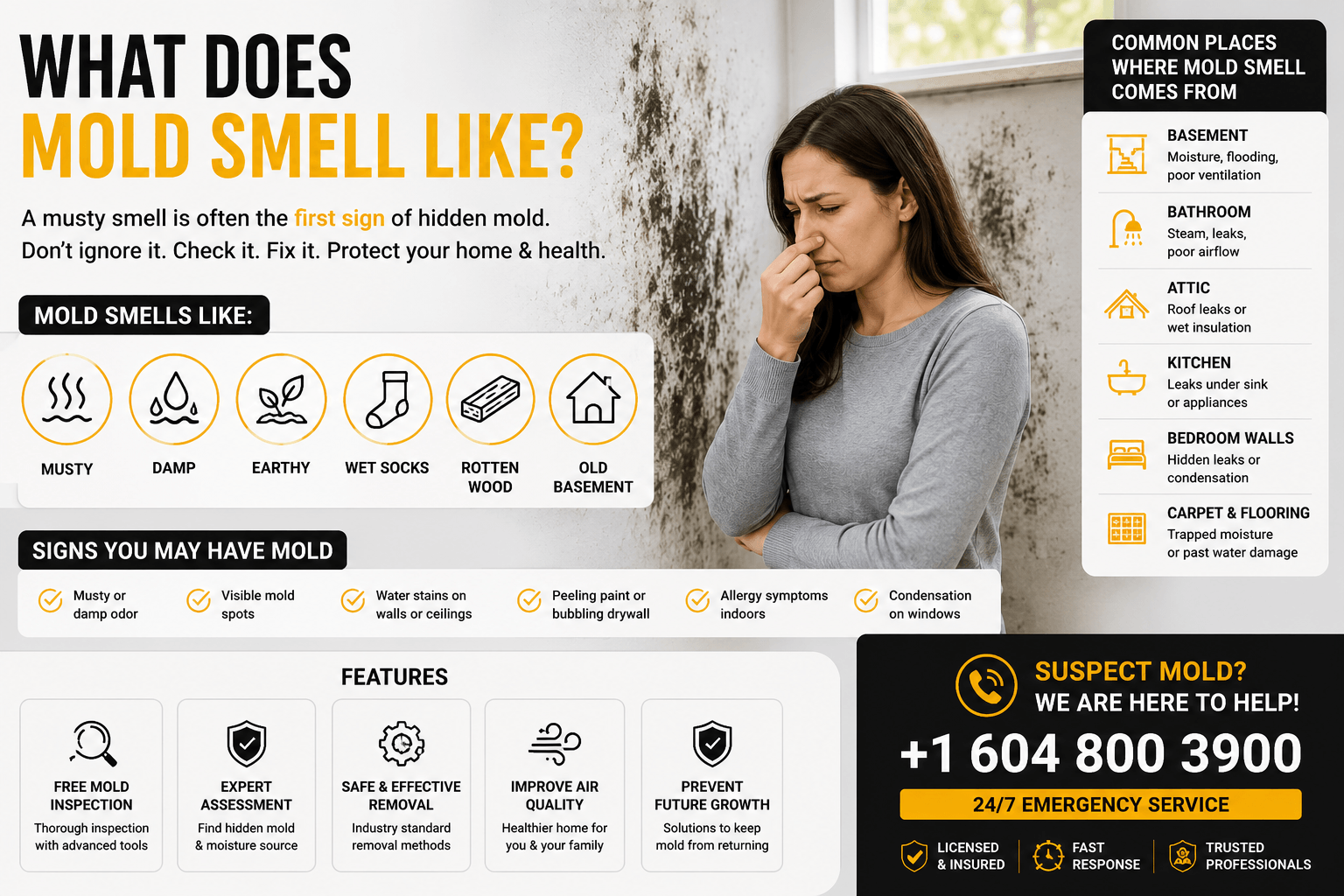
One of the first signs of hidden mold in a home is often the smell. Even before you see visible mold, you may notice a strong musty odor that does not go away.
If your house smells damp, earthy, or stale, there is a good chance mold may already be growing behind walls, under flooring, inside attics, or in other hidden areas.
Call +1 604 800 3900 for a free mold inspection and professional assessment.
Emergency Water Damage Restoration Help
What Does Mold Smell Like in a House?
Most people describe mold smell as:
- Musty
- Damp or wet
- Earthy
- Like wet socks
- Like rotten wood or paper
- Old basement smell
The smell is often stronger in areas with poor airflow or hidden moisture.
Why Mold Smells So Strong
Mold releases compounds called microbial volatile organic compounds (MVOCs). These compounds create the strong musty smell many homeowners notice.
The stronger the smell, the more likely mold has been growing for an extended period of time.
Common Places Where Mold Smell Comes From
| Area | Possible Cause |
|---|---|
| Basement | Moisture, flooding, poor ventilation |
| Bathroom | Steam, leaking pipes, poor airflow |
| Attic | Roof leaks or wet insulation |
| Kitchen | Leaks under sink or behind appliances |
| Bedroom Walls | Hidden plumbing leaks or condensation |
| Carpet and Flooring | Previous water damage or trapped moisture |
Signs the Smell May Be Mold
If you notice these signs together with a musty odor, mold may already be growing:
- Visible black or green spots
- Peeling paint or bubbling drywall
- Water stains on ceilings or walls
- Allergy symptoms indoors
- Condensation around windows
- Persistent damp smell after cleaning
What Mold Smell in Different Areas May Mean
Basement Mold Smell
A damp basement smell usually means excess moisture or hidden water damage. Basements are one of the most common places for mold growth because of poor airflow and humidity.
Bathroom Mold Smell
If your bathroom smells musty even after cleaning, mold may be growing behind tiles, under sinks, or inside the ceiling.
Attic Mold Smell
A strong smell in the attic often points to roof leaks, poor ventilation, or wet insulation.
Can You Smell Mold Behind Walls?
Yes. Even if mold is hidden behind drywall, you may still smell it. Many homeowners notice the odor before they ever see visible signs.
Hidden mold behind walls is common after plumbing leaks or water damage.
Can Mold Smell Make You Sick?
Mold exposure can affect indoor air quality and may lead to:
- Headaches
- Allergies
- Sneezing and coughing
- Breathing issues
- Eye irritation
- Fatigue
Children, seniors, and people with asthma are especially sensitive.
Why the Smell Keeps Coming Back
If the smell returns after cleaning, the moisture source may still exist. Surface cleaning alone will not solve hidden mold problems.
Professional inspection is often needed to identify the root cause.
How Professionals Detect Hidden Mold
Professional mold specialists use advanced equipment to locate hidden moisture and contamination, including:
- Moisture meters
- Thermal imaging cameras
- Humidity testing
- Visual inspection
What to Do If Your House Smells Like Mold
- Do not ignore the smell
- Check for leaks or water damage
- Improve ventilation
- Avoid painting over affected areas
- Schedule a professional inspection
Professional Mold Inspection and Removal
If your home smells musty or damp, it is important to inspect the property before the problem spreads further.
We provide professional mold remediation services and complete commercial restoration services across Metro Vancouver.
Free Mold Inspection
We offer free on site mold inspections with fast 24/7 response.
Call +1 604 800 3900 now to schedule your inspection and protect your property from hidden mold damage.
Leave a Reply