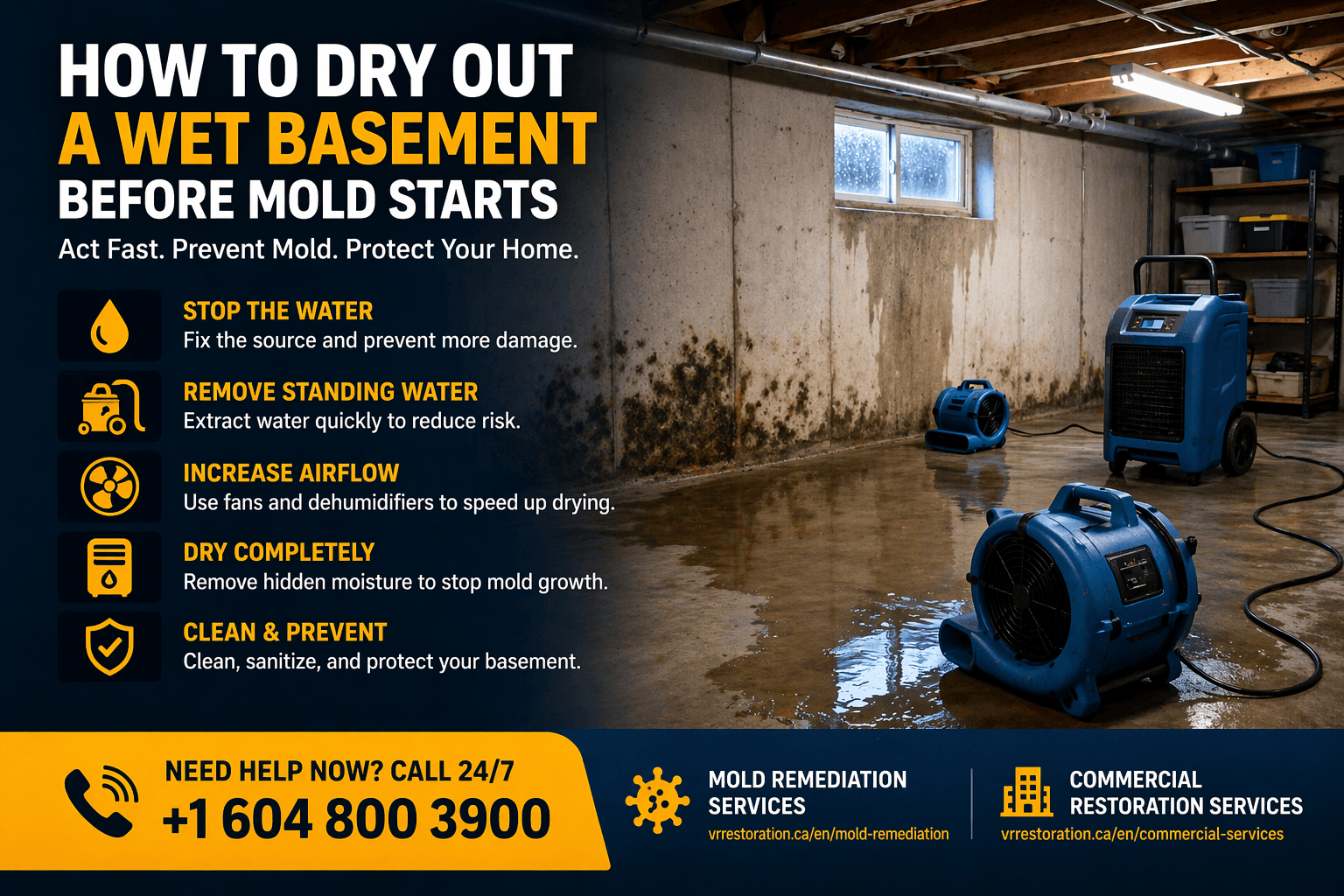
A wet basement can quickly turn into a much larger problem if it is not dried properly. Even a small amount of water can soak into drywall, flooring, insulation, wood framing, and stored belongings. Once moisture is trapped in the basement, mold can begin growing within 24 to 48 hours.
Whether your basement flooded after heavy rain, a burst pipe, sewer backup, or foundation leak, taking action immediately is the best way to reduce damage and avoid costly mold remediation.
Call +1 604 800 3900 for emergency basement drying and water damage restoration.
Why Wet Basements Lead to Mold Growth
Basements are naturally more vulnerable to moisture because they are below ground level and often have limited airflow. When water enters the basement, it can remain trapped in materials long after the visible surface appears dry.
Moisture hidden inside walls, flooring, insulation, or wood framing creates the perfect environment for mold. The longer the area stays damp, the greater the chance mold will spread throughout the basement and into other parts of the property.
Common Causes of Wet Basements
There are many reasons why a basement may become wet or flooded. Some of the most common causes include:
- Heavy rain and poor drainage around the home
- Foundation cracks and seepage
- Burst or leaking pipes
- Hot water tank leaks
- Sewer backup
- Sump pump failure
- Washing machine or appliance leaks
- Overflowing toilets or sinks
Understanding the source of water is important because the cause often determines how the drying and cleanup process should be handled.
Step 1: Stop the Water Source
Before you can begin drying the basement, the water source must be stopped. If the issue is a burst pipe, shut off the main water supply. If the flooding is caused by rainwater, try to block additional water from entering the property.
If the basement is flooded with sewage or contaminated water, avoid entering the area without proper protective equipment and call a professional restoration company immediately.
Step 2: Remove Standing Water Quickly
Standing water should be removed as soon as possible. The faster the water is extracted, the lower the risk of structural damage and mold growth.
For small amounts of water, wet vacuums and pumps may help. Larger floods often require professional extraction equipment to remove water from carpets, flooring, and hard to reach areas.
Step 3: Remove Wet Items and Materials
Wet furniture, boxes, rugs, cardboard, drywall, insulation, and other porous materials can hold moisture and create ideal conditions for mold.
Move items out of the basement to a dry area if possible. Severely damaged materials may need to be removed completely to prevent contamination and odor.
Step 4: Increase Airflow and Ventilation
Air circulation is one of the most important parts of drying a basement. Open windows if weather allows, use fans, and run dehumidifiers to remove moisture from the air.
Professional restoration companies often use industrial drying equipment to speed up the process and reach moisture hidden behind walls and under flooring.
Step 5: Dry Walls, Floors, and Hidden Areas
Many homeowners focus only on visible water, but moisture can remain trapped behind drywall, baseboards, insulation, flooring, and wood framing.
These hidden areas must be dried properly or mold can begin growing even after the basement looks dry. Moisture meters and thermal imaging tools are often used to detect hidden dampness.
Step 6: Clean and Sanitize the Basement
After drying, the basement should be cleaned and sanitized to reduce bacteria, odors, and mold spores. This is especially important if the water came from a sewer backup or contaminated source.
Professional cleaning products and antimicrobial treatments can help protect the basement from future mold problems.
Warning Signs Mold May Already Be Starting
Even after drying, there are signs that mold may already be developing in the basement:
- Persistent musty smell
- Dark spots on walls, ceilings, or flooring
- Peeling paint or bubbling drywall
- Visible discoloration on wood or insulation
- Increased allergy symptoms indoors
If you notice any of these signs, it is important to schedule professional mold inspection and remediation right away.
Why DIY Drying Is Not Always Enough
Many homeowners try to dry a wet basement with fans and household dehumidifiers, but these methods often do not remove hidden moisture. Water can stay trapped inside building materials and continue causing damage long after the surface appears dry.
Professional restoration specialists use advanced equipment to ensure the basement is fully dry and safe.
Professional Basement Drying and Mold Prevention Services
If your basement is wet, fast action is critical. Our team provides emergency water extraction, structural drying, moisture detection, mold prevention, and full restoration services.
We also offer professional mold remediation services if mold has already started growing. For business owners dealing with flooded commercial properties, we also provide commercial restoration services across Metro Vancouver.
How to Prevent Basement Flooding in the Future
While not all floods can be avoided, there are steps homeowners can take to reduce the risk:
- Clean gutters and downspouts regularly
- Ensure proper grading around the home
- Inspect foundation walls for cracks
- Install or maintain a sump pump
- Check plumbing lines for leaks
- Use a dehumidifier in damp basements
Call for Emergency Basement Drying Services
The first 24 to 48 hours are the most important after basement flooding. Acting quickly can prevent mold, reduce repair costs, and protect your home.
Call +1 604 800 3900 now for emergency basement drying, mold prevention, and water damage restoration services.
Leave a Reply