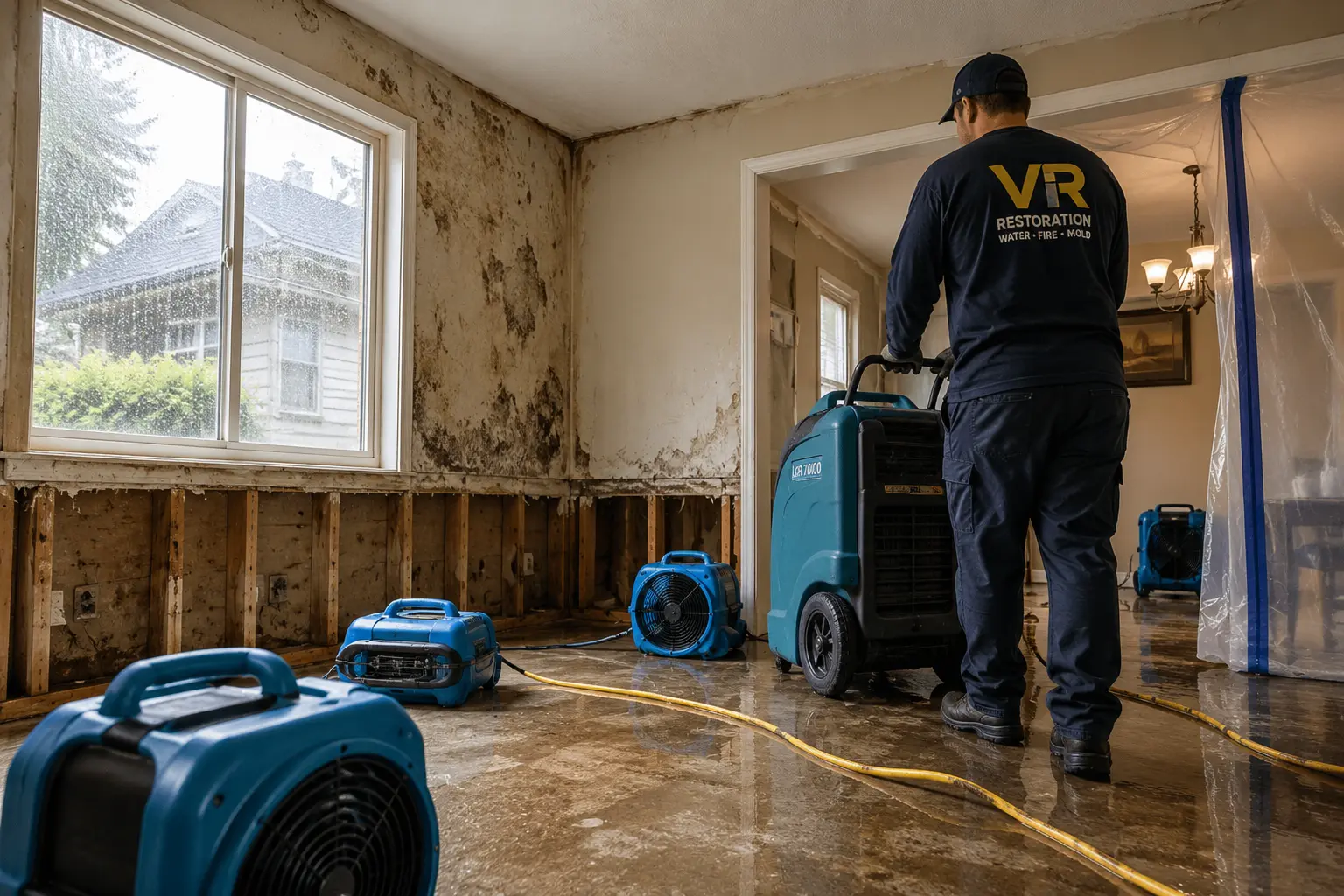
Quick answer: Heavy rain can cause serious problems in older Vancouver homes because aging roofs, worn seals, old drainage systems, foundation cracks, and outdated plumbing may allow water to enter the building. Even a small leak can spread behind walls, damage flooring, weaken wood, and create conditions for mold. Fast inspection and drying can prevent a small problem from becoming a major repair.
Older homes have character and strong construction, but many were built before modern waterproofing, drainage, insulation, and ventilation standards. During long periods of rain, water may enter through several areas at the same time. Homeowners should check the roof, attic, windows, basement, crawlspace, plumbing, and foundation after every major storm.
Worried About Rain Damage In Your Home 📞 Call +1 604 800 3900
Free inspection and clear guidance for Vancouver, West Vancouver, North Vancouver, Burnaby, Coquitlam, and nearby communities.
Why Older Vancouver Homes Face More Rain Damage
Vancouver receives long periods of rain during fall and winter. Older homes can be more vulnerable because many parts of the building may have reached the end of their useful life.
- Roof shingles may be cracked, loose, or worn
- Roof flashing may no longer seal properly
- Window caulking may have separated from the frame
- Foundation walls may contain small cracks
- Drain tile may be clogged, damaged, or collapsed
- Gutters and downspouts may be too small for heavy rain
- Old plumbing may leak during pressure changes
- Attic ventilation may not control moisture properly
One problem alone may not cause a major loss. The risk becomes greater when several weak areas allow water to enter at the same time.
Where Rainwater Enters Older Homes
Rainwater can enter from the roof, exterior walls, windows, foundation, basement, or plumbing system. The table below shows common entry points and the damage they may cause.
| Area | Common Problem | Possible Damage | Warning Sign |
|---|---|---|---|
| Roof | Worn shingles or damaged flashing | Wet insulation, ceiling stains, attic mold | Dripping or staining after rain |
| Windows | Failed caulking or damaged seals | Rotten trim, wet drywall, mold | Water on the sill or bubbling paint |
| Exterior walls | Cracks in stucco, siding, or masonry | Hidden moisture inside wall cavities | Musty smell or soft drywall |
| Foundation | Cracks or failed exterior drainage | Basement seepage and flooring damage | Damp walls or water at floor edges |
| Gutters | Leaves, debris, or poor slope | Roof edge leaks and foundation pooling | Water overflowing during rain |
Early Warning Signs Of Hidden Water Damage
Water damage is not always easy to see. Moisture may remain behind drywall, under flooring, inside insulation, or around framing for days before visible damage appears.
- Yellow or brown marks on ceilings
- Paint that bubbles, peels, or cracks
- Drywall that feels soft or cool
- Swollen baseboards or window trim
- Wood flooring that cups or separates
- A musty smell after rain
- Condensation that remains for long periods
- Water sounds inside walls
- White mineral marks on basement concrete
- Higher indoor humidity without a clear reason
If you notice one or more of these signs, a professional moisture inspection can help locate the wet area before repairs become more expensive.
Roof And Attic Problems After Heavy Rain
The roof is the first line of protection against rain. In an older home, roofing materials, nails, flashing, vents, skylights, and chimneys may allow water to enter.
Common Attic Problems
- Roof leaks around chimneys and skylights
- Wet insulation that loses its performance
- Dark staining on roof sheathing
- Water dripping onto ceiling drywall
- Bathroom fan ducts releasing moisture into the attic
- Poor airflow that keeps wood damp
Wet attic insulation should not be ignored. It can hold moisture against wood framing and create the right conditions for mold. Learn more about our water damage restoration services and mold remediation services.
Window And Exterior Wall Leaks
Older windows often have worn seals, damaged flashing, or cracked exterior caulking. Wind can push rain through small openings that are not visible during dry weather.
Water may enter around the window and move behind drywall before reaching the floor. This can damage insulation, wall framing, trim, paint, and flooring.
Signs Of A Window Or Wall Leak
- Water collecting on window sills
- Paint peeling near the window frame
- Dark marks at wall corners
- Soft drywall below the window
- Flooring damage beside an exterior wall
- Musty smell inside a nearby closet
Basement And Foundation Water Problems
Basements in older Vancouver homes can experience water seepage when the soil becomes saturated. Water pressure builds around the foundation and finds weak areas such as cracks, joints, window wells, and service openings.
Common Basement Damage
- Water entering through foundation cracks
- Damp drywall along exterior basement walls
- Wet carpet or flooring
- Water around the furnace or hot water tank
- Mold behind stored boxes or furniture
- Damage caused by a failed sump pump
Basement water should be removed quickly. Concrete may look dry on the surface while moisture remains inside flooring, walls, insulation, and wood framing.
Old Drainage Systems And Blocked Gutters
Many older homes rely on drainage systems that have not been inspected for years. Drain tile may become blocked by soil, roots, or collapsed pipe sections. Gutters and downspouts may also release water too close to the foundation.
A good drainage system should move water away from the home before it reaches the foundation.
- Clean gutters before the rainy season
- Extend downspouts away from the foundation
- Check that exterior drains are not blocked
- Inspect window wells after heavy rain
- Test sump pumps and backup systems
- Consider a camera inspection for older drain tile
Mold Risks After Rainwater Enters The Home
Mold can begin growing on wet materials when moisture remains for too long. Drywall paper, wood, insulation, carpet, and dust provide materials that mold can use for growth.
Signs of possible mold include a musty smell, dark spots, recurring stains, increased humidity, or irritation that becomes worse inside the home.
| Wet Material | Possible Problem | Recommended Action |
|---|---|---|
| Drywall | Softness, staining, hidden mold | Measure moisture and remove affected sections if needed |
| Insulation | Trapped moisture and reduced performance | Remove wet insulation and dry the cavity |
| Wood framing | Mold growth and long term decay | Dry to safe levels and clean when required |
| Carpet | Odour, staining, and contamination | Extract water and evaluate carpet and pad |
What To Do When You Find Water Damage
- Protect people first. Stay away from wet electrical outlets, light fixtures, and sagging ceilings.
- Stop the source. Shut off water for plumbing leaks or use a safe temporary cover for exterior entry points.
- Take photos and videos. Document every affected room before moving or removing damaged materials.
- Move valuables. Lift furniture, remove rugs, and move important items to a dry area.
- Contact your insurance provider. Report the damage and ask what documents they need.
- Arrange professional drying. Hidden moisture should be measured and removed before repairs begin.
How Professional Water Damage Restoration Works
- Inspection and moisture mapping identifies visible and hidden wet areas.
- Source control stops additional water from entering the property.
- Water extraction removes standing water from floors and other surfaces.
- Selective removal opens wet walls and removes materials that cannot be saved.
- Structural drying uses air movers and dehumidifiers to remove hidden moisture.
- Cleaning and sanitation protects the affected area and controls odour.
- Moisture verification confirms that materials are dry before repairs begin.
- Repairs and rebuilding restore drywall, insulation, flooring, trim, and paint.
VR Plus Restoration provides water extraction, drying, mold remediation, insurance documentation, and complete repair support. Visit our water damage page to learn more.
Insurance Help For Rain Damage In BC
Insurance coverage depends on how the water entered the home. Sudden damage caused by a storm, fallen branch, or unexpected opening may be covered. Long term roof leaks, neglected maintenance, and gradual foundation seepage may not be covered.
Steps That Can Help Your Claim
- Report the damage quickly
- Take detailed photos and videos
- Keep damaged materials until the insurer provides direction
- Save receipts for emergency work
- Request moisture readings and a detailed estimate
- Keep a simple timeline of what happened
We help homeowners prepare claim ready estimates, moisture records, photos, and restoration documentation. We can also explain the process step by step and communicate with your adjuster when required.
How To Protect An Older Home From Future Rain
- Inspect the roof, flashing, vents, and skylights every year
- Replace damaged shingles before the rainy season
- Refresh exterior caulking around windows and doors
- Clean gutters and downspouts regularly
- Move downspout water away from the foundation
- Inspect basement walls after major storms
- Test sump pumps and backup power systems
- Check attic ventilation and bathroom fan ducts
- Keep indoor humidity near or below fifty percent
- Install water sensors near plumbing and mechanical equipment
Frequently Asked Questions
Why are older Vancouver homes more likely to have water damage
Older homes may have worn roofs, aging seals, old drainage systems, foundation cracks, outdated plumbing, and limited ventilation. Heavy rain can expose several weak areas at the same time.
How can I tell if rainwater is inside my walls
Watch for bubbling paint, swollen trim, soft drywall, musty odour, cold wall areas, and flooring damage. A moisture meter can help confirm hidden water.
Can heavy rain cause attic mold
Yes. A roof leak or poor attic ventilation can keep insulation and wood framing damp. Mold may begin growing when wet materials are not dried quickly.
Can basement water damage be hidden
Yes. Water can remain behind drywall, under flooring, inside insulation, and around framing even when the floor looks dry.
Should I open windows to dry rain damage
Opening windows during wet Vancouver weather may increase indoor humidity. Controlled drying with proper air movement and dehumidification is often more effective.
Will home insurance cover rain damage
Coverage depends on the cause and your policy. Sudden storm damage may be covered, while gradual leaks and maintenance problems may be excluded.
How quickly should I call a restoration company
Call as soon as you notice water. Fast extraction, moisture inspection, and drying can reduce damage and lower the risk of mold.
Get A Free Water Damage Inspection
If heavy rain has affected your older home, do not wait for stains or mold to become worse. VR Plus Restoration can inspect the property, find hidden moisture, remove water, dry the structure, and guide you through the insurance process.
We serve homeowners in Vancouver, West Vancouver, North Vancouver, Burnaby, Coquitlam, New Westminster, Surrey, Abbotsford, and nearby communities.
Protect Your Home Before The Damage Spreads 📞 Call +1 604 800 3900
Free inspection, fast response, and clear insurance guidance.
Leave a Reply