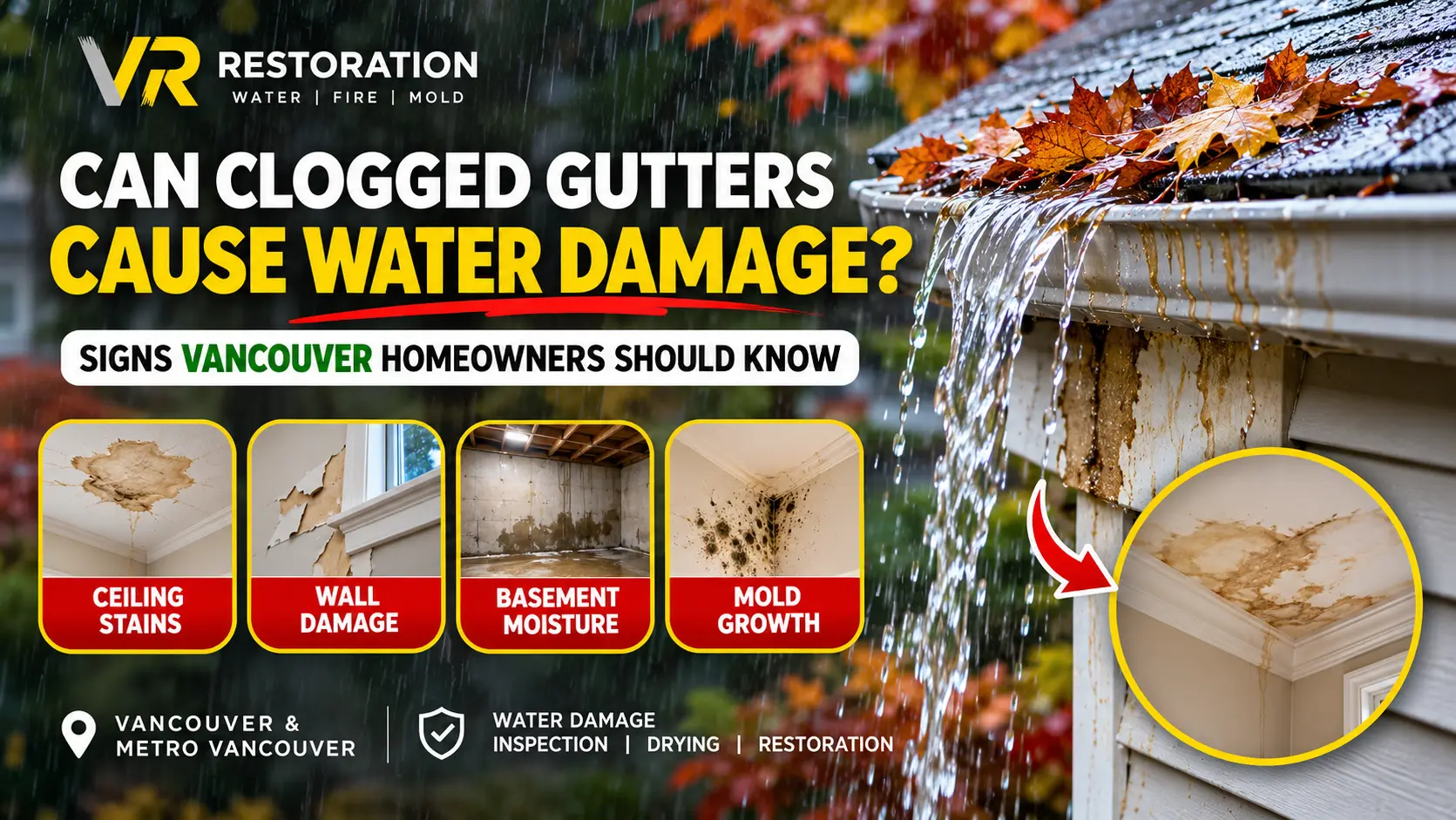
Heavy rain is part of life in Vancouver and across British Columbia. But when gutters become clogged with leaves, branches, and debris, rainwater may stop flowing where it should. Instead of draining safely away from your home, it can overflow onto exterior walls, collect near the foundation, and potentially cause serious water damage.
Many homeowners assume overflowing gutters are only a maintenance problem. In reality, clogged gutters can cause water damage inside your home, including wet drywall, ceiling stains, damaged insulation, basement moisture, and mold growth.
This guide explains how clogged gutters cause water damage, what signs to look for, which areas of your house are most vulnerable, and when professional water damage restoration may be necessary.
Quick Answer: Can clogged gutters cause water damage?
Yes. Clogged gutters can cause water damage when rainwater overflows and reaches areas that are not designed to handle continuous moisture. Water may penetrate exterior walls, damage roof edges, collect around foundations, or enter basements. If moisture becomes trapped inside building materials, it may also lead to mold growth and structural deterioration.
If you already notice moisture inside your property, VR Restoration provides professional water damage restoration services throughout Vancouver and Metro Vancouver.
Why Clogged Gutters Are a Serious Problem During Vancouver's Rainy Season
Vancouver experiences frequent rainfall during the fall and winter. As leaves collect inside gutters, downspouts can become partially or completely blocked.
When this happens, rainwater may overflow along the roofline rather than travel through the drainage system.
The problem becomes more significant during prolonged rainfall because water can repeatedly flow against exterior surfaces or accumulate near the foundation.
Homes surrounded by mature trees may be especially vulnerable to seasonal gutter blockages.
What Happens When Rain Gutters Are Blocked?
- Leaves and debris accumulate inside the gutters.
- Rainwater cannot drain properly through the downspouts.
- Water begins overflowing from the gutter edges.
- Overflowing water reaches fascia boards, siding, walls, or the ground near the foundation.
- Existing weaknesses in flashing, seals, or drainage systems may allow water to enter the building.
- Moisture can become trapped behind drywall, beneath flooring, or inside other building materials.
Not every overflowing gutter causes interior water damage. However, repeated overflow increases moisture exposure and can reveal existing weaknesses in your home's waterproofing and drainage systems.
7 Ways Clogged Gutters Can Cause Water Damage to Your Home
1. Water Damage Behind Exterior Walls
When gutters overflow, rainwater may run directly down your home's exterior walls.
If the siding, flashing, exterior joints, or building envelope contains vulnerable areas, water may penetrate into the wall assembly.
Once inside, it can affect insulation, wooden framing, and drywall without immediately becoming visible.
Warning Signs
- Bubbling or peeling interior paint
- Yellow or brown stains on drywall
- Swollen baseboards
- Persistent musty odors
- Soft or deteriorating wall materials
- Moisture appearing after heavy rainfall
What should you do? Have the gutter overflow and potential exterior entry point investigated. If interior materials are wet, professional moisture detection can help determine how far the water has spread.
2. Basement Flooding and Foundation Water Damage
One of the most concerning consequences of clogged gutters is excessive rainwater collecting near a home's foundation.
Gutters and downspouts are intended to help direct roof runoff away from the building. When they fail, water may accumulate around foundation walls.
Depending on soil conditions, foundation waterproofing, exterior drainage, and existing cracks or openings, water may eventually enter the basement.
Signs of Foundation Water Intrusion
- Damp basement walls
- Water collecting near foundation joints
- Wet basement carpets or flooring
- White mineral deposits on concrete surfaces
- Musty smells after heavy rain
- Water stains near the bottom of finished basement walls
If water is already entering your basement, read our guide on who to call for a flooded basement in Vancouver.
3. Roof Edge and Fascia Board Damage
Gutters are usually attached near the roof edge, often alongside fascia boards.
When rainwater repeatedly overflows or becomes trapped in the gutter system, wooden fascia and nearby roof components may remain exposed to excess moisture.
Over time, this can contribute to peeling finishes, wood deterioration, and damage around the roofline.
Signs to Look For
- Peeling paint beneath the gutters
- Dark staining on fascia boards
- Soft or deteriorating wood
- Sagging gutters
- Water dripping behind the gutter instead of through the downspout
- Visible gaps near the roof edge
A qualified roofing or gutter contractor should inspect damaged roofline components and repair the underlying problem.
4. Ceiling Water Stains and Attic Moisture
In some circumstances, gutter overflow can contribute to moisture problems around roof edges, flashing, and adjacent building materials.
If water finds a path into the roof assembly, moisture may reach attic insulation or eventually become visible on interior ceilings.
However, ceiling stains can also result from unrelated roof leaks, plumbing problems, or condensation. The source should be confirmed before assuming the gutters are responsible.
Possible Warning Signs
- New water stains near exterior ceiling edges
- Wet attic insulation
- Staining on roof sheathing
- Peeling ceiling paint
- Dripping water during rainstorms
- Sagging or deteriorating ceiling drywall
If your ceiling is sagging or water is reaching light fixtures, stay away from the affected area and arrange professional assistance.
5. Water Damage Around Windows and Doors
Overflowing gutters can increase the amount of rainwater running down exterior walls and around windows or doors.
If window flashing, door thresholds, exterior seals, or surrounding wall assemblies have existing defects, this additional water exposure may contribute to leaks.
Common Signs
- Water stains beneath windows
- Swollen wooden window trim
- Peeling paint around door frames
- Damp drywall near exterior openings
- Water collecting along interior door thresholds
- Recurring leaks during heavy rainfall
Replacing interior paint or sealant without investigating the actual water entry point may allow the problem to continue.
6. Mold Growth Behind Walls and Baseboards
Hidden moisture can create conditions that support mold growth when affected building materials remain damp.
This is particularly concerning when water reaches enclosed areas with limited airflow, such as wall cavities, insulation, and spaces behind baseboards.
Homeowners may notice a musty smell before finding any visible mold.
Signs That Mold May Be Developing
- Persistent musty odors
- Visible spots or discoloration on damp surfaces
- Swollen or damaged drywall
- Peeling wallpaper
- Recurring moisture after rain
Mold concerns should be addressed together with the underlying moisture problem. Simply cleaning visible mold without correcting the water source may not prevent recurrence.
Learn more about our mold remediation services in Metro Vancouver.
7. Flooring and Subfloor Water Damage
When rainwater enters through exterior walls, door thresholds, or foundation openings, it may travel beneath finished flooring.
Some flooring materials can trap moisture against the subfloor, making water damage difficult to identify from the surface.
Warning Signs
- Warped hardwood flooring
- Swollen laminate edges
- Loose or lifting floorboards
- Soft spots underfoot
- Discoloration around floor seams
- Unexplained damp odors
Professional moisture measurements may be needed to determine whether water is trapped beneath the flooring.
How to Tell if Your Gutters Are Causing Water Damage
The easiest clue is whether water damage becomes worse during or shortly after heavy rain, particularly near exterior walls, roof edges, or basement foundation areas.
However, a gutter problem should not be diagnosed based on timing alone.
| Warning Sign | Possible Explanation | Recommended Action |
|---|---|---|
| Water overflowing from gutters | Blocked gutter or downspout | Arrange safe gutter inspection and cleaning |
| Water running behind gutters | Improper drainage, flashing, or gutter installation | Inspect roofline and gutter connections |
| Basement moisture after rain | Foundation or drainage problems | Investigate exterior water management and moisture intrusion |
| Wet drywall near exterior walls | Water penetrating through the building envelope | Identify the entry point and assess hidden moisture |
| Ceiling stains near roof edges | Potential roof or flashing leak | Arrange roofing inspection and moisture assessment |
| Musty odors after storms | Possible trapped moisture or mold growth | Inspect affected materials and address the moisture source |
Can Clogged Gutters Cause Water Damage Even Without Basement Flooding?
Yes. A basement does not need to flood for clogged gutters to contribute to water damage.
Overflowing rainwater may damage fascia boards, exterior walls, window surrounds, attic materials, or interior drywall without ever reaching the basement.
In fact, hidden moisture can sometimes be more difficult to recognize than visible flooding.
Our article 10 Hidden Places Water Can Damage Your Home explains other areas homeowners should inspect after heavy rainfall.
What Should You Do if Clogged Gutters Have Already Caused Water Damage?
If water has entered your home, addressing the gutter problem is only the first part of the solution.
Wet building materials may require professional assessment and drying even after the drainage problem has been corrected.
- Keep the affected area safe. Stay away from standing water near electrical equipment, unstable ceilings, or other hazards.
- Document the damage. Take photos of overflowing gutters, water stains, affected walls, flooring, and other visible damage.
- Arrange gutter repairs or cleaning. A qualified contractor should address blocked downspouts, gutter defects, or other drainage issues.
- Identify where water entered. Investigate exterior walls, windows, roof connections, and foundation areas as appropriate.
- Check for hidden moisture. Moisture may remain inside drywall, flooring, insulation, and structural materials.
- Begin appropriate water damage restoration. Depending on the affected area, water extraction, controlled drying, and removal of unsalvageable materials may be necessary.
- Contact your insurance provider. Ask about your coverage and documentation requirements.
Has Rainwater Entered Your Home? VR Restoration provides professional water damage inspections, moisture detection, water removal, and structural drying throughout Metro Vancouver. 📞 Call +1 604 800 3900 24/7 Emergency Water Damage Response
How Professionals Restore Water Damage Caused by Gutter Overflow
A professional water damage restoration company focuses on identifying affected building materials, removing excess water, and creating appropriate drying conditions.
1. Water Damage Inspection
Technicians assess visible damage, likely water entry locations, and areas that may contain hidden moisture.
2. Moisture Detection and Mapping
Moisture meters and other appropriate inspection tools help determine which building materials have elevated moisture levels.
3. Water Extraction
Standing water is removed using suitable extraction equipment when necessary.
4. Structural Drying and Dehumidification
Commercial air movers and dehumidifiers may be used to help dry affected materials and control indoor moisture conditions.
5. Drying Monitoring
Moisture readings are monitored to evaluate drying progress and determine when suitable drying goals have been achieved.
6. Repairs and Restoration
Depending on the extent of damage, affected drywall, insulation, baseboards, flooring, or other materials may need repair or replacement.
The source of the water intrusion must also be corrected to reduce the risk of repeated damage.
How Much Does Water Damage From Clogged Gutters Cost to Repair?
Repair costs vary significantly depending on where the water travelled and how long the affected materials remained wet.
For example, minor damage to exterior trim may involve a different scope of work than water intrusion affecting finished basement walls, flooring, or several interior rooms.
Factors That Affect Restoration Costs
- Size of the affected area
- Whether water entered the building
- Length of time materials remained wet
- Amount of insulation or drywall affected
- Condition of the flooring and subfloor
- Whether mold or contamination is present
- Drying equipment and monitoring required
- Repairs needed after drying
- Whether the foundation or building envelope needs additional work
A professional assessment can help determine the damage and the appropriate restoration scope.
Does Home Insurance Cover Water Damage From Clogged Gutters in BC?
Home insurance coverage depends on the cause of the damage and the terms of the individual insurance policy.
Some policies cover certain sudden and accidental water losses, while damage associated with gradual deterioration, maintenance issues, seepage, or excluded types of flooding may not be covered.
Because clogged gutters may be considered a maintenance issue, homeowners should not assume resulting damage is automatically covered.
If you discover water damage, contact your insurance provider and explain what happened.
Keep photographs, inspection findings, receipts, and restoration documentation. These records may help your insurer evaluate the claim.
VR Restoration can assist with documentation related to moisture measurements and restoration work, although insurance coverage decisions are made by your insurance provider.
How to Prevent Water Damage From Clogged Gutters
Regular maintenance can help reduce the likelihood of gutter overflow and related water damage.
Keep Gutters Free From Debris
Remove leaves, branches, and accumulated debris so rainwater can move freely through the gutter system.
Inspect Downspouts
Ensure downspouts are not blocked and discharge water to an appropriate drainage location away from the foundation.
Check Gutters Before the Rainy Season
In Metro Vancouver, it is particularly useful to inspect gutters during the fall when leaves are accumulating and rainfall becomes more frequent.
Investigate Overflow During Rainstorms
From a safe location at ground level, observe whether water is overflowing along the gutter edges or running behind the gutter.
Inspect Exterior Walls and Foundation Areas
Look for water stains, damaged finishes, pooling rainwater, and recurring dampness near exterior walls.
Maintain Roof Flashing and Drainage Components
Damaged flashing, loose gutters, or poorly connected downspouts can interfere with the building's rainwater management system.
Consider Professional Gutter Cleaning
Working on ladders and roofs can be dangerous, particularly during wet weather. For elevated or difficult gutter systems, hire a qualified contractor rather than attempting unsafe cleaning.
Clogged Gutters vs. Roof Leaks: How Can You Tell the Difference?
Both clogged gutters and roof defects can contribute to water damage during heavy rainfall.
However, the location and pattern of water intrusion may provide clues about the source.
| Clogged Gutter Problem | Possible Roof Leak |
|---|---|
| Water visibly overflowing from gutters | Water entering through damaged roofing or flashing |
| Excess rainwater collecting near exterior walls | Moisture appearing beneath roof penetrations |
| Water damage near fascia or gutter connections | Wet attic insulation or stained roof sheathing |
| Basement moisture associated with roof runoff near the foundation | Ceiling stains associated with leaks in the roof assembly |
Important: These observations are not a definitive diagnosis. Gutter problems and roof leaks can occur together, and a qualified inspection may be required to identify the actual source.
Frequently Asked Questions About Clogged Gutters and Water Damage
Can clogged gutters really cause water damage inside a house?
Yes. When gutters overflow, water can reach exterior walls, roof edges, windows, and foundations. If there are openings or weaknesses in the building envelope, water may enter and damage interior materials.
Can clogged gutters cause basement flooding?
Yes. Blocked gutters can allow roof runoff to collect near the foundation. If drainage or waterproofing is inadequate, the excess water may contribute to basement seepage or flooding.
Can overflowing gutters cause mold inside walls?
Yes. If overflowing rainwater penetrates an exterior wall and leaves materials damp, mold may develop under suitable conditions. Fixing the moisture source and drying affected materials are important.
Can clogged gutters damage the foundation?
Overflowing gutters can increase water exposure around the foundation. Depending on existing drainage conditions, this may contribute to water intrusion or deterioration. The extent of damage requires inspection.
Can clogged gutters cause ceiling leaks?
In some circumstances, gutter overflow can contribute to water intrusion around roof edges and adjacent flashing. However, ceiling leaks may also come from damaged roofing, plumbing, or other causes.
How do I know if water damage is coming from my gutters?
Look for overflowing gutters during rain, pooling water near the foundation, damage below roof edges, and moisture that appears after storms. A professional inspection can help confirm the source.
Will cleaning the gutters fix existing water damage?
No. Cleaning blocked gutters may prevent additional overflow, but it does not remove water already trapped in drywall, flooring, insulation, or structural materials. Existing moisture damage may still require restoration.
Should I call a gutter company or water damage restoration company?
A gutter or roofing contractor can repair the drainage problem. If water has already entered your home and affected building materials, a water damage restoration company can assess moisture, remove water, and provide structural drying.
Does homeowners insurance cover clogged gutter water damage?
Coverage depends on the policy and the circumstances. Damage related to poor maintenance or gradual deterioration may be excluded. Contact your insurance provider to confirm whether your specific loss is covered.
Who can help with gutter related water damage in Vancouver?
For gutter maintenance and repairs, contact a qualified gutter or roofing contractor. For interior water damage inspection, moisture detection, water extraction, and structural drying, contact VR Restoration at 604 800 3900.
Water Damage Restoration in Vancouver After Heavy Rain
Clogged gutters may seem like a small maintenance problem, but repeated overflow can contribute to serious water damage when rainwater enters vulnerable areas of a property.
If you discover wet drywall, basement moisture, damaged flooring, or unexplained water stains after heavy rainfall, it is important to identify the source and determine whether moisture remains trapped inside building materials.
At VR Restoration, we provide professional water damage restoration services for residential and commercial properties throughout Metro Vancouver.
Our services include:
- Emergency water damage response
- Water damage inspection and assessment
- Moisture detection and mapping
- Water extraction and cleanup
- Commercial structural drying and dehumidification
- Drying monitoring and documentation
- Mold remediation when necessary
- Water damage repairs and restoration planning
- Insurance claim documentation assistance
We serve Vancouver, West Vancouver, North Vancouver, Burnaby, Coquitlam, Port Coquitlam, Surrey, Richmond, New Westminster, and surrounding communities.
Learn more about our water damage restoration services in Vancouver.
Water Damage After Heavy Rain? We're Here to Help. Contact VR Restoration for professional water damage inspection, cleanup, and structural drying. 📞 Call +1 604 800 3900 Available 24/7 | Vancouver & Metro Vancouver
Leave a reply
Your comment will be reviewed before it appears publicly.