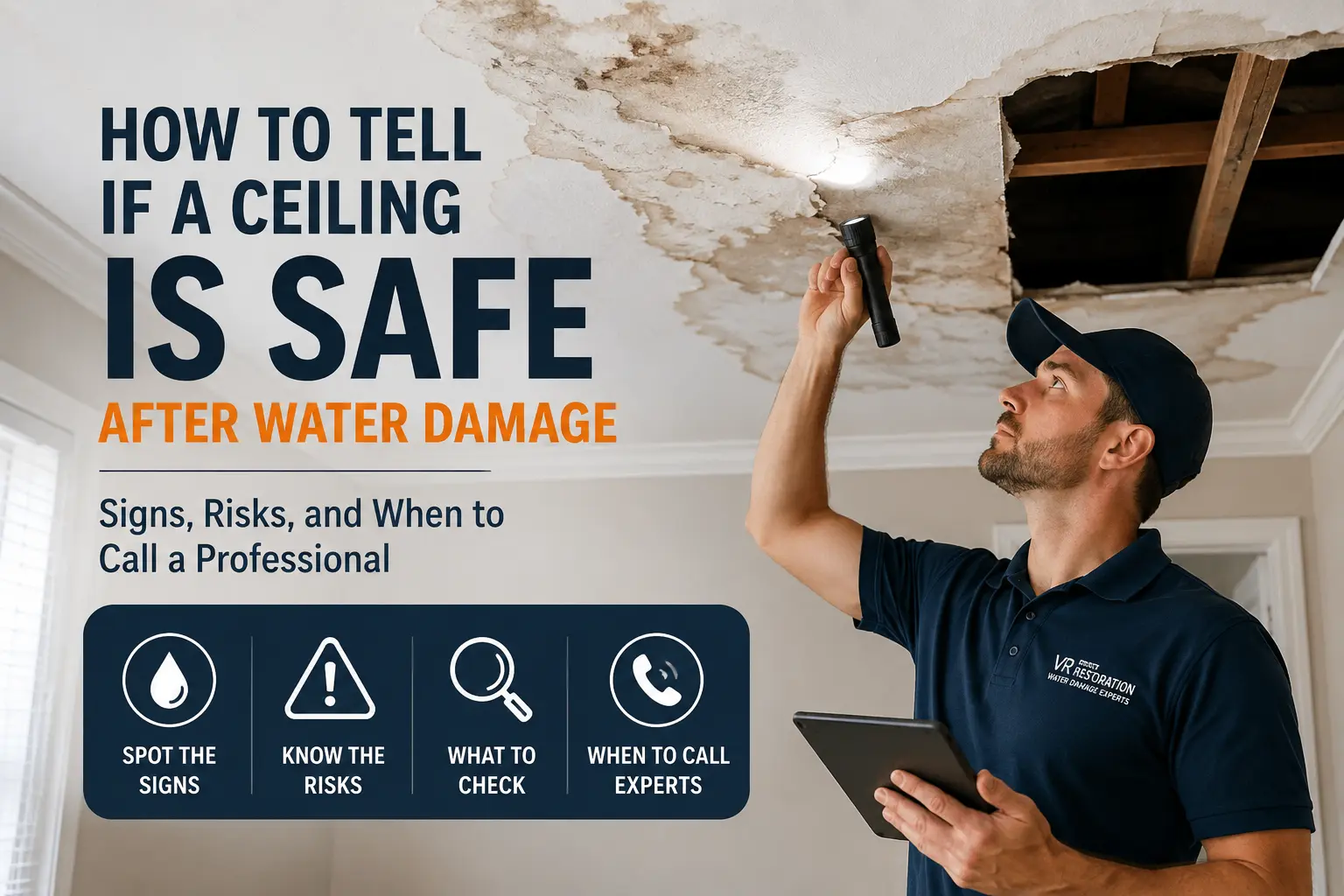
Quick answer: A water damaged ceiling may not be safe if it is sagging, bulging, cracking, dripping near electrical fixtures, or feels soft. Do not stand underneath a ceiling that looks swollen or unstable. The safest approach is to stop the water source, keep people away from the area, document the damage, and have the ceiling checked before repairs begin.
Ceiling water damage is common after roof leaks, plumbing problems, overflowing bathrooms, heavy rain, and leaks from an upstairs unit. In Vancouver, West Vancouver, North Vancouver, Burnaby, and nearby areas, wet weather can make these problems especially common.
If you are not sure whether your ceiling is safe, VR Plus Restoration offers professional water damage assessment, moisture detection, drying, and restoration. For help call +1 604 800 3900.
Worried About A Wet Or Sagging Ceiling 📞 Call +1 604 800 3900
Free assessment and water damage estimate available
Warning Signs Your Ceiling May Be Unsafe
A small water stain does not always mean the ceiling is about to collapse, but some warning signs should never be ignored.
| Warning Sign | What It May Mean | What You Should Do |
|---|---|---|
| Sagging ceiling | Water may be collecting above the drywall | Keep everyone away and call for an inspection |
| Large bubble or bulge | Water may be trapped behind paint or drywall | Do not press or puncture it yourself |
| Cracks getting larger | The ceiling material may be weakening | Move furniture and avoid standing below it |
| Water near a light fixture | Possible electrical hazard | Stay away and have the power checked safely |
| Soft or crumbling drywall | The material has absorbed too much water | Professional removal may be needed |
| Musty smell | Moisture may have been present for some time | Check for hidden moisture and mold |
Why A Wet Ceiling Can Become Dangerous
Drywall and ceiling materials are designed to stay dry. Once they absorb water, they become heavier and weaker. If enough water collects above the ceiling, the material can pull away from framing and fall.
Water may also travel farther than the stain you see. A leak near one side of the room can move across joists and insulation before appearing somewhere else.
- Wet drywall becomes heavy and weak
- Insulation can hold large amounts of hidden moisture
- Wood framing may stay wet after the surface looks dry
- Electrical wiring and fixtures may become unsafe
- Hidden moisture can lead to mold growth
What To Do Immediately After You Notice Ceiling Water Damage
- Keep people away from the area. Do not stand underneath a sagging or bulging ceiling.
- Stop the water source if possible. Shut off the water if the problem is plumbing related.
- Do not touch wet electrical fixtures. Water around lights, fans, or outlets can create an electrical hazard.
- Take photos and videos. Document the ceiling, floor, furniture, and suspected source before cleanup begins.
- Move valuables away. Protect furniture, electronics, rugs, and personal belongings.
- Call a restoration professional. Moisture needs to be measured above and around the damaged area.
If the leak came from a plumbing failure, roof leak, or water damage upstairs, learn more about our Water Damage Restoration services.
How Professionals Inspect A Water Damaged Ceiling
A professional inspection should determine how much of the ceiling is wet, where the water came from, and whether the structure can be dried safely.
Moisture Detection
Moisture meters help identify areas that are still wet even when the surface appears normal.
Thermal Imaging
Thermal cameras can help locate temperature differences that may indicate hidden moisture inside ceilings and walls.
Attic Or Floor Cavity Inspection
If the ceiling is below an attic or another floor, the area above may need to be inspected for wet insulation, plumbing leaks, or roof damage.
Structural Condition
The ceiling material is checked for sagging, separation, cracking, softness, and other signs that replacement may be needed.
Can A Water Damaged Ceiling Be Dried Or Does It Need Replacement
Not every wet ceiling needs to be completely replaced. The decision depends on the amount of water, how long it remained wet, and the condition of the drywall and insulation.
| Condition | Possible Solution |
|---|---|
| Minor surface stain with dry material | Fix the source, verify dryness, repair and repaint |
| Wet but firm drywall | Professional drying may save the material |
| Soft or sagging drywall | Damaged sections usually need removal |
| Wet insulation above ceiling | Insulation may need removal to allow full drying |
| Visible mold growth | Containment and mold remediation may be required |
Common Causes Of Ceiling Water Damage
Finding the source is one of the most important parts of restoration. Repairing the ceiling without fixing the source will only allow the problem to return.
- Roof leaks after heavy rain or snow
- Bathroom leaks from an upstairs floor
- Toilet overflow or failed wax seal
- Leaking shower or bathtub
- Burst or leaking plumbing pipes
- Air conditioner or appliance leaks
- Attic condensation
- Damaged roof flashing or skylights
Roof Leaks
Roof leaks often create stains near exterior walls, chimneys, vents, and skylights. Rainwater can travel across roof framing before entering the ceiling below.
Bathroom Leaks
If the damaged ceiling is below a bathroom, the source may be a toilet, shower, bathtub, supply pipe, or drain connection.
Attic Moisture
Poor attic ventilation can create condensation during colder months. Over time this moisture can soak insulation and ceiling materials.
Can Ceiling Water Damage Cause Mold
Yes. Mold can begin growing when drywall, insulation, or wood remains wet for an extended period. Because ceiling cavities are dark and difficult to inspect, mold may develop before it becomes visible inside the room.
Common warning signs include:
- Musty smell after the leak has stopped
- Black, brown, or green spots around the stain
- Repeated staining after repainting
- Peeling paint
- Persistent humidity in the room
If mold is suspected, visit our Mold Remediation page for more information about safe inspection and removal.
Does Home Insurance Cover Ceiling Water Damage In BC
Insurance may cover ceiling water damage when it is caused by a sudden and accidental event, such as a burst pipe or certain unexpected plumbing failures. Coverage varies depending on the cause and your policy.
Damage caused by long term leaks, poor maintenance, or gradual deterioration may not be covered.
Before removing damaged materials:
- Take photos and videos
- Document where the water came from
- Save damaged items when practical
- Contact your insurance provider
- Keep restoration estimates and moisture reports
VR Plus Restoration can help document the damage, prepare a clear estimate, and guide you step by step through the restoration and insurance process.
How To Prevent Future Ceiling Water Damage
- Inspect your roof before and after severe weather
- Keep gutters and downspouts clear
- Repair plumbing leaks immediately
- Check bathroom caulking and shower seals
- Inspect attic insulation and ventilation
- Watch for small ceiling stains before they grow
- Install water leak detectors near bathrooms and appliances
A small stain can be an early warning. Addressing it quickly may prevent ceiling replacement, mold remediation, and more expensive repairs.
Frequently Asked Questions About Water Damaged Ceilings
Can a wet ceiling collapse
Yes. A ceiling that has absorbed a large amount of water can become heavy and weak. Sagging, bulging, cracking, or falling pieces are signs to keep away from the area and arrange an inspection.
How long does a ceiling take to dry after water damage
Drying time depends on the amount of water, materials involved, humidity, ventilation, and whether insulation is wet. Professional drying may take several days, and moisture readings should confirm the area is dry before repairs begin.
Should I poke a hole in a water bubble in my ceiling
It is safer not to do this without knowing what is above the ceiling. Electrical wiring, insulation, and a large amount of trapped water may be present. Keep the area clear and have it assessed safely.
Can I paint over a water stain
Only after the water source is repaired and the ceiling is fully dry. Painting too early can hide moisture and allow mold or additional damage to continue.
How do I know if there is mold above my ceiling
A musty smell, repeated stains, long term moisture, or visible spotting can indicate a problem. Moisture readings and inspection of the cavity above the ceiling can help confirm the condition.
Should I call insurance before restoration starts
You should notify your insurer as soon as possible, but emergency steps to prevent additional damage should not normally be delayed. Document the condition carefully and keep records of the work performed.
Need Help With Ceiling Water Damage In Vancouver
If you notice a ceiling stain, active leak, sagging drywall, or water coming through a light fixture, do not wait for the problem to become worse. VR Plus Restoration provides water damage inspection, water extraction, structural drying, moisture detection, mold remediation, and restoration services throughout Vancouver and surrounding communities.
We can also help you understand the restoration process and prepare the documentation needed for an insurance claim when applicable.
Get A Free Water Damage Assessment 📞 Call +1 604 800 3900
Serving Vancouver, West Vancouver, North Vancouver, Burnaby, Coquitlam, and surrounding areas.
Leave a Reply