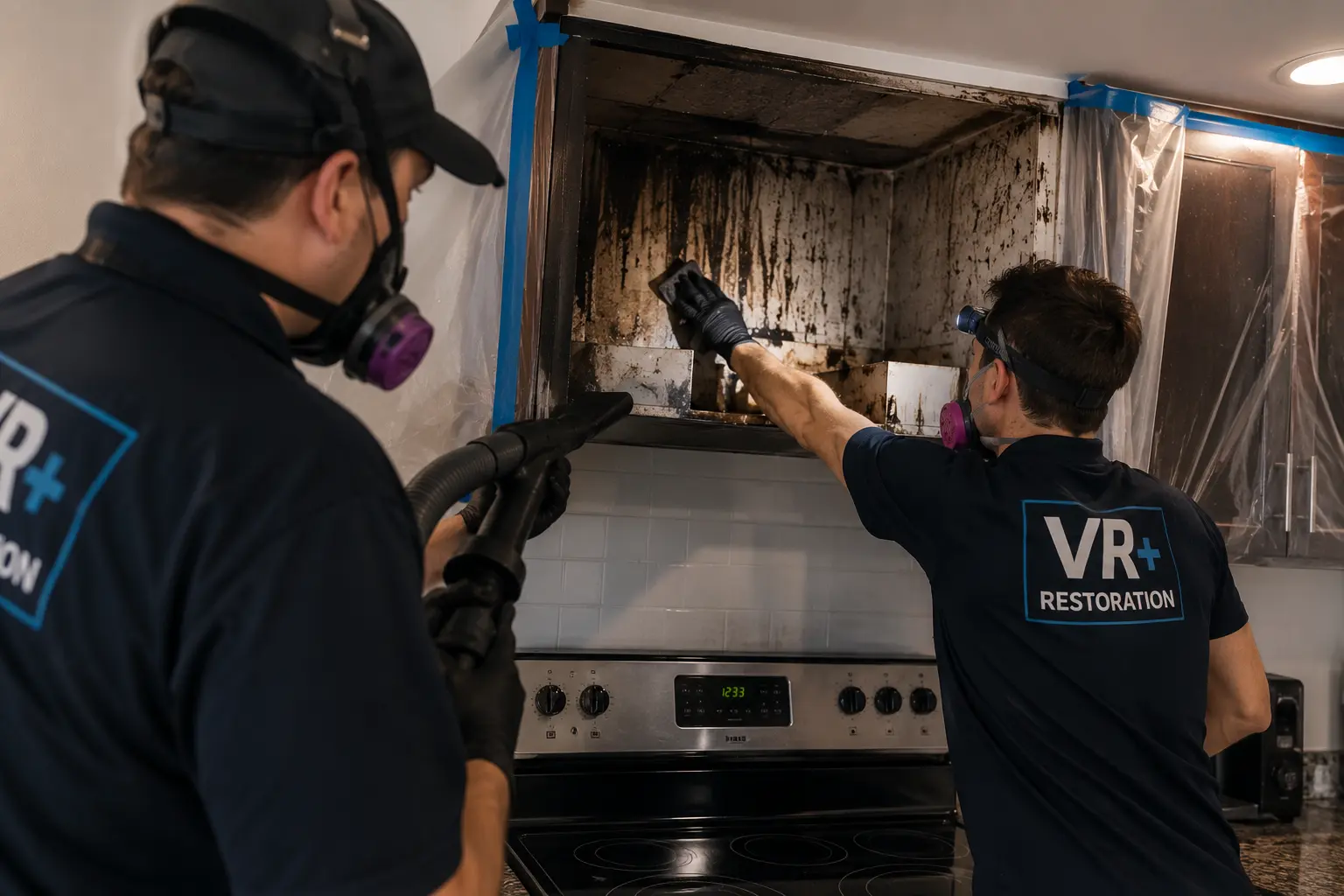
After a house fire, the visible damage may be repaired but the smell of smoke can still remain. Many homeowners are surprised to discover that even after damaged materials are removed, walls are repaired and the property looks clean, a strong burnt or smoky smell can continue inside the home.
If you are wondering how to get smoke smell out of a house after a fire, the most important thing to understand is that smoke odor is not always a surface problem. Smoke particles and soot can travel deep into drywall, insulation, wood, flooring, furniture, fabrics and HVAC systems.
In some cases, regular cleaning products and air fresheners are not enough. Professional smoke odor removal may require specialized equipment, professional cleaning materials and multiple treatment steps to address the actual source of the smell.
Why Does Smoke Smell Stay in a House After a Fire?
Smoke is made up of very small particles and gases that can spread throughout a property. These particles can settle on surfaces and also enter porous building materials.
Even if the fire was limited to one room, smoke may travel into:
- Drywall
- Insulation
- Wood framing
- Carpet and carpet padding
- Hardwood flooring
- Furniture
- Curtains and fabrics
- Ceilings
- Cabinets
- Heating and ventilation systems
This is why a home can continue smelling like smoke even after the most obvious fire damage has been repaired.
Can Smoke Smell Go Away on Its Own?
Sometimes a very light smoke smell may fade with time and ventilation. However, stronger fire odor usually does not disappear simply by opening windows or waiting.
When smoke particles have entered porous materials, the smell can remain for weeks, months or even longer unless the affected materials are properly cleaned, treated or removed.
In some situations, the smell may seem weaker for a while and then become noticeable again when the temperature or humidity changes.
Why Regular Cleaning Is Often Not Enough
Household cleaning products can remove some surface residue, but they may not reach smoke particles trapped inside building materials.
Air fresheners and scented sprays can temporarily cover the smell, but they do not remove the source of the odor.
Professional fire restoration focuses on identifying where the smoke contamination is located and treating those areas directly.
How Professionals Remove Smoke Smell After a Fire
The correct method depends on the type of fire, the materials that burned, the amount of smoke produced and how far the smoke travelled through the property.
A professional smoke odor removal process may include several different techniques.
1. Detailed Smoke and Soot Inspection
Before treatment begins, the affected areas should be inspected carefully.
Smoke residue is not always visible. Technicians may inspect walls, ceilings, floors, furniture, vents and hidden areas to determine where odor causing particles may remain.
2. Soot and Residue Removal
Soot can continue producing odor if it remains on surfaces.
Professional cleaning materials are used to remove smoke residue from appropriate surfaces without spreading contamination to other parts of the property.
3. HEPA Air Filtration
Professional air filtration equipment can help remove fine airborne particles from the indoor environment.
HEPA filtration may be used as part of the overall smoke cleanup process, especially when fine soot particles remain in the air.
4. Professional Deodorizing Products
Professional odor removal products are designed to treat smoke contamination rather than simply cover the smell with fragrance.
Different materials may require different cleaning and deodorizing products.
5. Thermal Fogging
Thermal fogging may be used in some restoration situations to help treat areas where smoke particles have travelled.
The treatment creates very small deodorizing particles that can reach areas that may be difficult to treat with surface cleaning alone.
6. Hydroxyl Treatment
Hydroxyl equipment may be used to help reduce persistent smoke odor in certain environments.
This type of treatment can be useful when odor is present throughout multiple rooms or has entered porous materials.
7. Cleaning HVAC Systems
Smoke can travel through heating and ventilation systems and spread odor throughout the property.
If smoke residue is present inside vents or ductwork, those areas may need to be inspected and professionally cleaned.
8. Sealing Affected Materials
In some cases, certain structural materials may continue releasing smoke odor even after cleaning.
Specialized sealing products may be used on appropriate surfaces to help lock in remaining odor after the area has been properly cleaned.
9. Removing Materials That Cannot Be Restored
Some materials may be too heavily affected by smoke to clean successfully.
Severely contaminated insulation, carpet padding, drywall or other porous materials may need to be removed and replaced.
Special Equipment and Materials May Be Required
Smoke odor removal is not always easy. In some fire damage situations, the smell can remain even after several areas have been cleaned.
VR Restoration uses specialized restoration equipment and professional odor removal materials to treat smoke affected properties.
Depending on the condition of the property, the process may involve:
- Professional smoke and soot cleaning products
- HEPA air filtration equipment
- Air scrubbers
- Professional deodorizing treatments
- Thermal fogging equipment
- Hydroxyl treatment equipment
- Specialized odor sealing products
- Removal of deeply contaminated materials
The goal is to address the source of the odor instead of simply hiding it.
Why Does My House Still Smell Like Smoke After Fire Repairs?
If repairs have already been completed but the property still smells like smoke, some affected materials may not have been fully treated.
Common reasons include:
- Soot remaining behind walls or ceilings
- Smoke particles trapped in insulation
- Contaminated HVAC systems
- Smoke absorbed into wood framing
- Carpet or padding that was not fully cleaned
- Furniture and fabrics that still contain odor
- Hidden smoke residue inside cabinets or closets
A professional odor inspection can help determine which areas are still contributing to the smell.
Can Painting Over the Walls Remove Smoke Smell?
Painting alone does not always remove smoke odor.
If soot and smoke residue are still present, simply applying paint may trap contamination underneath without properly cleaning the surface first.
In some cases, surfaces must be professionally cleaned and treated before specialized primers or sealers are applied.
Can Smoke Smell Stay in Drywall?
Yes. Drywall is porous and can absorb smoke particles and odor.
Light contamination may sometimes be cleaned and treated, while heavily affected drywall may need to be removed and replaced.
The decision depends on the amount of smoke exposure and the condition of the material.
Can Smoke Smell Stay in Insulation?
Yes. Insulation can hold smoke odor for a long time because it is highly porous.
If insulation has been heavily contaminated by smoke, replacement may be more effective than attempting to deodorize it.
Can Smoke Smell Stay in Wood?
Wood framing, cabinets and flooring can absorb smoke odor.
Professional cleaning, deodorizing and sealing may be required depending on the level of contamination.
Can Smoke Travel Through HVAC Systems?
Yes. Smoke can enter return vents, ductwork and heating systems during a fire.
Once contaminated, the HVAC system can sometimes redistribute smoke odor throughout the home when the system is operating.
This is one reason homeowners may continue noticing smoke smell in rooms that were far away from the original fire.
How Long Does It Take to Remove Smoke Smell After a Fire?
There is no single timeline for smoke odor removal.
The amount of time required depends on:
- The size of the fire
- The type of materials that burned
- How long smoke remained inside the property
- How many rooms were affected
- Whether HVAC systems were contaminated
- Whether porous materials absorbed smoke
- The amount of soot remaining
Some properties may respond quickly to professional treatment, while others may require several treatment stages.
Why Smoke Odor Sometimes Requires More Than One Treatment
Fire smoke can penetrate deeply into different materials. Because of this, one cleaning treatment may not always remove every source of odor.
In some cases, technicians may need to clean the property, treat the air, inspect hidden areas and then evaluate whether any odor remains.
If odor continues, additional treatment or removal of heavily contaminated materials may be necessary.
What Should You Do If Your House Still Smells Like Smoke?
If your home still smells like smoke after fire repairs, do not rely only on air fresheners or scented products.
Consider the following steps:
- Identify which rooms have the strongest smoke smell.
- Check closets, cabinets and hidden areas.
- Inspect HVAC vents and air returns.
- Look for remaining soot or staining.
- Remove heavily affected fabrics or materials when necessary.
- Arrange a professional smoke odor assessment if the smell continues.
Is Smoke Odor Removal Different From Fire Damage Repair?
Yes. Fire damage repair focuses on restoring damaged building materials, while smoke odor removal focuses on contamination left behind by smoke and soot.
A room may be structurally repaired and look completely finished while odor remains inside hidden materials.
That is why smoke cleanup and deodorization are important parts of a complete fire restoration process.
Professional Fire and Smoke Damage Restoration
VR Restoration provides professional fire damage restoration services for residential and commercial properties.
Our team can inspect smoke affected areas, identify possible sources of persistent odor and determine the appropriate cleaning and deodorizing process.
Depending on the property, treatment may include professional cleaning, air filtration, deodorization, specialized equipment and removal of materials that cannot be restored.
Frequently Asked Questions About Smoke Smell After a Fire
How do you get smoke smell out of a house after a fire?
Smoke odor removal may involve soot cleaning, HEPA air filtration, professional deodorizing products, HVAC cleaning, thermal fogging, hydroxyl treatment and removal of heavily contaminated materials.
Why does my house still smell like smoke after it was repaired?
Smoke particles may still be trapped inside drywall, insulation, wood, flooring, furniture or HVAC systems even after visible fire damage has been repaired.
Will opening windows remove fire smoke smell?
Ventilation may help reduce light odor, but it usually cannot remove smoke particles that have entered porous materials.
Can air fresheners remove smoke smell after a fire?
Air fresheners usually mask odor temporarily rather than removing the source of smoke contamination.
Can smoke smell stay in a house for months?
Yes. If smoke residue remains inside porous materials, odor can continue for a long period of time.
Does drywall need to be replaced because of smoke smell?
Not always. Light contamination may sometimes be professionally cleaned and treated, while heavily affected drywall may require removal.
Can professional restoration remove smoke odor completely?
Professional restoration can significantly reduce and often eliminate smoke odor by treating the source. However, heavily contaminated properties may require multiple treatments or removal of materials that cannot be successfully restored.
Still Smelling Smoke After Fire Damage Repairs?
If your home has already been repaired but the smell of smoke is still present, hidden smoke contamination may remain inside the property.
VR Restoration uses specialized equipment and professional odor removal materials to identify and treat smoke affected areas.
Some smoke odors can be difficult to remove and may require more than one treatment or removal of deeply affected materials. A proper inspection can help determine the best approach for your property.
Need help removing smoke smell after a fire?
Call VR Restoration at
604 800 3900
for professional fire and smoke damage restoration assistance.
Leave a Reply