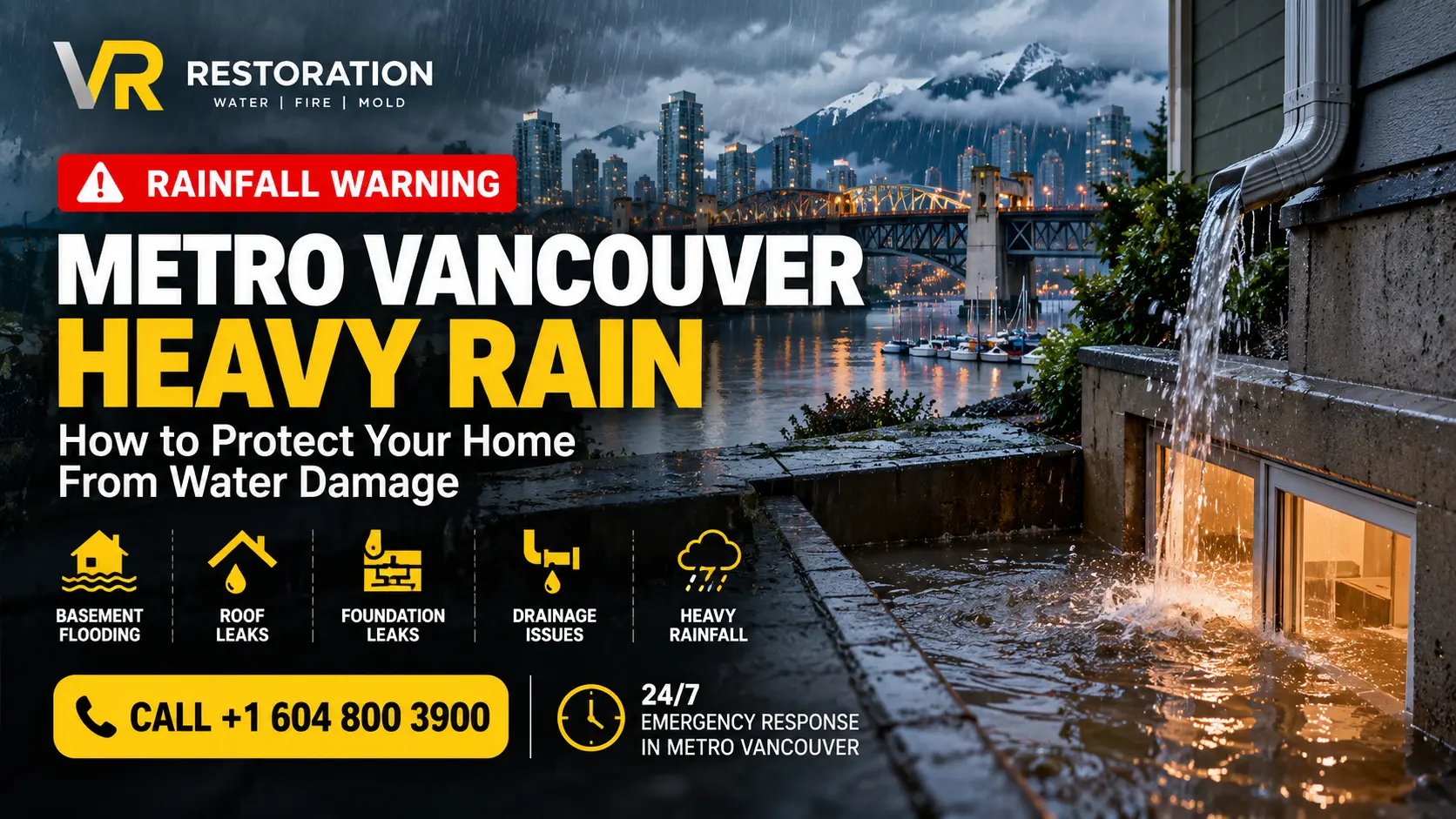
Heavy rain across Metro Vancouver can quickly create problems for homes and businesses, especially when drainage systems, foundations, roofs, or plumbing systems are already vulnerable.
With significant rainfall affecting parts of Metro Vancouver on September 29, 2026, homeowners should pay close attention to basements, drains, windows, roofs, and other areas where water may enter the property.
Even after the heaviest rain stops, water damage may not be immediately visible. Moisture can remain underneath flooring, behind drywall, inside insulation, and around foundations.
If you discover water entering your property, VR Restoration provides emergency water damage restoration in Vancouver and throughout Metro Vancouver.
Water Entering Your Home During Heavy Rain? Get emergency water extraction and professional moisture inspection. 📞 Call +1 604 800 3900 24/7 emergency response across Metro Vancouver
Heavy Rain Across Metro Vancouver
Periods of intense rain can overwhelm storm drains and drainage systems and cause water to collect around homes, buildings, parking areas, and low lying locations.
Properties in Vancouver, Burnaby, New Westminster, North Vancouver, West Vancouver, Coquitlam, Surrey, Langley, Maple Ridge, and surrounding communities can experience water related problems during major rainfall events.
The risk does not disappear immediately when the rain becomes lighter. Water that has already entered a building can continue moving through flooring, drywall, insulation, and other porous materials.
Why Heavy Rain Can Cause Water Damage
A home does not need to experience major flooding to develop serious water damage. During prolonged or intense rainfall, water can enter through surprisingly small openings.
| Problem | How Heavy Rain Can Affect Your Home |
|---|---|
| Basement flooding | Water may enter through foundation cracks, doors, windows, drains, or other vulnerable areas. |
| Roof leaks | Damaged roofing, flashing, or drainage systems can allow rainwater into ceilings and walls. |
| Foundation leaks | Water accumulating around the building can find openings in foundation walls. |
| Drainage problems | Blocked or overwhelmed drainage systems can allow water to collect around the property. |
| Window leaks | Wind driven rain can enter around poorly sealed windows. |
| Sewer or drain backup | Heavy rainfall can contribute to drainage problems and backups in some situations. |
| Gutter overflow | Blocked gutters can send large amounts of water toward walls and foundations. |
Check Your Basement During and After Heavy Rain
Basements are one of the most important areas to inspect during a major rainfall event. Because they are below ground level, water can sometimes enter without being immediately noticed.
Walk through your basement and look carefully around exterior walls, windows, flooring, mechanical rooms, storage areas, and the bottom of drywall.
Watch for signs such as:
- Standing water
- Wet carpet
- Damp flooring
- Water stains
- Dark areas along walls
- Swollen baseboards
- Peeling or bubbling paint
- Musty smells
- Water around basement windows
- Moisture around foundation walls
If your basement has already flooded, read our guide on who to call for a flooded basement in Vancouver.
What Should You Do If Water Enters Your Basement?
If you discover basement flooding during heavy rain, acting quickly can help limit the amount of damage.
1. Put Safety First
Do not walk into standing water if electrical outlets, extension cords, appliances, electrical panels, or other energized equipment may have been exposed to water.
If you are uncertain whether the area is safe, stay away from the affected section until it has been properly assessed.
2. Identify the Water Source If Possible
Try to determine where the water is entering without putting yourself at risk. Check basement windows, foundation walls, plumbing fixtures, drains, ceilings, and exterior doors.
Knowing the source can help determine whether you need a restoration company, plumber, drainage specialist, roofer, or another professional.
3. Take Photos and Videos
When it is safe, document the affected areas before moving damaged items. Take photos and videos of standing water, wet flooring, damaged drywall, furniture, belongings, and the suspected source.
This documentation may also be useful if you need to contact your insurance provider.
4. Remove Standing Water Quickly
Water extraction should begin as soon as it is safe to do so. The longer water remains inside the property, the more opportunity it has to spread into building materials.
Professional extraction equipment can remove significant amounts of water much faster than household equipment.
5. Check for Hidden Moisture
A floor or wall can appear dry while moisture remains underneath or behind it.
Professional moisture detection can help identify water inside drywall, underneath flooring, behind baseboards, and within other building materials.
Water Can Hide Behind Walls After Heavy Rain
One of the biggest concerns after rain related water damage is hidden moisture.
Rainwater can travel through small openings and move behind finished surfaces before becoming visible. By the time a water stain appears, moisture may have already affected a larger area.
Hidden moisture may be found:
- Behind drywall
- Inside insulation
- Under laminate flooring
- Under carpet and carpet padding
- Behind baseboards
- Inside ceilings
- Around window frames
- Inside wall cavities
- Around foundation walls
Do Not Ignore a Small Amount of Water
A small puddle in the basement may appear harmless, but the visible water may only represent part of the problem.
Water can spread underneath flooring or absorb into drywall and wood. If these materials remain damp, the damage can become more extensive over time.
Learn more about what happens when water damage is left untreated.
Found Water After the Heavy Rain? Do not wait for the surface to dry on its own. Hidden moisture may still be present. 📞 Call VR Restoration
Can Heavy Rain Lead to Mold?
Yes. When rainwater enters a building and materials remain damp, conditions may develop that support mold growth.
Drywall, insulation, wood, carpet, and other materials can retain moisture even after visible water has been removed.
This is why proper drying and moisture monitoring are important after a flood or significant leak.
If you notice visible growth, unusual discoloration, or a persistent musty smell after water damage, professional mold remediation or inspection may be required.
Signs of Water Damage After the Rain Stops
Not every leak becomes visible while it is raining. Some signs may appear hours or even days later.
| Warning Sign | What It Could Mean |
|---|---|
| Brown ceiling stain | Possible roof, plumbing, or upper level water intrusion |
| Musty smell | Possible hidden moisture or microbial growth |
| Soft drywall | Moisture may have entered the wall |
| Swollen baseboards | Water may have travelled along the bottom of the wall |
| Warped flooring | Moisture may be trapped underneath the floor |
| Bubbling paint | Water may be present behind the painted surface |
| Unusually high humidity | Moisture may still be evaporating from wet materials |
How Professional Water Damage Restoration Works
If rainwater has entered your home, professional water damage restoration can help determine how far the moisture has spread and what needs to be dried or restored.
Water Damage Inspection
The affected areas are inspected to identify visible damage, possible water sources, and areas where hidden moisture may be present.
Water Extraction
Standing water is removed using professional extraction equipment where required.
Moisture Detection
Moisture meters and other inspection methods can help locate water that may not be visible from the surface.
Structural Drying
Commercial air movers and dehumidifiers may be installed to help dry affected materials and control indoor humidity.
Drying Monitoring
Moisture levels can be monitored throughout the drying process instead of relying only on whether a wall or floor feels dry.
Repairs and Restoration
If materials have been significantly damaged, repairs may be required after the affected area has been properly dried.
How to Protect Your Home During Heavy Rain in Metro Vancouver
Some simple checks can help reduce the risk of rain related water damage.
- Keep gutters and downspouts clear
- Check that downspouts direct water away from the foundation
- Inspect basement windows for water intrusion
- Check foundation walls for visible leaks
- Keep floor drains clear
- Check sump pumps if your property has one
- Inspect ceilings and walls for new water stains
- Move valuable belongings away from basement floors when flooding is a concern
- Check areas that have leaked during previous storms
What If Your Roof Starts Leaking During Heavy Rain?
Roof leaks can cause water to enter attics, ceilings, walls, insulation, and living spaces.
Place a container underneath an active interior drip when it is safe, move belongings away from the affected area, and document the damage.
Do not climb onto a wet roof during a storm. Wet roofing surfaces can be extremely dangerous.
Once the immediate situation is safe, the source of the leak should be repaired and the affected interior materials should be checked for moisture.
Should You Contact Your Insurance Company?
If your property experiences significant water damage, contact your insurance provider to report the loss and determine what coverage may apply.
Insurance coverage depends on the cause of the damage and the specific terms, exclusions, and endorsements in your policy.
Take photos and videos and keep records related to the water damage and restoration work. Your insurance provider can explain what documentation is required for your specific claim.
Emergency Water Damage Restoration Across Metro Vancouver
VR Restoration provides emergency water damage services throughout Metro Vancouver, including Vancouver, Burnaby, North Vancouver, West Vancouver, Coquitlam, New Westminster, Surrey, and surrounding communities.
Depending on the situation, our services can include:
- Emergency water extraction
- Basement flood cleanup
- Moisture detection
- Structural drying
- Commercial dehumidification
- Flood damage restoration
- Mold inspection and prevention
- Water damage repairs
Frequently Asked Questions About Heavy Rain and Water Damage
What should I do if my basement starts flooding during heavy rain?
Stay away from standing water if there may be an electrical or contamination risk. When safe, document the damage and contact a professional water damage restoration company for water extraction and moisture assessment.
Can rainwater get behind basement walls?
Yes. Water can enter through foundation cracks, windows, exterior openings, or other vulnerable areas and travel behind drywall and insulation.
Should I wait until the rain stops before calling a restoration company?
If water is actively entering your property and causing damage, you do not necessarily need to wait. A restoration company can assess the situation and determine what emergency measures can safely begin.
Can a small basement leak cause mold?
Any area that remains damp can potentially develop conditions that support mold growth. Small leaks should be dried properly, especially when water has reached drywall, insulation, carpet, or wood.
How do I know if there is water behind my drywall?
Warning signs can include discoloration, bubbling paint, soft drywall, swollen baseboards, unusual odors, or visible moisture. Professional moisture meters can help identify moisture that is not obvious from the surface.
Who should I call for water damage in Vancouver?
A professional water damage restoration company can handle water extraction, moisture detection, structural drying, and restoration. Depending on the source of the water, you may also require a plumber, roofer, drainage specialist, electrician, or another professional.
Water Damage After Heavy Rain? VR Restoration Is Available 24/7
If heavy rain has caused basement flooding, roof leakage, or other water damage in your home or business, acting quickly can help reduce further damage.
VR Restoration provides emergency water extraction, moisture inspection, professional drying, and water damage restoration throughout Metro Vancouver.
Even if the visible water appears minor, we can inspect the affected area to determine whether moisture has travelled underneath flooring or behind walls.
Need Emergency Water Damage Help? Available 24/7 across Metro Vancouver 📞 +1 604 800 3900
Leave a Reply