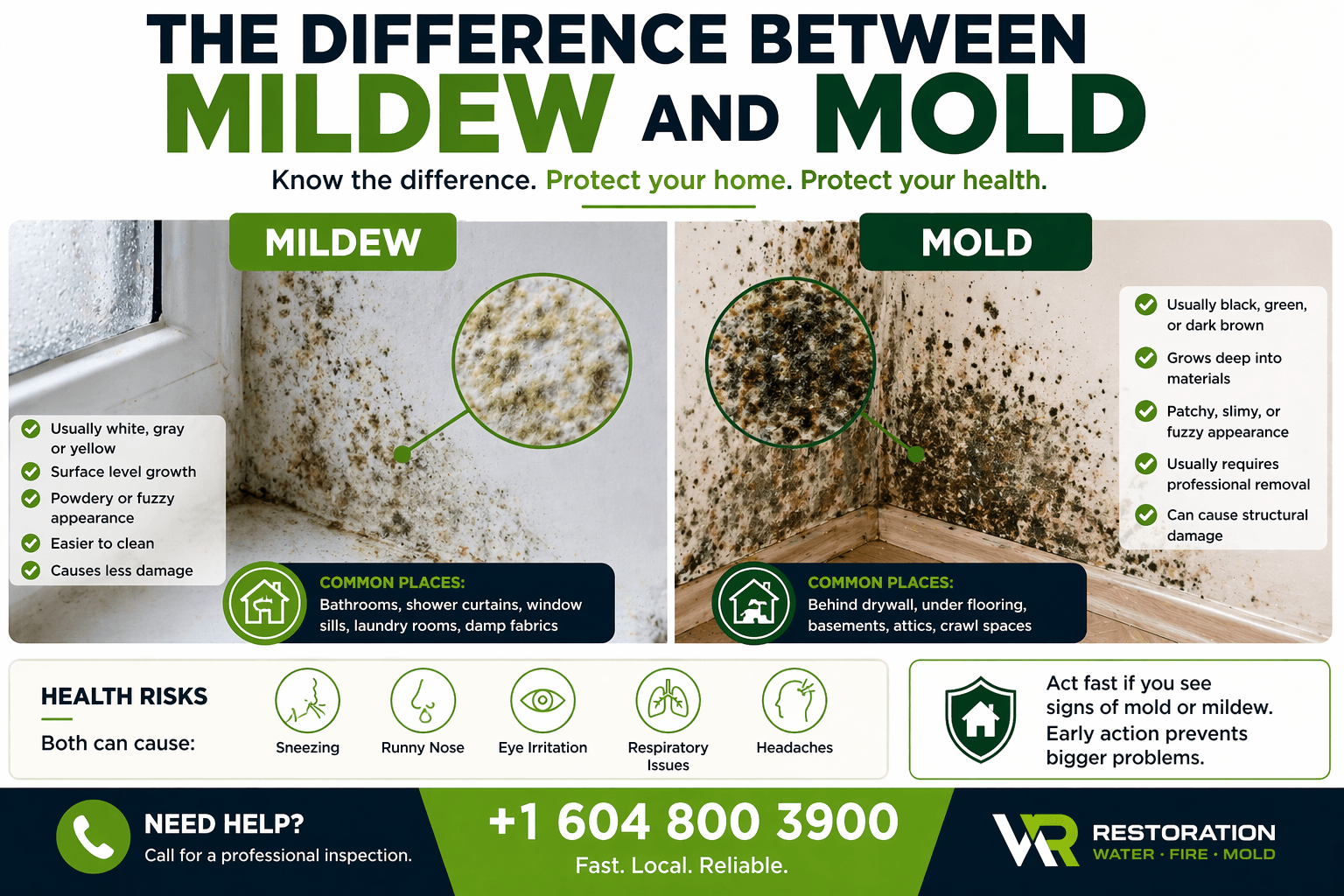
Many homeowners use the words mildew and mold interchangeably, but they are not exactly the same. While both are types of fungi that grow in damp areas, they differ in appearance, severity, health risks, and the amount of damage they can cause to a property.
Understanding the difference between mildew and mold can help you know when a simple cleaning may be enough and when you need professional mold remediation.
Call +1 604 800 3900 if you suspect mold or mildew in your home or business.
What Is Mildew?
Mildew is a type of fungus that usually grows on the surface of damp materials. It often appears as a thin, powdery, or fuzzy layer that is white, gray, or light yellow in color.
Mildew is most commonly found in bathrooms, around windows, on shower curtains, in laundry rooms, and on damp fabrics or paper products.
Because mildew usually stays on the surface, it is often easier to clean and remove than mold.
What Is Mold?
Mold is a more serious type of fungal growth that can spread deeper into materials such as drywall, wood, insulation, carpet, and ceiling tiles. Mold often appears black, green, brown, or dark gray and may have a fuzzy, slimy, or patchy texture.
Unlike mildew, mold can spread behind walls, under flooring, inside attics, and throughout hidden parts of the property.
Once mold takes hold, it often requires professional remediation to remove it completely and stop it from returning.
Main Differences Between Mildew and Mold
| Mildew | Mold |
|---|---|
| Usually white, gray, or yellow | Usually black, green, or dark brown |
| Stays on the surface | Can grow deep into materials |
| Often powdery or fuzzy | Often patchy, slimy, or fuzzy |
| Easier to clean | Usually requires professional removal |
| Causes less damage | Can damage drywall, wood, and insulation |
Where Mildew Commonly Grows
- Bathroom ceilings and walls
- Shower curtains and tile grout
- Around windows
- On damp fabrics
- Inside laundry rooms
Where Mold Commonly Grows
- Behind drywall
- Under flooring and carpets
- Inside attics and basements
- Behind cabinets and sinks
- Inside crawl spaces
- After water damage or flooding
Health Risks of Mildew and Mold
Both mildew and mold can affect indoor air quality and cause allergic reactions, coughing, sneezing, headaches, and irritation.
However, mold is usually considered more dangerous because it spreads more aggressively and can release larger amounts of spores into the air.
People with asthma, allergies, or respiratory conditions may be especially sensitive to mold exposure.
Can You Clean Mildew Yourself?
In many cases, mildew can be cleaned using household products if it is only on the surface and the area is small. However, it is important to fix the moisture source so it does not return.
If the mildew keeps coming back, spreads quickly, or covers a large area, there may be a deeper moisture problem.
When Mold Requires Professional Help
You should contact a professional if:
- The mold covers a large area
- The mold keeps returning
- You smell mold but cannot see it
- The mold is inside walls or ceilings
- The mold appeared after flooding or water damage
- Family members are experiencing health symptoms
Professional mold specialists can identify hidden moisture, remove contaminated materials, and prevent mold from returning.
How to Prevent Mold and Mildew
- Fix leaks quickly
- Use exhaust fans in bathrooms
- Keep humidity levels low
- Dry wet areas within 24 hours
- Inspect attics and basements regularly
- Improve ventilation throughout the property
Professional Mold Removal Services
If you are not sure whether you are dealing with mildew or mold, it is always better to have the property inspected.
Our team provides professional mold remediation services for homes and businesses. We also offer commercial restoration services for larger properties affected by mold or water damage.
Call +1 604 800 3900 now for fast, professional mold inspection and removal services.
Leave a Reply