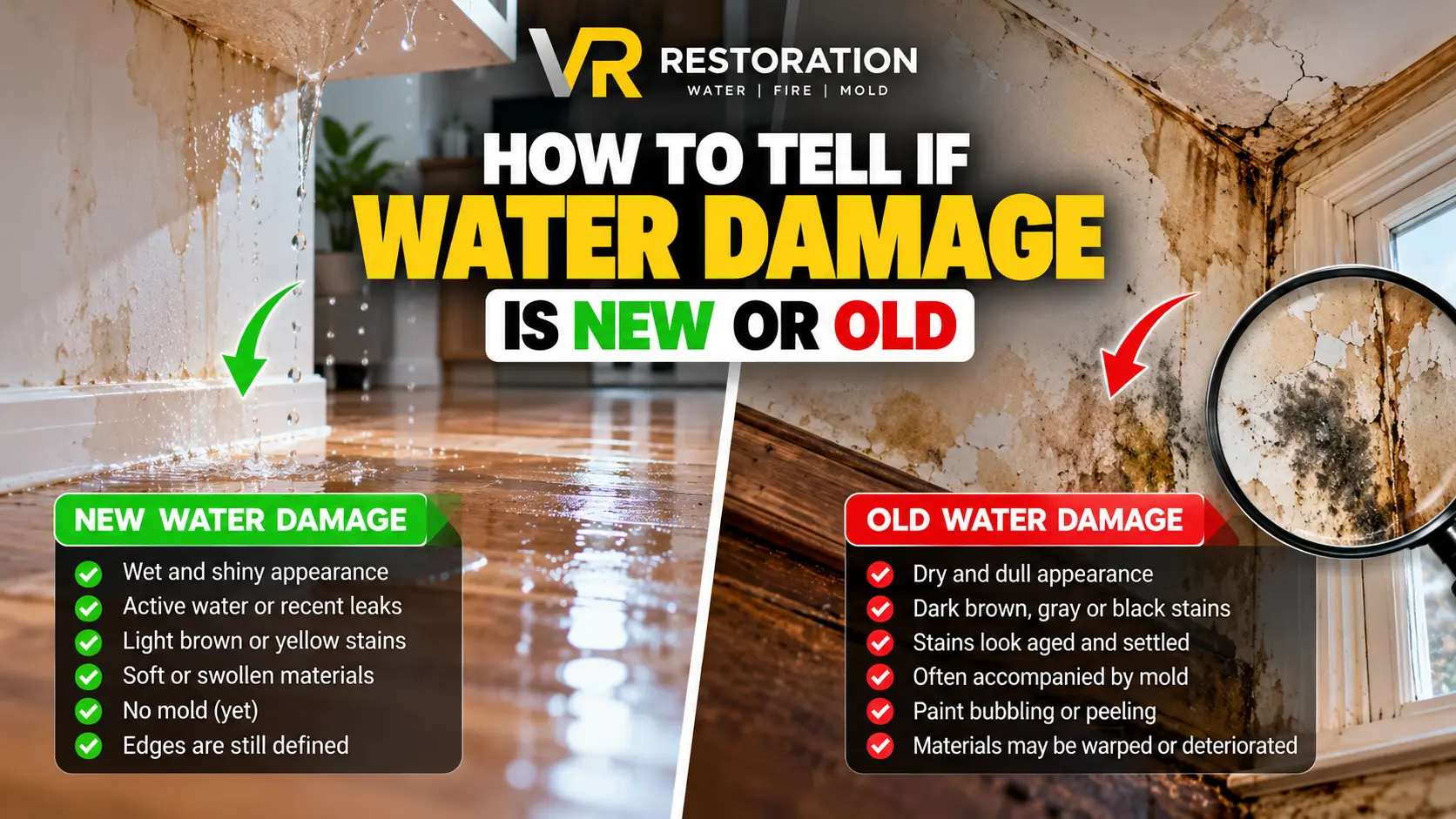
Water damage can change quickly, but the clues it leaves behind can help you determine whether the problem is new, old, or a combination of both. Fresh water damage often feels wet, looks light in colour, and changes over a short period. Older water damage is more likely to show dark rings, soft materials, warping, musty odours, or visible mold.
Knowing the difference matters because water can keep moving through drywall, insulation, flooring, cabinets, and structural framing long after the first stain appears. A mark that looks minor on the surface may be connected to a much larger moisture problem behind it.
This guide explains how to tell if water damage is new or old, which warning signs deserve immediate attention, and when professional water damage restoration is the safest choice.
Why the Age of Water Damage Matters
The age of water damage affects how a property should be inspected and restored. New damage may involve an active leak that requires immediate water extraction and structural drying. Old damage may appear dry while moisture remains trapped inside building materials. It can also point to recurring leaks, weakened drywall, damaged flooring, or mold growth.
Understanding the likely timeline can help a plumber or restoration technician locate the source faster. It also gives property owners clearer information when documenting the loss for a landlord, property manager, strata, or insurance provider.
Quick Answer: Is the Water Damage New or Old?
Water damage is more likely to be new when the affected area is wet, cool, soft, pale, or actively spreading. It is more likely to be old when the area has dark rings, yellow or brown staining, crumbling material, persistent odours, visible mold, or repeated changes after rain or plumbing use.
No single sign can provide an exact date. The most reliable assessment considers the colour, texture, smell, moisture level, source, and pattern together.
Signs of New Water Damage
1. The Area Feels Wet or Cool
Fresh water damage often feels damp, cool, or spongy. Carpet may feel wet underfoot, drywall may give under gentle pressure, and wood flooring may begin to swell along the edges. If water is dripping, pooling, or spreading, treat the situation as active even when the visible stain is small.
2. The Stain Is Light in Colour
A recent ceiling or wall stain may look pale yellow, tan, or light brown. The edge may appear clearly defined because the water has not yet moved through several wetting and drying cycles. A fresh stain may also grow noticeably within a few hours.
3. Paint Is Bubbling or Peeling
Water trapped behind paint can create bubbles, blisters, or loose sections. Wallpaper may lift at the seams. These changes can develop quickly after a roof leak, burst pipe, overflowing fixture, or failed appliance connection.
Never puncture a bulging ceiling. Waterlogged drywall can collapse, and the water may be contaminated or close to electrical wiring.
4. The Material Is Soft but Has Not Yet Crumbled
Newly wet drywall can feel soft while still holding its shape. Wood may begin to swell before it shows major warping or decay. Catching water damage at this stage may allow more materials to be dried and saved.
5. There Is Little or No Musty Odour
New water damage may smell damp without having the strong earthy odour associated with prolonged moisture. However, smell alone cannot determine age. Mold can begin developing quickly under favourable conditions, which is why fast drying is important even after a recent leak.
Signs of Old Water Damage
1. The Stain Is Dark or Has Several Rings
Older water damage often becomes darker over time. Brown, orange, copper, or yellow rings may form as water repeatedly wets and dries the same surface. Several rings can indicate a recurring roof leak, plumbing problem, condensation issue, or drainage failure rather than one isolated event.
2. Drywall Is Soft, Crumbly, or Sagging
Drywall that has absorbed water for a long time may crumble, sag, or feel chalky. The paper facing can separate, and fasteners may become visible. These changes suggest that the material has lost strength and may need to be removed.
3. Wood Is Warped, Split, or Discoloured
Prolonged moisture can cause baseboards to pull away from walls, hardwood boards to cup, and subfloors to swell. Wood may also darken around joints or fasteners. Severe softness can indicate decay and should be assessed by a qualified professional.
4. A Musty Smell Keeps Returning
A persistent earthy or musty odour is a common sign that moisture has been present for some time. The smell may be strongest inside a cabinet, near a baseboard, beneath carpet, or when the heating system turns on. If the odour returns after cleaning, the source may be hidden inside a wall cavity, under flooring, or in insulation.
5. Mold or Repeated Surface Growth Is Visible
Black, green, white, or grey spotting can indicate an ongoing moisture problem. Colour does not reveal the type of mold or its health risk, and appearance cannot provide an exact timeline. It does show that the area needs moisture control and careful assessment.
Avoid scrubbing a large affected area. Disturbing the material can spread contamination to nearby rooms.
6. The Area Looks Dry but Changes Again
Old water damage can appear dry between rainstorms, showers, or appliance cycles. If a stain expands after heavy rain or plumbing use, the leak is probably intermittent. Dated photos can help you track the pattern and give a restoration professional useful evidence.
What the Colour of a Water Stain Can Tell You
A light yellow or tan mark may indicate recent moisture, while darker brown or orange staining often suggests repeated exposure. Green, black, or grey spotting may be microbial growth. White powder on concrete or masonry can be mineral residue left behind as water evaporates.
Colour is only one clue. Dust, rust, paint, wood tannins, and contaminants can all change the appearance of a stain. A proper inspection should combine visual signs with moisture readings and an investigation of the source.
Where Hidden Water Damage Commonly Appears
- Under sinks, dishwashers, refrigerators, and washing machines
- Around toilets, tubs, showers, and supply lines
- Below roof valleys, skylights, vents, and flashing
- Behind baseboards and cabinets
- Under carpet, laminate, hardwood, and tile
- Inside exterior walls near windows and doors
- Along foundation walls and in crawl spaces
- Around heating equipment, hot water tanks, and sprinkler lines
Because water follows gravity and the easiest available path, the visible stain may be far from the original leak. A ceiling mark does not always mean the source is directly above it.
How Professionals Confirm the Extent of Water Damage
A professional inspection typically begins with the history of the problem and a careful visual assessment. Moisture meters can compare affected materials with dry reference areas. Thermal imaging may reveal temperature patterns that help locate moisture, although those patterns still need to be confirmed with direct readings.
The restoration team may also inspect adjoining rooms, flooring layers, wall cavities, cabinets, insulation, and structural materials. The goal is to map the full affected area, identify the source, and decide which materials can be dried and which need safe removal.
For more information about the drying and recovery process, review our water damage restoration services.
What to Do as Soon as You Find Water Damage
- Protect people first. Stay away from sagging ceilings, contaminated water, slippery surfaces, and electrical hazards.
- Stop the source when it is safe. Shut off a local valve or the main water supply for a plumbing leak. Do not climb onto a wet roof or enter an unstable area.
- Call emergency help when needed. Contact a plumber, roofer, electrician, or restoration company based on the source and immediate risk.
- Document the damage. Take clear photos and videos before moving items. Record when you noticed the problem and any recent storms, plumbing failures, or appliance issues.
- Move dry belongings away. Relocate furniture, boxes, fabrics, and electronics when this can be done safely.
- Begin professional drying promptly. Water may have travelled beyond what is visible. Early moisture mapping and controlled drying can reduce secondary damage.
When Water Damage Requires Professional Restoration
Professional water damage restoration is strongly recommended when water affects a large area, reaches electrical components, comes from a sewage backup, or has been present for an unknown length of time. You should also call when a ceiling is sagging, hardwood is lifting, drywall is crumbling, or a musty smell has no obvious source.
Residents seeking local assistance can learn more about water damage restoration in West Vancouver. Homeowners and businesses farther east can also explore water damage services across the Tri Cities. Local experience is valuable because building designs, rainfall, drainage conditions, and common leak sources vary between communities.
Can Old Water Damage Become Active Again?
Yes. A dry or painted stain does not prove that the original source was repaired. A failed roof detail, cracked pipe, worn shower seal, or drainage problem can allow water to return during the next storm or plumbing cycle.
Cosmetic repairs should only begin after the source has been corrected and the materials have reached appropriate moisture levels. Painting too early can hide warning signs and trap moisture inside the assembly.
Can You Handle Water Damage Yourself?
A very small amount of clean water on a hard, nonporous surface may be manageable if the source is stopped immediately and the area is dried completely. More extensive damage requires special care. Water can enter insulation, wall cavities, subflooring, and other spaces that ordinary fans cannot dry reliably.
Do not attempt cleanup when the water may contain sewage, chemicals, or outdoor flood contamination. Avoid wet areas near outlets, appliances, lighting, or the electrical panel. When in doubt, keep the area clear and contact qualified help.
Frequently Asked Questions
How quickly can mold grow after water damage?
Mold can begin developing quickly when moisture, warmth, and an organic food source are present. Conditions differ from one property to another, so drying should begin as soon as possible rather than waiting for visible growth.
Does a dry stain mean the leak is fixed?
No. The surface may be dry while moisture remains inside insulation, framing, or subflooring. A dry stain can also be evidence of a recurring leak that is inactive only at that moment.
Can I paint over a water stain?
Only after the source has been repaired, the area has been fully dried, and damaged materials have been assessed. Paint is a finishing step, not a solution for trapped moisture.
How do I know if water is behind a wall?
Possible signs include bubbling paint, soft drywall, loose baseboards, staining, musty odours, and changes in wall temperature. Professional moisture readings can help confirm whether water is present.
Should I replace water damaged drywall?
It depends on the water source, exposure time, material condition, and whether the drywall can be dried safely. Crumbling, sagging, contaminated, or mold affected drywall often needs removal.
What if I cannot tell whether the damage is new or old?
Treat uncertain water damage as a current concern. A professional inspection can determine whether moisture is active, map the affected area, and recommend the right next step.
The Bottom Line
Fresh water damage is more likely to feel wet, look light, and change quickly. Older water damage is more likely to show dark rings, weakened material, warping, persistent odours, or visible mold. Many real situations include both, especially when a slow leak has continued unnoticed.
If you notice any of these signs, act promptly. Stop the source when it is safe, document the damage, avoid electrical hazards, and arrange a professional assessment. Fast action can protect the structure, reduce restoration costs, and help your home or business return to a safe and comfortable condition.
Leave a Reply