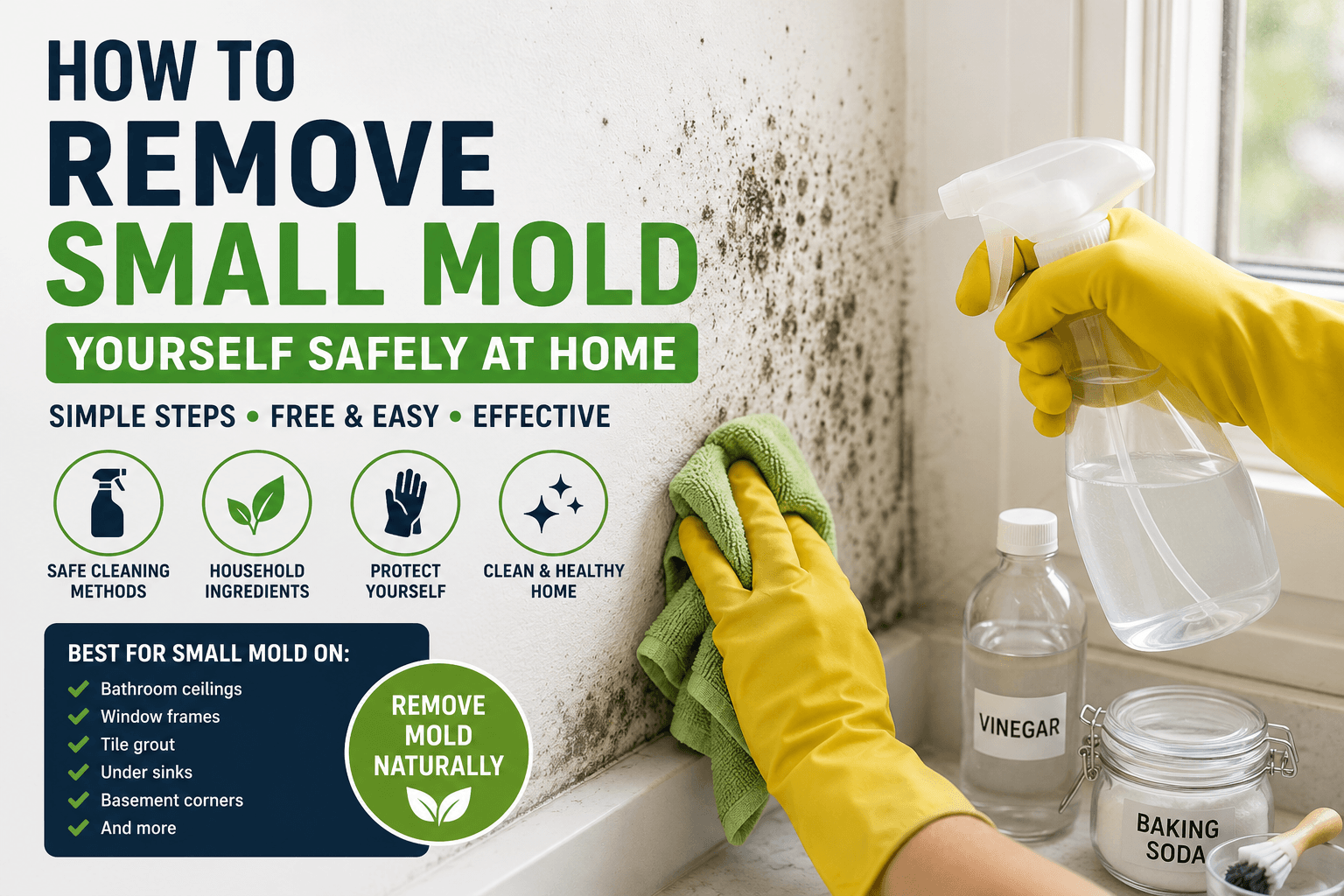
Finding small mold spots in your home can be frustrating, but not every mold problem requires major restoration work. In some cases, small surface mold can be cleaned safely using simple household products if the affected area is limited and there is notel:+16048003900 major water damage.
This guide explains how to remove small mold yourself, when it is safe to handle on your own, and when you should call professionals.
Need help with larger mold problems? Call +1 604 800 3900 for a free inspection and fast professional assistance.
When You Can Remove Mold Yourself
DIY mold cleaning may be possible if:
- The mold area is small
- The mold is only on the surface
- There is no strong ongoing moisture problem
- The affected area is not inside walls or ceilings
- No one in the home has serious respiratory issues
If mold keeps coming back or spreads quickly, there may be hidden moisture damage that requires professional inspection.
What You Need Before Cleaning Mold
Before starting, gather basic protective and cleaning supplies:
- Rubber gloves
- Protective mask
- Safety glasses
- Spray bottle
- Microfiber cloths or paper towels
- Small brush or sponge
- Fan or ventilation
Best Household Products for Small Mold Removal
| Product | Best For |
|---|---|
| White Vinegar | General surface mold cleaning |
| Baking Soda | Odor removal and light mold |
| Hydrogen Peroxide | Bathroom surfaces and tiles |
| Dish Soap & Warm Water | Basic cleaning of small spots |
Step by Step: How to Remove Small Mold Yourself
1. Improve Ventilation
Open windows and use fans to improve airflow before cleaning.
2. Wear Protection
Always wear gloves and a mask to avoid breathing in mold spores.
3. Apply Cleaning Solution
Spray white vinegar or another cleaning solution directly onto the moldy area.
4. Let It Sit
Allow the solution to sit for 10 to 15 minutes so it can break down the mold.
5. Scrub the Surface
Use a sponge or soft brush to gently scrub the affected area.
6. Dry the Area Completely
Moisture is what causes mold to return. Dry the area fully after cleaning.
Where Small Mold Commonly Appears
- Bathroom ceilings
- Window frames
- Tile grout
- Under sinks
- Basement corners
- Around washing machines
What You Should NOT Do
- Do not paint over mold
- Do not ignore musty smells
- Do not use excessive water
- Do not disturb large mold areas
- Do not mix cleaning chemicals
Signs the Mold Problem Is More Serious
You should contact professionals if:
- The mold covers a large area
- The smell keeps returning
- Mold is inside walls or ceilings
- You recently had water damage or flooding
- Family members experience allergies or breathing issues
How to Prevent Mold From Returning
- Fix leaks immediately
- Improve ventilation
- Use dehumidifiers
- Dry wet areas quickly
- Inspect bathrooms and basements regularly
Professional Mold Inspection and Removal
While small surface mold may sometimes be cleaned yourself, hidden mold problems often require professional help.
We provide complete mold remediation services and professional commercial restoration services across Metro Vancouver.
Free Mold Inspection
If you are unsure whether your mold problem is serious, we offer free inspections with fast 24/7 response.
Call +1 604 800 3900 now for professional mold cleaning and inspection services.
Leave a Reply