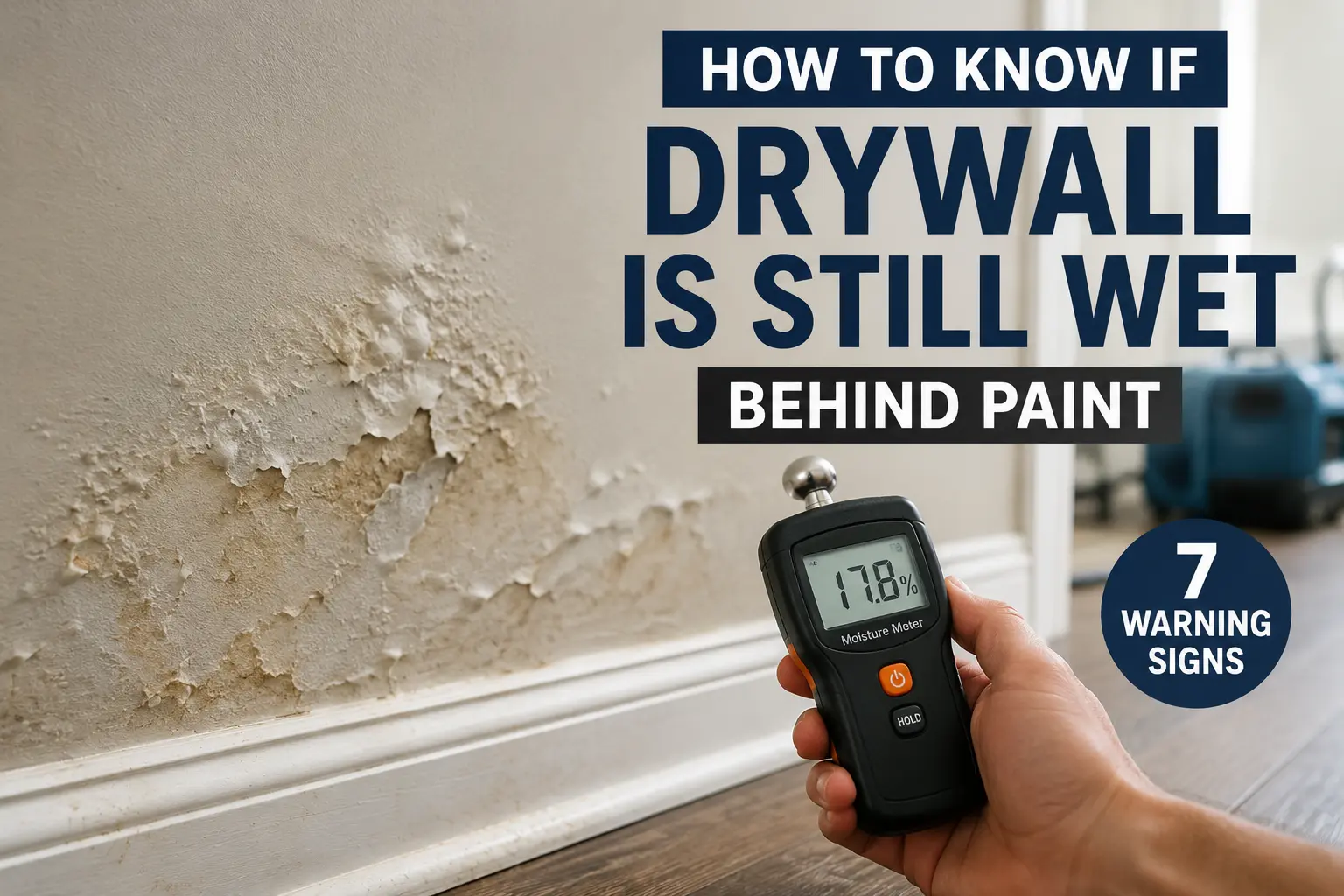
Drywall can look completely normal on the surface while moisture remains trapped behind the paint. This often happens after a plumbing leak, roof leak, overflowing fixture, basement water problem or other type of water damage.
If you are trying to figure out how to tell if drywall is wet, there are several warning signs to watch for. Some are visible, while others require moisture detection equipment to confirm what is happening inside the wall.
Hidden moisture should not be ignored. Wet drywall can weaken over time, damage paint and baseboards, create musty odours and increase the risk of mold growth if the affected area does not dry properly.
Can Drywall Stay Wet Behind Paint?
Yes. Drywall is porous and can absorb moisture from leaks, flooding and condensation.
Paint can sometimes make the surface appear dry even while moisture remains inside the drywall or behind it. This is one reason water damage can be difficult to identify without a proper inspection.
Moisture may also become trapped between drywall, insulation and wall framing.
7 Signs Drywall May Still Be Wet Behind Paint
1. Paint Is Bubbling or Blistering
Bubbling paint is one of the most common signs that moisture may be present behind the surface.
Water can weaken the bond between paint and drywall, causing bubbles, blisters or raised areas to appear.
If the paint was previously smooth and suddenly begins bubbling after a leak, the drywall should be checked for moisture.
2. Paint Is Peeling or Flaking
Moisture can cause paint to lose adhesion.
You may notice peeling, cracking or flaking around the affected area. This is especially common near ceilings, baseboards, windows and plumbing fixtures.
3. The Wall Feels Soft
Drywall that has absorbed a significant amount of water may begin to soften.
If the wall feels unusually soft, weak or flexible when lightly touched, moisture damage may be present.
Avoid pushing hard on damaged drywall because heavily saturated material can break apart.
4. You See Discolouration or Water Stains
Yellow, brown or darker patches on painted drywall can indicate previous or ongoing water exposure.
Water stains may appear after the surface begins drying, so they do not always tell you whether moisture is still active. However, they are an important sign that the area should be inspected.
5. You Notice a Musty Smell
A musty or damp smell near a wall can be a warning sign of hidden moisture.
If the smell is strongest near one section of drywall, baseboard or corner, moisture may still be present behind the painted surface.
Persistent musty odours can also indicate conditions that support mold growth.
6. Baseboards Begin to Swell or Separate
Water inside a wall often travels downward.
If baseboards begin swelling, warping, separating from the wall or showing stains, the drywall behind them may still be wet.
This is common after plumbing leaks, appliance leaks and water intrusion near floor level.
7. The Wall Feels Cooler Than Surrounding Areas
Wet materials can sometimes feel cooler than nearby dry surfaces because moisture affects temperature.
A cool spot does not automatically confirm water damage, but it can be one clue when combined with staining, bubbling paint or a musty smell.
How to Check If Drywall Is Still Wet
Visual signs can be useful, but hidden moisture is not always obvious.
Professional restoration technicians may use specialized equipment to determine whether drywall and nearby materials are still wet.
Use a Moisture Meter
A moisture meter can help measure elevated moisture levels inside drywall and other building materials.
These tools are especially useful when the surface looks dry but water damage is still suspected.
Use Thermal Imaging
Thermal imaging cameras can help identify temperature differences that may indicate hidden moisture.
Thermal imaging does not directly see water, but it can help identify areas that require closer inspection with a moisture meter.
Inspect Nearby Materials
Moisture inside drywall often affects surrounding materials too.
Check for:
- Swollen baseboards
- Damaged flooring
- Wet insulation
- Peeling paint
- Musty odours
- Visible mold
- Water stains
How Long Does Drywall Stay Wet After a Leak?
There is no single drying time for wet drywall.
Drying time depends on several factors, including:
- How much water entered the wall
- How long the leak continued
- Indoor humidity
- Air circulation
- Whether insulation is wet
- The temperature inside the property
- Whether professional drying equipment is being used
Drywall may feel dry on the surface while moisture remains inside the wall cavity.
Can Wet Drywall Dry on Its Own?
Small amounts of moisture may dry naturally in some situations, but you should not assume wet drywall will always dry properly on its own.
Limited airflow, wet insulation and high humidity can slow the drying process.
When water has entered a wall cavity, professional air movement and dehumidification may be required to dry the area properly.
Does Wet Drywall Need to Be Replaced?
Not every piece of wet drywall needs to be replaced.
The decision depends on:
- How wet the drywall became
- How long it remained wet
- Whether the material is still structurally sound
- The source of the water
- Whether contamination is present
- Whether mold growth has developed
Drywall that is soft, sagging, heavily stained, contaminated or structurally damaged may need to be removed.
Drywall exposed to contaminated water should be evaluated more carefully because cleaning alone may not be appropriate.
Can Wet Drywall Cause Mold?
Yes. Persistent moisture inside drywall can create conditions that support mold growth.
Mold can develop on the drywall paper, wood framing, insulation and other materials inside the wall cavity.
Because these areas are hidden, mold may begin developing before it becomes visible on the painted surface.
If you suspect mold after a leak, learn more about our mold remediation services .
What Happens If Wet Drywall Is Painted Over?
Painting over wet drywall does not solve the moisture problem.
New paint may temporarily hide stains, but trapped moisture can cause the paint to bubble, peel or fail again.
If moisture remains inside the wall, it can also continue affecting drywall, insulation and framing.
The area should be properly dried before repairs and repainting are completed.
Can Water Be Hidden Behind Drywall Without Any Stains?
Yes. Water can remain behind drywall without immediately creating visible stains.
This can happen when:
- A slow plumbing leak is inside the wall
- Water enters from another floor
- Insulation absorbs the moisture
- The leak is located behind cabinets
- Water travels along framing before becoming visible
In these situations, moisture detection equipment can be especially helpful.
Common Causes of Wet Drywall Behind Paint
Hidden drywall moisture can come from many different sources.
- Burst pipes
- Slow plumbing leaks
- Roof leaks
- Window leaks
- Bathroom leaks
- Shower or bathtub leaks
- Toilet overflows
- Appliance leaks
- Basement flooding
- Water entering through exterior walls
- Condensation problems
What Should You Do If You Think Drywall Is Still Wet?
If you suspect hidden moisture behind painted drywall, the first step is to identify and stop the water source.
Then:
- Look for bubbling, peeling or discoloured paint.
- Check nearby baseboards and flooring for damage.
- Pay attention to musty or damp odours.
- Avoid painting over the affected area.
- Do not assume the wall is dry based only on the surface.
- Arrange a moisture inspection if the source or extent of the damage is unclear.
How Professionals Dry Wet Drywall
The correct drying process depends on the extent of the water damage.
Professional water damage restoration may include:
- Moisture detection
- Water extraction
- Air movers
- Dehumidification
- Removal of wet insulation
- Removal of damaged drywall when necessary
- Structural drying
- Moisture monitoring
- Cleaning and sanitization where required
The goal is to make sure moisture is removed from the affected building materials, not just from the visible surface.
Can Water Behind Drywall Spread to the Floor?
Yes. Water inside a wall can travel downward into baseboards, flooring and the subfloor.
If you suspect water has moved underneath your flooring, read our guide on how to tell if water is trapped under your floor .
What If the Drywall Is Wet Near the Basement Floor?
Moisture near the bottom of basement walls can be caused by plumbing leaks, groundwater, foundation seepage or basement flooding.
If water is entering from below, you may also want to read our guide on why water may be coming up through your basement floor .
When Should You Call a Water Damage Restoration Company?
Professional help is recommended when the source of the water is unclear, moisture is hidden inside the wall or multiple building materials are affected.
You should consider calling a restoration company if:
- The drywall feels soft or unstable
- Paint continues bubbling or peeling
- You smell persistent musty odours
- The leak affected insulation
- Water has spread into flooring
- You suspect mold
- The wall remains wet after several days
- The water came from a contaminated source
VR Restoration provides professional water damage restoration services throughout Metro Vancouver and surrounding communities.
Professional Moisture Detection and Water Damage Restoration
Hidden moisture can be difficult to identify without the right equipment.
VR Restoration can inspect water damaged areas, identify elevated moisture levels and determine what materials may require drying, removal or restoration.
Our water damage restoration process can include moisture detection, water extraction, structural drying, dehumidification and restoration of affected areas.
Frequently Asked Questions About Wet Drywall
How can you tell if drywall is still wet behind paint?
Warning signs include bubbling paint, peeling paint, soft drywall, water stains, musty odours, swollen baseboards and cooler areas on the wall. A moisture meter can help confirm whether elevated moisture remains.
Can drywall be wet without showing a stain?
Yes. Moisture can remain inside drywall or behind it without creating an immediate visible stain.
How do professionals test drywall for moisture?
Restoration professionals commonly use moisture meters, thermal imaging and visual inspection to identify areas with elevated moisture.
Will wet drywall dry without being removed?
Sometimes, depending on the amount of moisture and how quickly drying begins. Severely saturated, contaminated or damaged drywall may need to be removed.
Can you paint over wet drywall?
No. Painting over wet drywall can trap moisture and lead to bubbling, peeling and continued water damage.
How long does wet drywall take to dry?
Drying time varies based on moisture levels, airflow, humidity, insulation and the extent of the water damage. Professional drying can take several days in more significant cases.
Can wet drywall cause mold behind the wall?
Yes. Persistent moisture can create conditions that support mold growth on drywall, insulation and framing inside the wall cavity.
Should wet drywall always be replaced?
No. Some drywall can be dried and saved, while heavily damaged, contaminated or structurally weakened drywall may need replacement.
Think Your Drywall Is Still Wet?
If your wall looks dry but you are still seeing bubbling paint, stains, swelling or musty odours, hidden moisture may still be present behind the surface.
VR Restoration provides professional moisture detection, structural drying and water damage restoration services for residential and commercial properties.
Need help checking for hidden moisture?
Call VR Restoration at
604 800 3900
for professional water damage assistance.
Leave a Reply