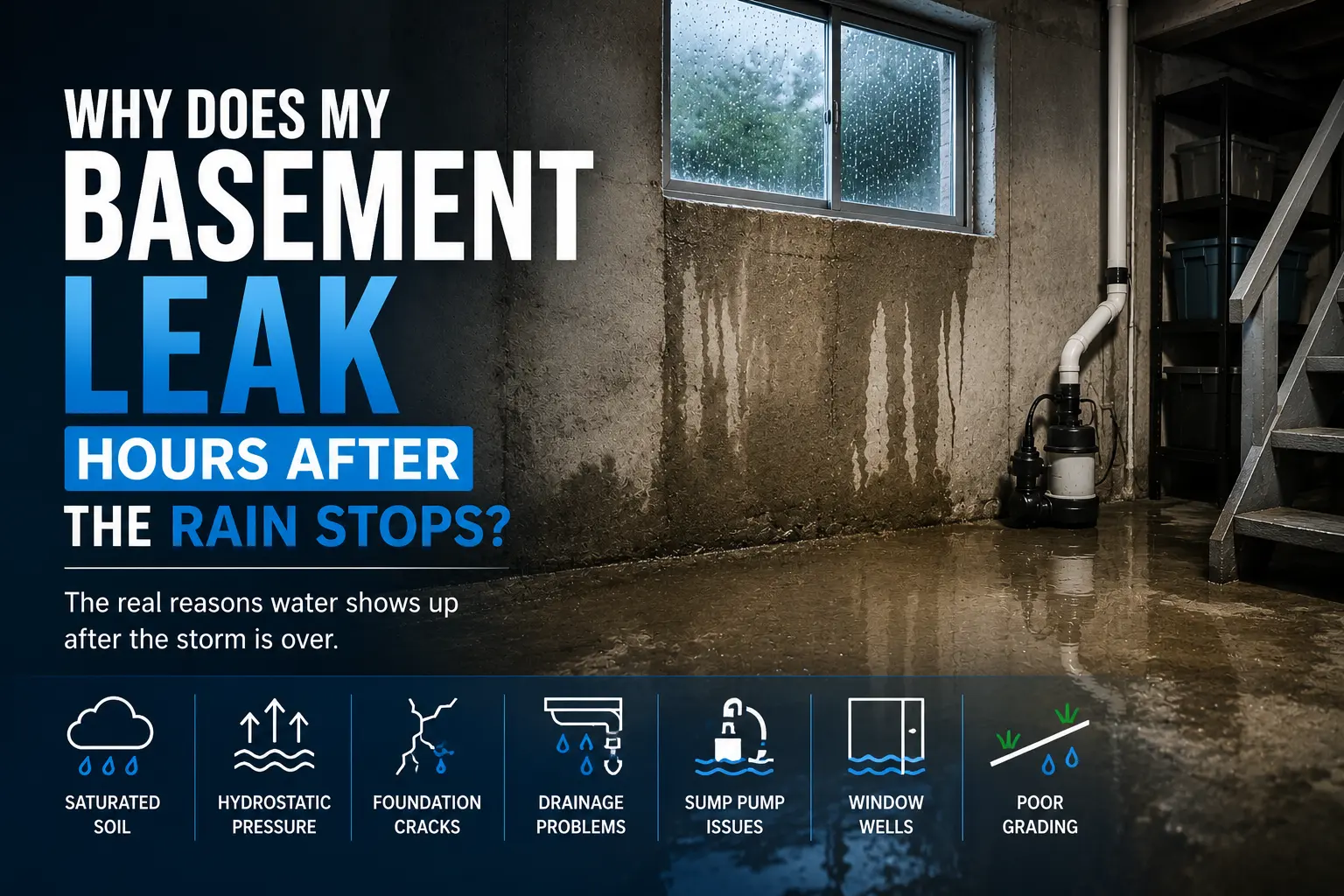
It can be confusing to see a basement stay dry during a storm and then start leaking several hours after the rain has stopped. In many homes, this happens because water continues moving through saturated soil and building up pressure around the foundation even after the weather clears.
If your basement leaks after the rain stops, the delay can provide an important clue about where the water is coming from. Common causes include hydrostatic pressure, groundwater, foundation cracks, drainage problems, sump pump issues and water entering through the wall and floor joint.
This guide explains why basement water can appear later, what signs to look for and when professional water damage restoration may be needed.
Why Can Basement Water Show Up Hours After Rain?
Rain does not stop affecting the ground the moment the storm ends. Water can continue soaking into the soil around your home for hours.
As the soil becomes saturated, pressure can build around the foundation. Water may then find its way through cracks, joints and weak points in the basement.
This delayed movement of water is one reason a basement may look fine during the storm and become wet later.
7 Reasons Your Basement May Leak After the Rain Stops
1. Hydrostatic Pressure Keeps Building
Hydrostatic pressure is one of the most common reasons basement water appears after rain.
When the soil around your foundation becomes saturated, water pressure can continue increasing even after rainfall ends.
That pressure can force moisture through:
- Foundation cracks
- Basement floor cracks
- Wall and floor joints
- Porous concrete
- Weak waterproofing areas
The delay happens because it takes time for rainwater to move deeper into the soil and reach the foundation.
2. Groundwater Levels Rise Slowly
Groundwater does not always rise immediately during a storm.
After prolonged or heavy rain, the water table may continue rising for several hours. If groundwater reaches the level of your basement slab or foundation, water can begin entering from below or around the edges.
This is especially common in lower lying properties or areas with poor natural drainage.
3. Foundation Cracks Allow Delayed Seepage
Small foundation cracks may not leak immediately when rain begins.
Once the surrounding soil becomes saturated and pressure increases, water can slowly begin moving through those cracks.
If water repeatedly appears in the same area after rain, a foundation crack may be involved.
4. Water Enters Through the Wall and Floor Joint
The joint where the basement wall meets the floor is a common entry point for moisture.
Water may collect around this area after the soil outside becomes saturated.
If you notice water appearing along the perimeter of the basement several hours after rain, the wall and floor joint should be inspected.
5. Foundation Drainage Is Slow or Blocked
Many homes have drainage systems designed to move water away from the foundation.
If those systems are partially blocked, damaged or overwhelmed, water may remain around the foundation longer than it should.
The result can be delayed basement leakage after the storm has already passed.
6. Poor Grading Keeps Water Near the House
The ground around your home should slope away from the foundation.
If the soil slopes toward the house, rainwater can collect near the basement walls and continue soaking downward after the rain stops.
This can increase groundwater pressure and contribute to delayed leaks.
7. Your Sump Pump Is Falling Behind
A sump pump may continue running long after heavy rain.
If the pump is too small, partially blocked or beginning to fail, groundwater may rise faster than the system can remove it.
In this situation, basement water may appear later rather than during the storm itself.
How Long After Rain Can a Basement Start Leaking?
There is no exact timeline.
Water may appear within minutes, several hours later or even the next day depending on:
- How much rain fell
- How saturated the soil already was
- The type of soil around the property
- Groundwater levels
- Foundation condition
- Drainage performance
- Sump pump capacity
Clay based soils, poor drainage and prolonged rainfall can all contribute to slower water movement and delayed basement seepage.
Why Does the Basement Leak Only After Heavy Rain?
If your basement stays dry during light rain but leaks after major storms, the problem may be related to the amount of water entering the ground.
Heavy rain can overwhelm:
- Foundation drains
- Sump pumps
- Exterior drainage systems
- Gutters and downspouts
- Soil drainage capacity
Once those systems can no longer move water away fast enough, pressure can build around the foundation.
Where Does Delayed Basement Water Usually Appear?
The location of the water can help identify the likely source.
Along the Basement Walls
Water along the walls may indicate foundation cracks, exterior drainage issues or water entering through the wall and floor joint.
In the Middle of the Floor
Water appearing through the floor can be related to groundwater pressure, slab cracks or moisture beneath the concrete.
You can learn more in our guide about why water may come up through a basement floor .
Near a Floor Drain
Water around a floor drain may indicate a drainage backup or sewer related issue.
If the water has an unusual smell or contains debris, avoid direct contact and seek professional assistance.
Near Windows
Basement windows and window wells can collect water during heavy rain.
Poor drainage around the window well can allow moisture to enter around the frame or surrounding wall.
How to Tell If the Leak Is Groundwater or Plumbing
Timing is one of the best clues.
If the basement becomes wet only after rain, groundwater or exterior drainage is more likely.
If water appears during dry weather, possible causes include:
- Plumbing leaks
- Appliance leaks
- Broken underground pipes
- Drain backups
A professional moisture inspection can help determine which source is more likely.
What Should You Do When the Basement Starts Leaking After Rain?
If you discover water in your basement after a storm, act quickly but safely.
- Avoid standing water near electrical outlets or appliances.
- Move furniture and stored items away from wet areas.
- Take photos of the water damage.
- Check the sump pump if your home has one.
- Look for visible cracks or water entry points.
- Check gutters and downspouts outside.
- Begin drying the affected area if it is safe to do so.
- Contact a restoration professional if water is spreading or hidden moisture is suspected.
Do Not Assume the Basement Is Dry When the Surface Looks Dry
One of the biggest problems with basement water damage is hidden moisture.
Water can move into:
- Drywall
- Insulation
- Baseboards
- Flooring
- Subflooring
- Wall cavities
The visible water may disappear while these materials remain damp.
If drywall was affected, read our guide on how to know if drywall is still wet behind paint .
Can Delayed Basement Leaks Cause Mold?
Yes. Repeated basement moisture can create conditions that support mold growth.
Mold can develop on drywall, wood framing, carpet, insulation, stored boxes and other porous materials.
Basements are particularly vulnerable because they often have lower airflow and higher humidity than other areas of the home.
If you suspect mold after repeated basement water damage, learn more about our mold remediation services .
How Professionals Find Hidden Basement Moisture
Water may travel farther than the visible wet area.
Restoration technicians may use:
- Moisture meters
- Thermal imaging
- Visual inspection
- Targeted wall or flooring inspection
The goal is to determine how far the moisture has travelled and which materials require drying or removal.
How Is a Wet Basement Professionally Dried?
Depending on the extent of the water damage, professional restoration may include:
- Water extraction
- Moisture detection
- Removal of damaged materials
- Air movers
- Dehumidification
- Structural drying
- Cleaning and sanitization
- Ongoing moisture monitoring
Drying the visible water is only part of the process. Moisture inside drywall, insulation and flooring must also be addressed.
You can also read our guide on how to dry a wet basement before mold develops .
How to Reduce the Risk of Basement Leaks After Rain
The correct solution depends on the source, but several maintenance steps can help reduce water around the foundation.
- Keep gutters clean
- Extend downspouts away from the foundation
- Make sure soil slopes away from the home
- Inspect visible foundation cracks
- Maintain the sump pump
- Keep window wells clear
- Address drainage problems
- Monitor the basement after heavy rain
Why Basement Leaks After Rain Matter in Metro Vancouver
Homes throughout Metro Vancouver experience periods of prolonged and heavy rainfall.
When soil remains saturated for extended periods, foundation drainage systems may have to handle large amounts of groundwater.
Older homes, properties with poor grading and basements with previous moisture problems may be especially vulnerable to delayed water intrusion.
If your basement begins leaking after heavy rain, it is important to identify whether the problem is a one time event or a recurring drainage issue.
When Should You Call a Water Damage Restoration Company?
Professional restoration should be considered when water has spread beyond a small area or may have entered hidden building materials.
You should consider professional help if:
- The basement keeps leaking after rain
- Water is spreading across the floor
- Drywall or insulation is wet
- Flooring is damaged
- You smell a musty odour
- The source of the water is unclear
- You suspect hidden moisture
- The water may be contaminated
VR Restoration provides professional water damage restoration services throughout Metro Vancouver and surrounding communities.
Frequently Asked Questions About Basement Leaks After Rain
Why does my basement leak after the rain has already stopped?
Rainwater can continue moving through saturated soil for hours after a storm. This can increase groundwater and hydrostatic pressure around the foundation, causing delayed basement leakage.
Can a basement start leaking the next day after rain?
Yes. Depending on soil conditions, groundwater levels and drainage, basement water may appear several hours or even a day after heavy rain.
Why does my basement only leak after very heavy rain?
Heavy rainfall can overwhelm foundation drainage, sump pumps and soil drainage capacity. Once the surrounding ground becomes saturated, water pressure may increase enough to enter the basement.
Is water after rain always a foundation problem?
No. Foundation cracks are one possible cause, but poor grading, clogged drainage, sump pump problems, window wells and groundwater can also contribute.
Can basement water after rain cause mold?
Yes. Persistent or recurring moisture can create conditions that support mold growth on drywall, wood, insulation and other materials.
Should I use a dehumidifier after a basement leak?
A dehumidifier can help reduce indoor humidity, but it may not be enough if standing water or significant moisture remains inside building materials.
How do I know if moisture is still hidden inside my basement walls?
Signs can include bubbling paint, soft drywall, swollen baseboards, musty odours and staining. Moisture meters and thermal imaging can help identify hidden moisture.
What if the basement keeps leaking every time it rains?
Repeated leakage usually means an underlying drainage, groundwater or foundation issue has not been resolved. The source should be investigated before more damage develops.
Basement Leaking After the Rain Stops?
If water appears several hours after a storm, do not assume the problem is over simply because the rain has stopped.
Groundwater and saturated soil can continue affecting your foundation long after the weather clears.
VR Restoration provides professional water extraction, moisture detection, structural drying and water damage restoration services throughout Metro Vancouver.
Need help with basement water damage?
Call VR Restoration at
604 800 3900
for professional assistance.
Leave a Reply