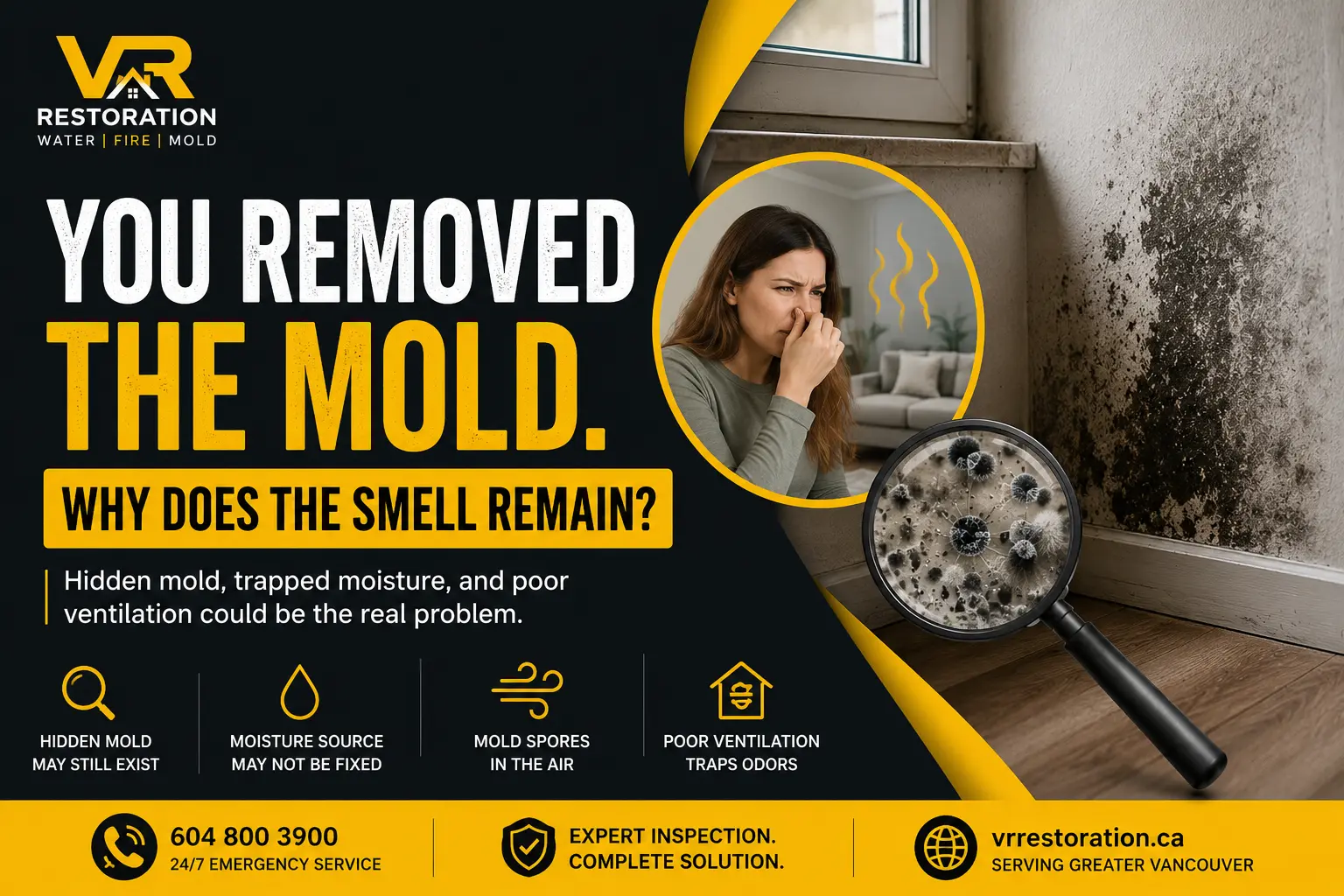
You cleaned the visible mold, wiped the surface, opened the windows, and maybe even used vinegar or other cleaning products. But the musty smell is still there. This is a common problem for many homeowners, and it usually means the mold issue was not fully solved.
A mold smell that remains after cleaning can be a sign of hidden mold, trapped moisture, contaminated materials, or poor ventilation. Even if the surface looks clean, mold spores and odors can stay behind walls, under flooring, inside insulation, or in damp areas that were never properly dried.
Call +1 604 800 3900 for a free mold inspection and professional assessment.
Why Mold Smell Can Stay After Cleaning
Mold odor usually comes from moisture and microbial growth. If the smell remains after cleaning, the root cause may still be active. Surface cleaning may remove what you can see, but it does not always remove hidden contamination.
The most common reasons include hidden mold behind walls, wet building materials, trapped odor in porous surfaces, or a moisture problem that was never fixed.
1. Hidden Mold May Still Be Growing
Visible mold is often only part of the problem. Mold can grow behind drywall, under cabinets, beneath flooring, inside wall cavities, and around plumbing lines. If hidden mold remains, the smell will continue even after the visible area has been cleaned.
- Behind bathroom walls
- Under kitchen cabinets
- Inside basement drywall
- Under carpet or flooring
- Inside attic insulation
- Behind baseboards
2. The Moisture Source Was Not Fixed
Mold needs moisture to grow. If the water source is still present, the smell will return again and again. This is why cleaning alone is not enough.
Common moisture sources include leaking pipes, roof leaks, window condensation, foundation seepage, bathroom humidity, and previous water damage that was never fully dried.
If your mold problem started after a leak or flood, visit our water damage restoration services page to learn how professional drying helps prevent mold from returning.
3. Porous Materials May Still Hold Mold Odor
Some materials absorb moisture and odor deeply. Even after surface cleaning, the smell may remain inside the material.
| Material | Why Odor Remains |
|---|---|
| Drywall | Absorbs moisture and can hold mold inside the paper backing |
| Carpet | Traps moisture, spores, and odor in fibres and underpad |
| Wood | Can absorb water and develop deep microbial growth |
| Insulation | Holds moisture and may need removal if contaminated |
| Fabric and furniture | Can trap musty odor even after surface cleaning |
4. Mold Spores May Still Be in the Air
When mold is disturbed during cleaning, spores can become airborne. These spores may travel to other rooms and continue affecting indoor air quality.
If the smell remains throughout the home, air quality testing may help identify whether mold spores are still present in the air.
5. Poor Ventilation Can Trap the Smell
Bathrooms, basements, laundry rooms, crawl spaces, and attics often have poor airflow. When air does not move properly, moisture and odor stay trapped.
Even if the mold has been cleaned, the smell may remain because the space is still damp or poorly ventilated.
6. HVAC Systems Can Spread Mold Odor
If mold spores or musty odors enter your heating or cooling system, the smell can spread through vents. This can make the entire property smell damp, even if the original mold area was small.
If the odor becomes stronger when the furnace or air conditioner runs, your HVAC system may need inspection.
7. Previous Water Damage Was Never Fully Dried
Water damage can hide inside walls, floors, and ceilings. A room may look dry on the surface while moisture remains trapped inside building materials.
This hidden moisture can continue creating musty odors and mold growth long after the original leak or flood.
Signs the Mold Problem Is Still Active
- The musty smell returns after cleaning
- The smell is stronger in one room
- Walls or floors feel damp
- Paint is peeling or bubbling
- There are water stains on ceilings or walls
- Allergy symptoms get worse indoors
- Mold keeps coming back in the same area
What You Should Not Do
- Do not paint over mold stains
- Do not ignore musty smells
- Do not use heavy moisture while cleaning
- Do not cover damaged areas with furniture or flooring
- Do not assume the problem is solved because visible mold is gone
How Professionals Find the Source of Mold Odor
Professional mold specialists do more than clean the surface. They look for the source of the smell and the moisture problem causing it.
- Moisture meter inspection
- Thermal imaging
- Visual inspection of hidden areas
- Humidity testing
- Air quality testing when needed
- Inspection of drywall, flooring, attic, and basement areas
When Mold Remediation Is Needed
If mold has spread into building materials or hidden spaces, basic cleaning may not be enough. Professional remediation may be required to safely remove contaminated materials, clean affected areas, dry the structure, and prevent future growth.
Learn more about our mold remediation services.
Commercial Mold Odor Problems
Musty odors in offices, stores, rental properties, warehouses, and commercial buildings can affect employees, customers, and tenants. Mold smell in a business should be inspected quickly to avoid health concerns, complaints, and property damage.
For business properties, visit our commercial restoration services.
How to Prevent Mold Smell From Coming Back
- Fix leaks immediately
- Dry wet areas within 24 hours
- Improve bathroom and kitchen ventilation
- Use a dehumidifier in damp areas
- Check attics, basements, and crawl spaces regularly
- Replace contaminated porous materials when needed
- Schedule professional inspection after water damage
Free Mold Inspection and Professional Help
If you removed the mold but the smell remains, there may still be hidden mold or moisture inside your home. The sooner you identify the source, the easier and more affordable it is to fix.
Call +1 604 800 3900 today for a free mold inspection, fast response, and professional mold removal support.
We help homeowners and businesses find the real cause of mold odor and restore a cleaner, healthier indoor environment.
Leave a Reply