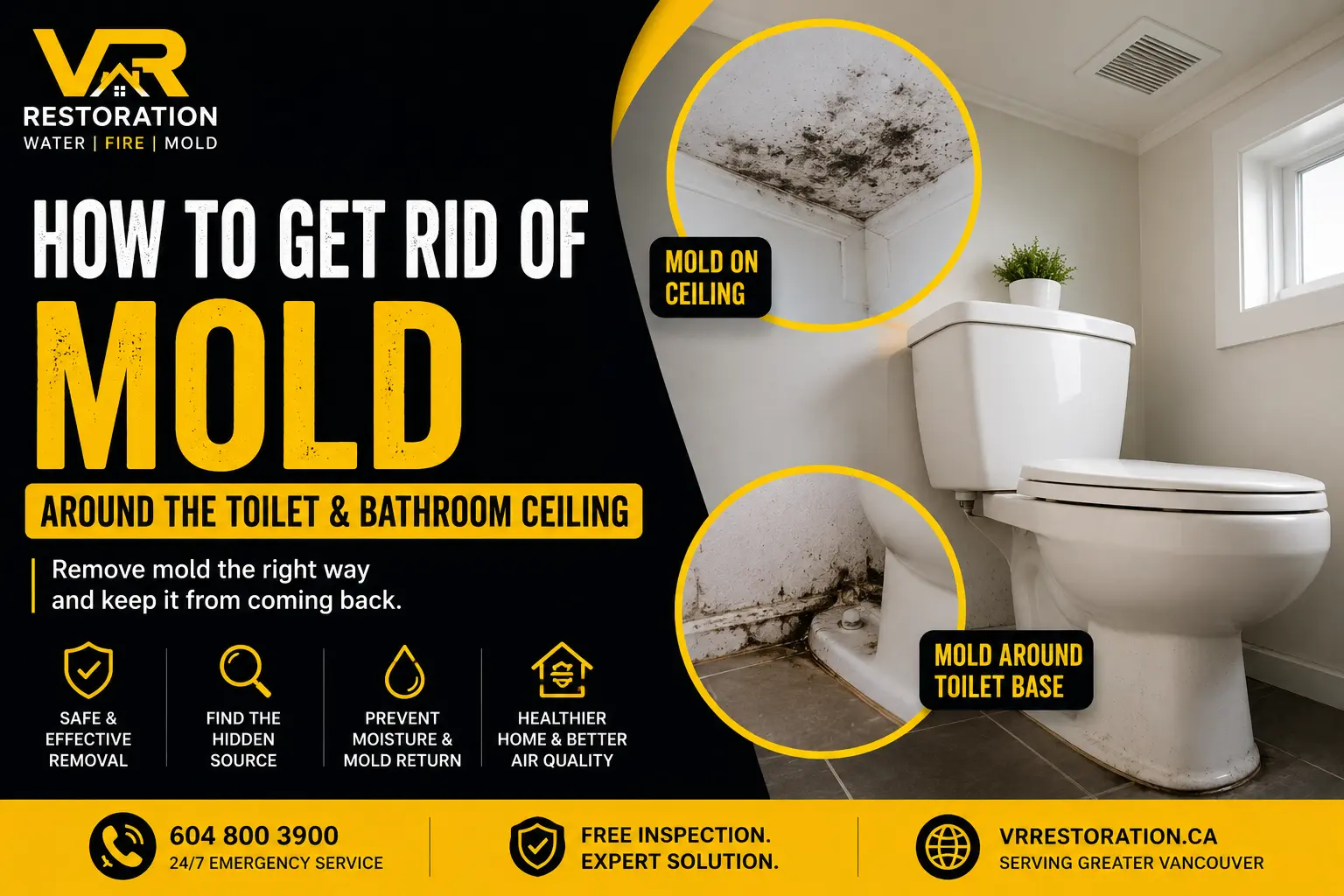
Bathroom mold is one of the most common problems homeowners face. If you notice black spots around your toilet, mold on the bathroom ceiling, or a persistent musty smell, it is important to act quickly. Mold thrives in damp environments and bathrooms provide the perfect conditions due to high humidity, steam, and moisture.
In this guide, you'll learn how to remove small amounts of bathroom mold safely, what causes mold to grow around toilets and ceilings, and when it is time to call a professional mold inspection company.
Need help right away? Call +1 604 800 3900 for a free mold inspection and professional assistance.
Why Mold Grows in Bathrooms
Bathrooms create ideal conditions for mold growth because they regularly experience high humidity, warm temperatures, and water exposure.
Common causes include:
- Steam from hot showers
- Poor ventilation
- Leaking plumbing fixtures
- Condensation on walls and ceilings
- Water around toilets and sinks
- Improperly functioning exhaust fans
Why Mold Forms Around Toilets
Many homeowners are surprised to find mold growing around the toilet base or behind the toilet.
This can happen because of:
- Small plumbing leaks
- Condensation on the toilet tank
- Moisture trapped around the base
- Damaged wax ring seals
- Poor air circulation behind the toilet
If mold keeps returning around the toilet after cleaning, there may be hidden moisture beneath the flooring or inside the wall.
Why Mold Appears on Bathroom Ceilings
Bathroom ceilings are another common location for mold because warm steam naturally rises and condenses on cooler ceiling surfaces.
Ceiling mold is often caused by:
- Inadequate bathroom ventilation
- Exhaust fans that are too small
- Poor attic ventilation above the bathroom
- Roof leaks
- Excessive humidity levels
How to Remove Small Amounts of Bathroom Mold
If the mold area is small and limited to the surface, you may be able to clean it yourself.
| Item Needed | Purpose |
|---|---|
| Rubber Gloves | Protect hands from mold and cleaning products |
| Protective Mask | Reduce inhalation of mold spores |
| Safety Glasses | Protect eyes during cleaning |
| White Vinegar | Natural mold cleaning solution |
| Spray Bottle | Apply cleaning solution evenly |
| Microfiber Cloth | Wipe and remove mold residue |
| Small Brush | Scrub mold from grout and corners |
Step-by-Step Bathroom Mold Removal
| Step | What To Do |
|---|---|
| 1 | Open windows and improve ventilation |
| 2 | Wear gloves, mask, and eye protection |
| 3 | Spray vinegar directly onto mold |
| 4 | Allow it to sit for 10–15 minutes |
| 5 | Gently scrub the affected area |
| 6 | Wipe clean and dry thoroughly |
| 7 | Run exhaust fans to remove humidity |
Signs DIY Mold Removal Is Not Enough
While small surface mold can sometimes be cleaned, larger problems require professional inspection.
You should contact professionals if:
- Mold keeps returning
- The affected area is larger than expected
- You smell mold but cannot see it
- The wall feels damp
- Water damage has occurred recently
- Family members have allergy symptoms
Hidden Mold Behind Bathroom Walls
Visible mold is often only part of the problem. Moisture can become trapped inside walls, ceilings, and flooring where mold continues growing unseen.
Professional mold detection can identify hidden contamination before it causes major structural damage.
Learn more about professional mold detection services in Vancouver.
Water Damage and Bathroom Mold
Many bathroom mold issues begin with unnoticed water damage. Even a small leak behind a toilet or sink can create enough moisture for mold growth.
If your mold problem was caused by flooding, leaks, or moisture damage, visit Tri Cities Water Damage to learn more about professional drying and water damage restoration.
How to Prevent Bathroom Mold From Returning
- Run exhaust fans during and after showers
- Keep humidity below 50%
- Fix plumbing leaks immediately
- Dry wet surfaces regularly
- Improve bathroom airflow
- Inspect toilets and sinks for hidden leaks
- Clean bathroom surfaces regularly
Health Risks of Bathroom Mold
Bathroom mold can affect indoor air quality and may trigger:
- Allergies
- Sneezing
- Coughing
- Eye irritation
- Respiratory issues
- Headaches
Children, seniors, and people with asthma are often more sensitive to mold exposure.
When to Call a Professional Mold Inspection Company
If mold continues to return, spreads quickly, or causes strong odors, professional inspection is recommended. Identifying the source of moisture is critical to preventing future growth.
Our team provides:
- Free mold inspections
- Moisture detection
- Mold assessments
- Professional mold remediation
- Water damage restoration support
- 24/7 emergency response
Free Mold Inspection and Professional Help
Removing bathroom mold is important, but solving the underlying moisture problem is what keeps it from coming back.
Call +1 604 800 3900 today for a free mold inspection and expert advice from experienced restoration professionals.
Leave a Reply