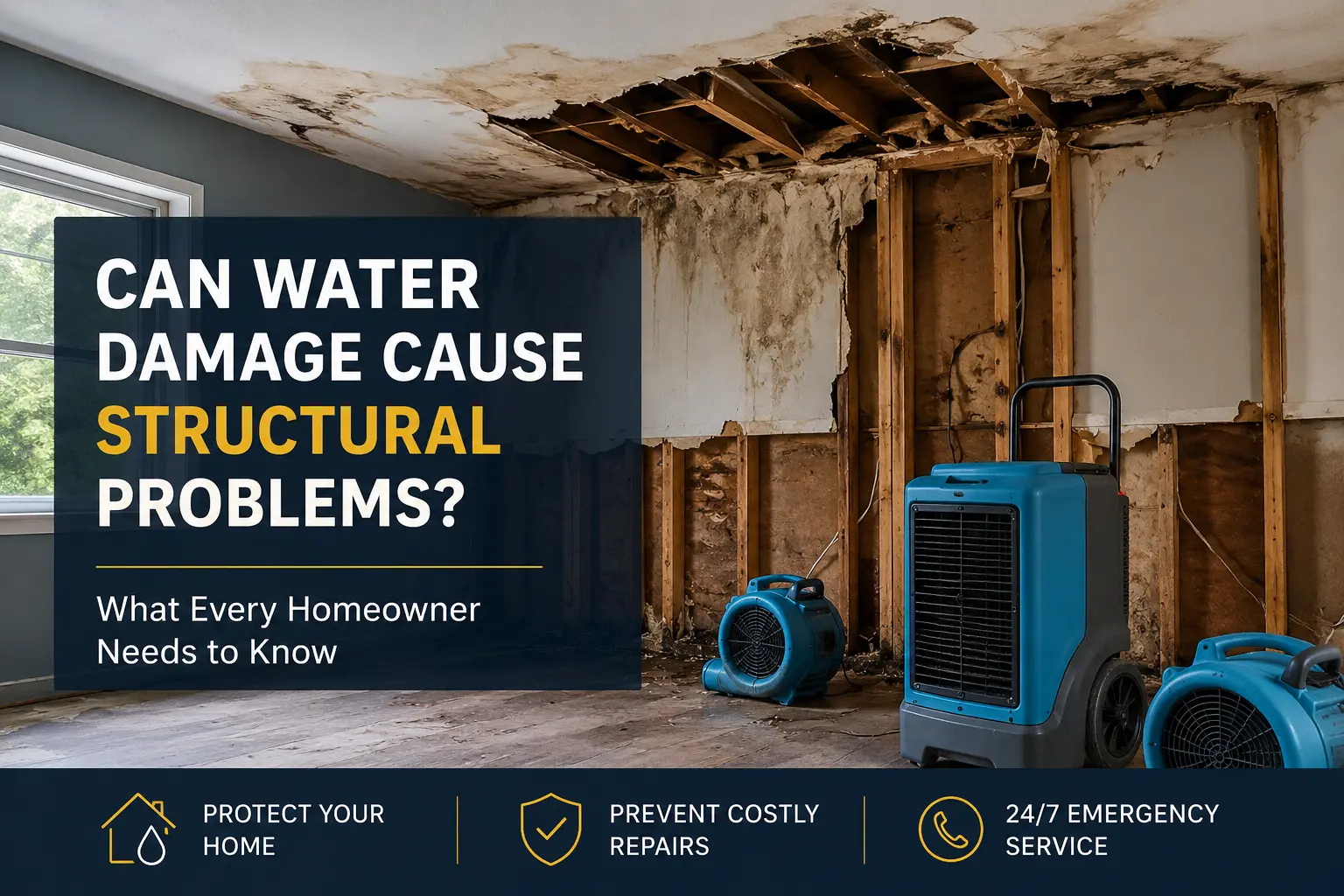
Many homeowners assume water damage only affects paint, drywall, or flooring. In reality, untreated water damage can weaken the structural components of your home and lead to expensive repairs.
When moisture is allowed to remain inside walls, ceilings, floors, or crawl spaces, it slowly damages wood framing, subfloors, insulation, and other structural materials. Acting quickly after a leak or flood can help prevent long-term damage and protect the value of your property.
Call +1 604 800 3900 for a free water damage inspection and professional restoration services.
How Water Damage Affects a Home's Structure
Water does much more than leave stains. As building materials absorb moisture, they begin to weaken over time. Wood expands, drywall softens, flooring warps, and insulation loses its effectiveness.
If the moisture is not professionally removed, these materials may eventually require complete replacement.
The longer water remains inside a home, the greater the chance of structural damage.
Which Parts of a House Are Most Vulnerable?
Water can affect almost every part of a property, especially areas where moisture becomes trapped.
- Wood framing
- Floor joists
- Subfloors
- Drywall
- Ceilings
- Insulation
- Basements
- Crawl spaces
- Roof structures
- Support beams
Many of these areas are hidden behind finished walls, making professional moisture detection extremely important.
Can Water Damage Weaken Wood Framing?
Yes. Wood framing is one of the most important structural components of any home, and prolonged moisture exposure can significantly weaken it.
Over time, wet framing may develop:
- Wood rot
- Warping
- Cracking
- Mold growth
- Reduced structural strength
Once structural wood begins deteriorating, repairs become much more expensive than early drying and restoration.
What Happens to Drywall and Ceilings?
Drywall absorbs water quickly.
As moisture increases, drywall may:
- Bubble
- Warp
- Crack
- Become soft
- Collapse
Ceilings are especially vulnerable because trapped water can create heavy saturated areas that eventually fail.
| Material | Possible Water Damage |
|---|---|
| Drywall | Softening, swelling, cracking, collapse |
| Ceiling | Sagging, stains, structural failure |
| Insulation | Water absorption and mold growth |
| Paint | Bubbling and peeling |
Can Water Damage Affect Floors and Subfloors?
Flooring materials often absorb water before homeowners even realize there is a problem.
Depending on the material, water damage may cause:
- Hardwood buckling
- Laminate swelling
- Soft subfloors
- Loose tiles
- Carpet mold
- Uneven flooring
If water reaches the subfloor, structural repairs may become necessary.
Can Water Damage Cause Foundation Problems?
While most foundation issues develop over a longer period, repeated moisture exposure around foundations can contribute to structural concerns.
Common causes include:
- Poor drainage
- Foundation cracks
- Heavy rainfall
- Flooding
- Improper grading
- Persistent basement moisture
Water entering through foundation cracks should always be professionally inspected.
Concerned About Structural Water Damage? 📞 Call +1 604 800 3900
How Mold Makes Structural Damage Worse
Moisture and mold often go hand in hand.
When building materials remain wet for several days, mold can begin growing and continue feeding on organic materials such as wood and drywall.
Mold may spread to:
- Wall cavities
- Wood framing
- Insulation
- Subfloors
- Ceiling joists
Learn more about our professional mold remediation services.
Warning Signs of Structural Water Damage
Watch for these common warning signs:
- Musty odors
- Water stains
- Bubbling paint
- Soft drywall
- Sagging ceilings
- Warped flooring
- Cracks around doors or windows
- Doors that suddenly become difficult to close
- Visible mold
- Persistent dampness
If you notice any of these problems, a professional inspection is recommended.
How Professionals Check for Structural Damage
Professional restoration companies use specialized equipment to locate hidden moisture and evaluate structural conditions.
Common equipment includes:
- Moisture meters
- Thermal imaging cameras
- Hygrometers
- Infrared inspections
- Commercial dehumidifiers
- Air movers
These tools help determine whether moisture has reached structural materials hidden behind walls and floors.
How to Prevent Structural Damage After Water Damage
Quick action is the best way to prevent expensive repairs.
- Stop the water source immediately.
- Remove standing water.
- Begin professional drying as soon as possible.
- Monitor moisture levels.
- Inspect hidden areas for trapped water.
- Repair leaks before rebuilding.
- Schedule mold inspection if moisture remained for more than 24 to 48 hours.
Building Materials Most Commonly Damaged by Water
| Building Material | Possible Damage |
|---|---|
| Wood Framing | Rot, weakening, mold |
| Drywall | Softening, swelling, collapse |
| Subfloor | Warping and structural instability |
| Hardwood Flooring | Buckling and cupping |
| Insulation | Moisture retention and mold |
| Ceiling Materials | Sagging and collapse |
| Support Beams | Wood deterioration over time |
When Should You Call a Restoration Company?
You should contact a professional restoration company immediately if:
- Your ceiling is sagging.
- You notice soft or warped flooring.
- There is visible mold.
- The leak has been present for more than 24 hours.
- You smell musty odors.
- Water entered wall cavities or ceilings.
- You suspect structural materials became wet.
Professional Water Damage Restoration Services
Our experienced restoration team provides complete structural drying and water damage restoration services throughout Metro Vancouver.
- Emergency water extraction
- Structural drying
- Commercial dehumidification
- Moisture mapping
- Thermal imaging inspections
- Mold prevention
- Water damage repairs
- Insurance claim assistance
Learn more about our Water Damage Restoration Services.
You may also find these articles helpful:
- What Happens If Water Damage Is Left Untreated?
- How to Tell If Water Damage Is New or Old
- Why Water Damage Still Happens During Vancouver Summers
Free Structural Water Damage Inspection
Water damage should never be ignored. Even a small leak can weaken structural materials over time if moisture remains hidden inside your home.
Early inspection and professional drying can help prevent mold growth, structural repairs, and thousands of dollars in future restoration costs.
Call +1 604 800 3900 today for a free inspection and 24/7 emergency water damage restoration services.
Our team proudly serves homeowners and businesses throughout Metro Vancouver.
Leave a Reply