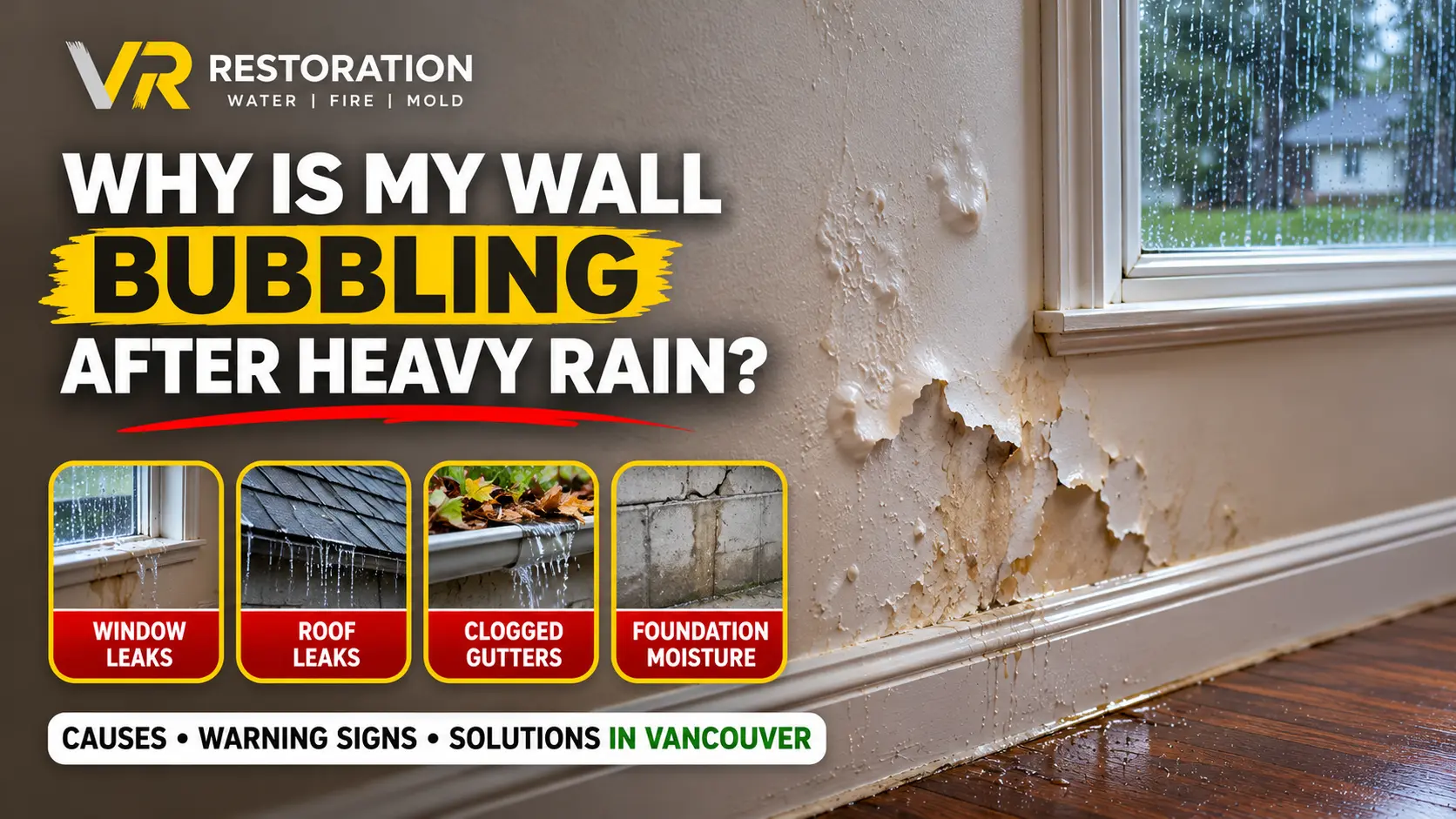
Have you noticed paint bubbling, peeling, or forming small blisters on your walls after heavy rain? Maybe the wall looks swollen, feels damp, or has developed a strange stain that was not there before. These changes can be early warning signs of moisture getting trapped behind the paint or inside the drywall.
In Vancouver and across Metro Vancouver, prolonged rainfall can expose problems with exterior walls, windows, roofs, and building drainage. Rainwater may enter through a small opening and travel inside the wall before the damage becomes visible.
Bubbling paint after rain does not always mean there is an active leak, but it should not be ignored. Moisture intrusion is one possible cause, along with poor paint adhesion, surface contamination, and other coating problems.
In this guide, we explain why walls bubble after heavy rain, how to recognize hidden water damage, what homeowners should do, and when professional water damage restoration may be necessary.
Quick Answer: Why is my wall bubbling after heavy rain?
Paint can bubble after heavy rain when moisture enters through damaged exterior walls, windows, roofing, or foundation openings and affects the wall surface or underlying materials. Trapped moisture can interfere with paint adhesion and cause blistering, peeling, or swelling. However, bubbling paint can also result from improper painting conditions or coating failure. A moisture assessment can help determine whether water damage is present.
If your wall is damp, soft, or showing signs of hidden moisture, VR Restoration provides water damage restoration services in Vancouver, including moisture detection, structural drying, and restoration.
What Does Bubbling Paint on a Wall Mean?
Bubbling paint occurs when the paint film loses adhesion to the surface underneath, creating raised areas or blisters.
These bubbles can appear as small raised circles, larger pockets, or uneven patches across a wall. In some cases, the paint may peel away, revealing damaged drywall or plaster underneath.
Moisture is one possible cause. Water can affect the bond between the paint and the wall, especially when it enters through a leak or remains trapped in porous materials.
However, paint can also blister because of improper surface preparation, painting over damp surfaces, incompatible coatings, or excessive heat.
The timing matters. If new bubbles appear during or shortly after rainfall, especially on an exterior-facing wall, water intrusion should be investigated.
7 Common Causes of Wall Bubbling After Heavy Rain
1. Rainwater Entering Through Exterior Wall Cracks
Small openings in exterior cladding, damaged joints, deteriorated sealant, or defects in the building envelope may allow rainwater to enter a wall assembly.
Once inside, moisture may affect insulation, framing, drywall, or plaster before becoming visible on the interior surface.
Warning Signs
- Paint bubbles on an exterior-facing wall
- New water stains after rain
- Soft or swollen drywall
- Peeling paint near wall corners
- Musty odors around the affected area
- Recurring damage during wet weather
A qualified building envelope contractor may be needed to identify and repair the exterior entry point. If interior materials are wet, a restoration assessment can help determine the extent of moisture.
2. Water Leaking Around Window Frames
Windows are a potential source of rainwater intrusion, particularly during wind driven storms.
Failed flashing, damaged exterior joints, window component defects, or problems in the surrounding wall can allow moisture to enter behind drywall.
Water may travel downward before producing bubbles or stains beneath the window.
Signs of a Window Related Leak
- Bubbling paint beneath a window
- Swollen window trim
- Water stains around window corners
- Damp drywall beside the frame
- Damage that becomes worse during windy rain
For more information, read our guide: Why Is Water Leaking Through My Window When It Rains?
3. Roof Leaks Allowing Water to Travel Inside Walls
A damaged roof or flashing connection can allow rainwater to enter the building and travel through concealed spaces.
Water does not always appear directly below the original leak. It may move along framing or other building components before affecting a ceiling or interior wall.
Possible Warning Signs
- Bubbling paint near the ceiling
- Yellow or brown stains on upper walls
- Peeling ceiling paint
- Wet attic insulation
- Water marks appearing after storms
A qualified roofing professional should investigate suspected roof defects. Water damaged interior materials may also require moisture testing and drying.
4. Clogged Gutters Causing Water to Overflow
Gutters help direct rainwater away from vulnerable areas of the building.
When leaves and debris block the drainage system, water may overflow and repeatedly run against exterior walls.
If the exterior wall has an existing weakness, this additional water exposure may contribute to moisture intrusion.
Interior bubbling paint may be one of the visible symptoms when water reaches drywall or other wall materials.
Learn more about how clogged gutters can cause water damage in Vancouver homes.
5. Basement Foundation Moisture
Bubbling paint on basement walls may be associated with moisture entering through foundation cracks, wall joints, or other below-grade openings.
During prolonged rainfall, saturated soil and inadequate exterior drainage can increase moisture exposure around foundation walls.
Common Signs
- Paint bubbling near the bottom of basement walls
- White mineral deposits on concrete
- Damp spots along foundation walls
- Peeling paint near floor joints
- Musty basement odors
- Wet carpet or flooring near exterior walls
Some basement paint problems are caused by moisture moving through concrete or masonry rather than a visible water leak.
The moisture source and condition of the wall should be evaluated before repainting or installing new finishes.
6. Condensation and High Indoor Humidity
Not every bubbling wall is caused by rainwater entering from outside.
Condensation can occur when humid indoor air contacts sufficiently cold surfaces. Persistent condensation may contribute to damp finishes and paint deterioration.
This can occur around poorly insulated exterior walls, thermal bridges, or areas with limited ventilation.
Clues That Condensation May Be Involved
- Moisture appearing during cold weather without rain
- Condensation on nearby windows
- Repeated dampness in poorly ventilated rooms
- Damage near cold exterior wall corners
- Elevated indoor humidity
Condensation and rainwater intrusion require different solutions. Proper diagnosis is important before beginning repairs.
7. Previous Water Damage or Poor Paint Adhesion
Sometimes bubbling paint becomes visible after rain even though the original problem is related to older moisture damage or a previous painting issue.
Paint applied over a damp, dusty, contaminated, or improperly prepared surface may lose adhesion over time.
A wall that experienced an earlier leak may also contain damaged materials or coatings that continue to deteriorate.
If the area has a history of water damage, determine whether the original leak was fully repaired and whether the materials were adequately dried.
How to Tell if Bubbling Paint Is Caused by Water Damage
The appearance of a paint bubble alone cannot confirm that water is trapped behind a wall.
However, certain observations can help determine whether further moisture investigation is necessary.
| Warning Sign | Possible Explanation | What to Do |
|---|---|---|
| Bubbles appear after heavy rain | Possible exterior water intrusion | Investigate nearby windows, walls, roof, and drainage |
| Wall feels damp | Possible elevated moisture | Arrange appropriate moisture testing |
| Yellow or brown stains | Possible current or previous water damage | Determine whether the source is still active |
| Soft or swollen drywall | Possible material deterioration from moisture | Assess whether drying or replacement is needed |
| Musty smell | Possible persistent moisture or microbial growth | Investigate concealed materials |
| Bubbles appeared shortly after painting | Possible coating or surface preparation problem | Evaluate paint adhesion and surface condition |
| Damage keeps returning | Unresolved moisture or coating problem | Identify the underlying cause before repainting |
Important: Moisture meters and other appropriate inspection methods can help determine whether building materials contain elevated moisture. A visual inspection alone may not reveal the full extent of concealed water damage.
Can Water Be Trapped Behind Drywall Without Visible Stains?
Yes. Water can become trapped behind drywall even when the painted surface looks relatively normal.
Moisture may enter through exterior openings and affect insulation, framing, or the back of drywall before producing obvious surface damage.
In some cases, the first noticeable signs are a musty smell, swollen baseboards, or localized paint bubbling.
The visible area of damage may be smaller than the actual moisture-affected area.
How Professionals Check for Hidden Moisture
- Visual inspection of affected walls and surrounding areas
- Moisture meter readings in suitable materials
- Comparison with unaffected reference areas
- Thermal imaging when appropriate
- Moisture mapping to document affected locations
- Further investigation when concealed damage is suspected
Thermal imaging can help locate temperature differences that may be associated with moisture, but it does not independently confirm water damage.
Should You Pop Water Bubbles in Your Wall?
No. Do not puncture or squeeze a suspicious wall bubble before understanding what is causing it.
A raised paint blister may be dry, or it may be associated with damp and deteriorating materials. Puncturing it does not solve the underlying problem.
If the wall is actively leaking, bulging significantly, or located near electrical equipment, avoid disturbing it.
Do not cut into drywall when you suspect concealed wiring, plumbing, contamination, or structural damage.
Instead, document the affected area and arrange an appropriate inspection if moisture intrusion is suspected.
Can You Paint Over Bubbling Walls?
Painting over bubbling or peeling paint without addressing the cause is usually not a lasting solution.
If moisture is still entering the wall, new paint may blister or peel again. Covering the area can also make it harder to notice continuing damage.
Before repainting:
- Identify whether the problem is related to moisture or coating failure.
- Repair any active water entry point.
- Determine whether underlying materials are wet or damaged.
- Complete appropriate drying and repairs.
- Remove loose or failed coatings using suitable methods.
- Prepare the surface according to the coating manufacturer's instructions.
- Apply appropriate primer and paint only after the surface is ready.
In older homes, disturbing existing paint may create a lead exposure risk. If lead-based paint is possible, seek appropriate testing and safe work practices before sanding or scraping.
What Should You Do if Your Wall Starts Bubbling After Heavy Rain?
If you discover new bubbling paint after a storm, take the following steps to help prevent additional damage.
- Check for immediate safety concerns. Stay away from water near electrical outlets, switches, or wiring. Avoid unstable or severely damaged wall and ceiling materials.
- Take photographs. Document the bubbles, stains, surrounding walls, and any visible water intrusion.
- Look for possible sources. From a safe location, check for signs of window leaks, overflowing gutters, roof problems, or exterior drainage issues.
- Do not cover the damage. Avoid repainting or installing new finishes until the cause has been investigated.
- Arrange source repairs. A roofer, window installer, plumber, or building envelope contractor may be needed depending on the cause.
- Assess affected materials. If drywall, insulation, flooring, or framing may be wet, contact a water damage restoration professional.
- Notify your insurer if appropriate. Ask about documentation requirements and potential coverage under your policy.
Bubbling Paint or Wet Drywall After Heavy Rain? VR Restoration helps identify hidden moisture and restore water damaged walls throughout Metro Vancouver. 📞 Call +1 604 800 3900 24/7 Emergency Water Damage Response
Can Bubbling Paint Be a Sign of Mold Behind the Wall?
Bubbling paint is not proof of mold. However, if the bubbling is caused by persistent moisture, conditions may develop that support mold growth.
Damp drywall, wood, insulation, and other materials can provide suitable environments for mold when moisture problems remain unresolved.
Possible Signs of a Mold Related Moisture Problem
- Persistent musty odors
- Recurring dampness
- Visible mold growth or suspicious discoloration
- Swollen or deteriorating drywall
- Water damage that has not been properly addressed
According to Health Canada, moisture problems from leaks and water intrusion should be addressed to help prevent indoor mold problems.
If mold is suspected, the moisture source should be corrected and the affected area evaluated. Professional mold remediation may be necessary depending on the extent and conditions.
How Professional Water Damage Restoration Works for Bubbling Walls
If paint bubbling is associated with water intrusion, the restoration process depends on the extent of moisture, material condition, and source of the leak.
1. Initial Water Damage Assessment
The affected wall and surrounding materials are inspected for visible deterioration and possible concealed moisture.
2. Moisture Detection and Mapping
Moisture measurements help determine which materials may be affected and whether water has spread beyond the visible paint damage.
3. Addressing the Water Source
The underlying leak must be corrected. Depending on the cause, this may involve a roofing, plumbing, window, drainage, or building envelope professional.
4. Accessing Wet Materials
When necessary, damaged drywall, insulation, trim, or other materials may need to be removed to access concealed moisture.
5. Structural Drying and Dehumidification
Commercial air movers and dehumidifiers may be used to help dry affected materials under controlled conditions.
6. Monitoring Drying Progress
Moisture readings are monitored to evaluate drying progress and determine when appropriate drying goals have been achieved.
7. Wall Repairs and Finishing
Once the source has been addressed and the materials are ready, damaged wall components can be repaired or replaced. Proper surface preparation and finishing can then be completed.
How Much Does It Cost to Repair Bubbling Walls From Water Damage?
The cost of repairing bubbling walls depends on whether the problem is limited to the paint or involves water damage inside the wall.
If the issue is only failed paint adhesion on a dry, sound surface, repairs may be relatively straightforward.
If water has affected drywall, insulation, framing, flooring, or other concealed materials, additional investigation, drying, removal, and reconstruction may be necessary.
Factors That Affect the Cost
- Size of the affected wall
- Whether the water source is still active
- How long materials have remained wet
- Extent of concealed moisture
- Condition of drywall and insulation
- Presence of mold or contamination
- Drying equipment and monitoring requirements
- Amount of demolition and reconstruction needed
- Repairs required to stop the original leak
A professional assessment can help determine whether drying, material replacement, or other repairs are appropriate.
Does Home Insurance Cover Bubbling Paint Caused by Rainwater in BC?
Insurance coverage depends on the cause of the damage and the terms of your individual policy.
Certain sudden and accidental water losses may be covered, while gradual deterioration, repeated leakage, maintenance problems, or excluded types of water intrusion may not be covered.
Bubbling paint by itself does not establish whether an insurance claim is eligible.
What to Document
- Photographs of the affected wall
- The date the bubbling was first noticed
- Weather conditions when the problem appeared
- Any visible signs of water intrusion
- Previous repairs or recurring leaks
- Professional inspection findings
- Receipts for necessary emergency work
Contact your insurance provider promptly to discuss the circumstances and any required documentation.
VR Restoration can help document affected materials, moisture measurements, and restoration work to support communication with your insurance adjuster. Coverage decisions remain with the insurance provider.
How to Help Prevent Bubbling Paint and Water Damage During Vancouver's Rainy Season
Regular home maintenance can help reduce some of the risks associated with rainwater intrusion.
- Inspect exterior walls: Look for damaged siding, deteriorated joints, and visible openings.
- Maintain windows: Investigate failed flashing, damaged seals, and recurring leaks.
- Clean gutters: Help rainwater drain away from vulnerable exterior surfaces.
- Check roof conditions: Have damaged roofing and flashing repaired by qualified professionals.
- Watch basement walls: Investigate dampness, peeling finishes, and moisture near foundation joints.
- Manage indoor humidity: Maintain appropriate ventilation and address condensation problems.
- Repair leaks promptly: Avoid allowing moisture to remain inside building materials.
- Inspect recurring stains: Determine the cause before repainting.
Our guide to 10 hidden places water can damage your home covers other areas worth checking after heavy rainfall.
Frequently Asked Questions About Bubbling Paint After Rain
Why is my wall bubbling after heavy rain?
Wall bubbling after heavy rain may be caused by moisture entering through exterior walls, windows, roofing, or foundation openings. Water can affect paint adhesion and underlying materials. However, coating problems can also cause bubbling, so the source should be confirmed.
Does bubbling paint always mean water damage?
No. Bubbling paint can result from moisture, poor surface preparation, incompatible coatings, or painting over an unsuitable surface. New bubbling that appears after rainfall should be investigated for possible water intrusion.
Can water be trapped behind a wall without visible damage?
Yes. Moisture can affect insulation, framing, or the back of drywall before visible stains or swelling develop. Appropriate moisture testing may help identify concealed damage.
Should I pop a water bubble in my wall?
Do not puncture a suspicious wall bubble before assessing the cause. Puncturing the paint does not repair a leak and may disturb damaged materials. If the wall is actively leaking or severely bulging, keep clear and seek professional help.
Can I paint over a wall that has water bubbles?
Painting over bubbling paint without correcting the underlying problem is not recommended. Any active moisture source should be repaired, affected materials assessed, and the surface properly prepared before repainting.
Can bubbling paint lead to mold?
Bubbling paint itself does not cause mold. However, if the bubbling is associated with persistent moisture, damp building materials may support mold growth. The moisture problem should be addressed promptly.
Why is paint bubbling near my window?
Paint bubbling near a window may result from damaged flashing, deteriorated exterior joints, window leaks, condensation, or other moisture problems. The source should be identified before repairing the paint.
Why is my basement wall paint bubbling?
Basement paint may bubble because of moisture moving through concrete or masonry, foundation water intrusion, condensation, or coating failure. The underlying moisture conditions should be evaluated before applying new finishes.
How do professionals find water damage behind drywall?
Professionals may use visual inspection, moisture meters, reference readings, moisture mapping, and thermal imaging where appropriate. Further investigation may be necessary to confirm concealed moisture.
Does homeowners insurance cover bubbling paint from water damage?
Coverage depends on the cause of damage and the policy. Some sudden and accidental losses may be covered, while gradual leaks and maintenance related problems may be excluded. Contact your insurer for confirmation.
Who should I call for bubbling walls after heavy rain in Vancouver?
A qualified contractor should investigate and repair the water entry point. If drywall, insulation, flooring, or other building materials may be wet, contact a water damage restoration company such as VR Restoration at 604 800 3900.
Professional Water Damage Restoration for Bubbling Walls in Vancouver
Bubbling paint may seem like a cosmetic issue, but when it appears after heavy rain, it can be a warning sign of moisture affecting the wall or surrounding building materials.
At VR Restoration, we help homeowners, strata properties, and businesses assess and restore water damage caused by rainwater intrusion, plumbing leaks, flooding, and other moisture problems.
Our services include:
- 24/7 emergency water damage response
- Water damage inspections and assessments
- Moisture detection and mapping
- Water extraction and cleanup
- Professional structural drying
- Commercial dehumidification
- Drying monitoring and documentation
- Mold remediation when necessary
- Water damage repair and restoration planning
- Insurance claim documentation assistance
We serve Vancouver, West Vancouver, North Vancouver, Burnaby, Coquitlam, Port Coquitlam, Surrey, Richmond, New Westminster, and surrounding Metro Vancouver communities.
Learn more about our water damage restoration services and emergency water damage restoration in Vancouver.
Is Your Wall Bubbling After Heavy Rain? Don't cover up a possible moisture problem. Contact VR Restoration for professional water damage assessment, drying, and restoration. 📞 Call +1 604 800 3900 Available 24/7 | Vancouver & Metro Vancouver
Leave a reply
Your comment will be reviewed before it appears publicly.