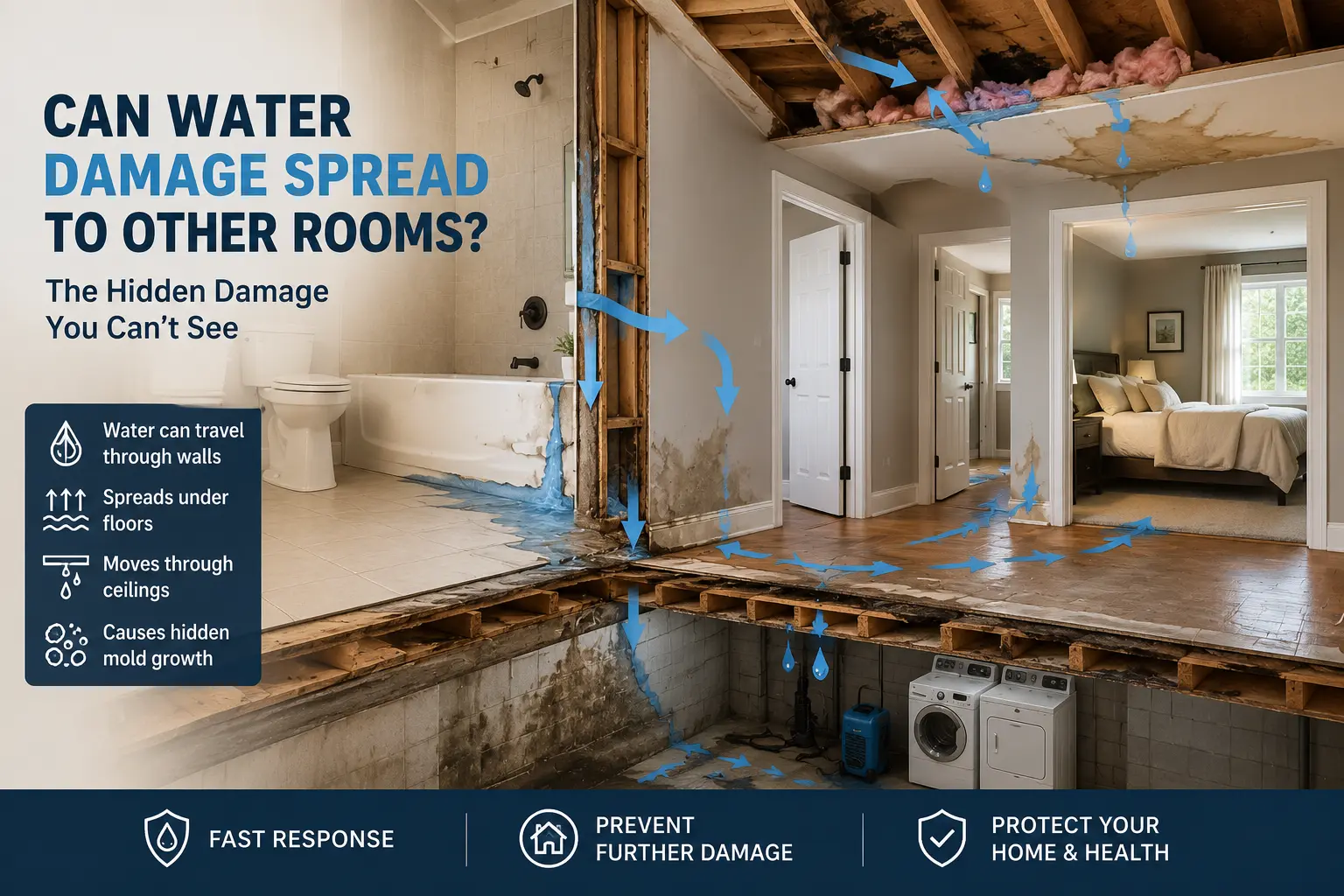
Many homeowners believe that if water damage starts in one room, it will stay there. Unfortunately, that is rarely the case. Water naturally follows the path of least resistance and can travel behind walls, beneath flooring, through ceilings, and even into neighboring rooms before visible signs appear.
What begins as a small leak in a bathroom, kitchen, or laundry room can quickly spread throughout your home, causing hidden moisture, mold growth, structural damage, and costly repairs.
Call +1 604 800 3900 for a free water damage inspection and professional restoration services.
Can Water Really Spread Beyond One Room?
Yes. Water rarely stays where the leak begins.
Because homes contain connected framing, drywall, insulation, flooring systems, and ceiling cavities, water can travel surprisingly far before becoming visible.
Even if only one room appears wet, neighboring rooms may already have hidden moisture.
How Water Travels Through Walls and Ceilings
Walls are filled with empty cavities that allow water to move downward through gravity.
Once water enters a wall, it can:
- Soak drywall
- Wet insulation
- Reach electrical wiring
- Travel to lower floors
- Damage framing
- Create hidden mold growth
Ceilings are also vulnerable because water often accumulates above drywall before stains become visible.
Can Water Spread Under Flooring?
Absolutely.
Water often travels underneath flooring materials without being noticed.
Common affected materials include:
- Hardwood flooring
- Laminate flooring
- Vinyl plank flooring
- Carpet and underlay
- Tile subfloors
By the time flooring begins buckling or warping, moisture has often been present for days.
How Water Damage Reaches Other Rooms
Different water sources allow moisture to spread in different ways.
| Where Water Starts | Where It Can Spread |
|---|---|
| Bathroom Leak | Hallway, bedroom ceiling, lower floor |
| Kitchen Leak | Cabinets, dining room, basement |
| Roof Leak | Attic, ceilings, walls |
| Laundry Room Leak | Hallway, nearby bedrooms |
| Burst Pipe | Multiple rooms through walls and ceilings |
| Basement Flood | Adjacent rooms, crawl spaces, storage areas |
How Long Does Water Take to Spread?
Water begins spreading immediately.
Within minutes, it can soak nearby flooring and drywall.
Within hours, it may reach wall cavities and insulation.
After 24 to 48 hours, mold may begin growing if moisture remains trapped.
The sooner professional drying begins, the less damage your property is likely to experience.
Think Water Damage Has Spread? 📞 Call +1 604 800 3900
Hidden Water Damage Is the Biggest Risk
Many homeowners clean up visible water and assume the problem is solved.
However, hidden moisture often remains:
- Behind drywall
- Inside insulation
- Under flooring
- Inside ceilings
- Behind cabinets
- Inside crawl spaces
This hidden moisture can continue damaging your home long after surfaces appear dry.
Can Water Damage Lead to Mold in Other Rooms?
Yes.
Once moisture spreads into neighboring rooms, mold may begin growing in areas you cannot see.
Common locations include:
- Wall cavities
- Behind baseboards
- Under laminate flooring
- Ceiling insulation
- Closets
- Basements
Learn more about our professional mold remediation services.
Warning Signs Water Damage Has Spread
If water has moved beyond the original leak, you may notice:
- Musty odors
- Water stains on nearby walls
- Bubbling paint
- Warped flooring
- Soft drywall
- Peeling paint
- Unexpected humidity
- Visible mold
These signs often indicate hidden moisture requiring professional inspection.
How Professionals Find Hidden Water
Professional restoration companies use advanced equipment to detect moisture that cannot be seen.
This includes:
- Thermal imaging cameras
- Digital moisture meters
- Hygrometers
- Infrared moisture inspections
- Commercial dehumidifiers
- Industrial air movers
These tools allow technicians to identify how far the water has spread before repairs begin.
How to Stop Water Damage From Spreading
- Stop the source of water immediately.
- Turn off the water supply if necessary.
- Remove standing water.
- Move furniture and valuables away from affected areas.
- Begin drying as quickly as possible.
- Schedule a professional moisture inspection.
- Monitor hidden areas for mold growth.
Areas Most Commonly Affected by Hidden Water Damage
| Area | Common Hidden Damage |
|---|---|
| Walls | Wet insulation and framing |
| Ceilings | Hidden leaks and sagging drywall |
| Floors | Warped subfloors and trapped moisture |
| Basements | Mold growth and humidity |
| Crawl Spaces | Standing moisture and wood rot |
| Cabinets | Swollen wood and mold behind units |
When to Call a Water Damage Restoration Company
You should contact professionals immediately if:
- The leak affected multiple rooms.
- Water entered walls or ceilings.
- Your flooring feels soft or warped.
- You notice musty odors.
- You suspect hidden moisture.
- Mold has started growing.
- The source of the leak is unknown.
Fast response helps prevent structural damage and reduces restoration costs.
Professional Water Damage Restoration Services
Our experienced team provides complete water damage restoration throughout Metro Vancouver.
- Emergency water extraction
- Structural drying
- Commercial dehumidification
- Moisture mapping
- Thermal imaging inspections
- Mold prevention
- Water damage repairs
- Insurance claim assistance
Learn more about our Water Damage Restoration Services.
You may also find these articles helpful:
- Can Water Damage Cause Structural Problems?
- How to Tell If Water Damage Is New or Old
- What Happens If Water Damage Is Left Untreated?
Free Water Damage Inspection
Water damage rarely stays in one room. Hidden moisture can travel throughout your home before you even notice the warning signs.
Early inspection and professional drying help protect your property, prevent mold growth, and reduce repair costs.
Call +1 604 800 3900 today for a free inspection and 24/7 emergency water damage restoration services.
Our team proudly serves homeowners and businesses throughout Metro Vancouver.
Leave a Reply