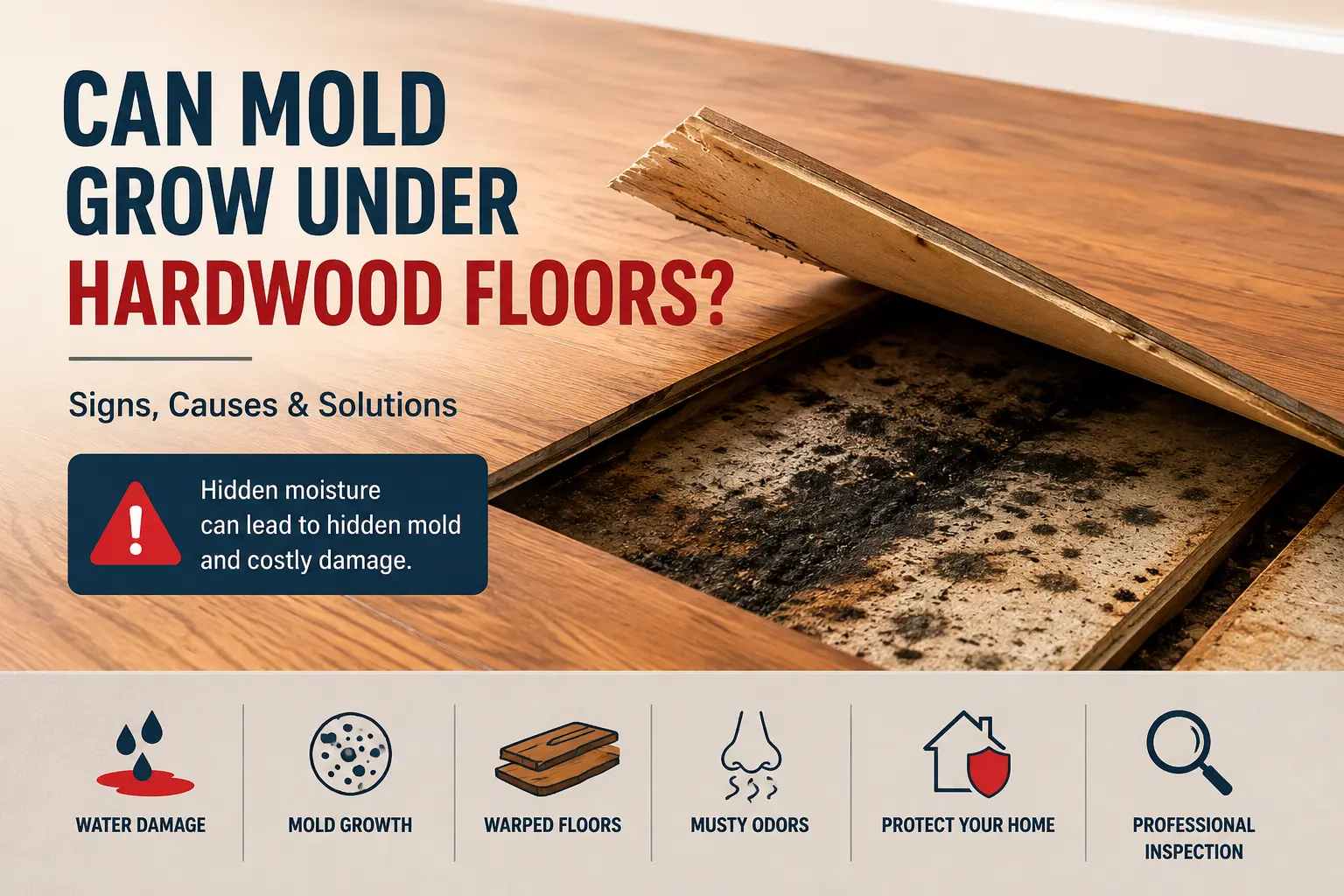
Hardwood floors add warmth, beauty, and value to any home, but they are not immune to moisture problems. One of the biggest concerns homeowners face after a plumbing leak, flooding, or long-term moisture exposure is whether mold can grow beneath hardwood flooring.
The answer is yes. Mold can develop under hardwood floors when moisture becomes trapped between the flooring and the subfloor. Since the affected area is hidden from view, mold often spreads unnoticed until visible damage or unpleasant odors appear.
If your hardwood floors have been exposed to water, acting quickly can help prevent extensive mold growth and costly structural repairs.
Can Mold Really Grow Under Hardwood Floors?
Yes. Mold only needs three things to grow:
- Moisture
- Organic material
- Time
Wood and plywood are natural materials that provide an ideal food source for mold. If water becomes trapped underneath hardwood flooring for more than 24 to 48 hours, mold may begin developing below the surface.
This commonly happens after:
- Burst pipes
- Dishwasher leaks
- Refrigerator water line failures
- Roof leaks
- Flooding
- Basement moisture
- Long-term plumbing leaks
Signs Mold May Be Growing Under Hardwood Floors
Since mold is usually hidden beneath the flooring, homeowners often notice indirect warning signs first.
Musty Odors
A persistent damp or earthy smell is often one of the earliest signs of hidden mold.
Warped or Buckled Flooring
Excess moisture causes hardwood planks to expand, cup, or buckle.
Dark Stains
Discoloration around floorboards may indicate moisture beneath the surface.
Soft or Spongy Floors
If the flooring feels unstable when walking, water may have damaged the subfloor underneath.
Recurring Mold Around Baseboards
Mold appearing along walls or trim may indicate hidden moisture below the flooring.
How Water Causes Mold Under Hardwood Floors
Hardwood itself is not waterproof. While the surface finish offers some protection, water can seep through:
- Floorboard joints
- Expansion gaps
- Damaged finishes
- Cracks around walls
- Heating vents
Once moisture reaches the plywood or wood subfloor, drying becomes much more difficult because airflow is limited beneath the flooring.
Without professional drying equipment, moisture can remain trapped for weeks.
Is Mold Under Hardwood Floors Dangerous?
Hidden mold can affect both your home and indoor air quality.
Potential risks include:
- Allergy symptoms
- Respiratory irritation
- Musty indoor odors
- Damage to flooring materials
- Wood rot
- Structural deterioration
The longer moisture remains, the greater the risk of widespread contamination.
How Professionals Detect Mold Beneath Hardwood Floors
Visible mold is only part of the problem. Professional restoration companies use specialized equipment to locate hidden moisture without unnecessary demolition.
Common inspection methods include:
- Moisture meters
- Thermal imaging cameras
- Hygrometers
- Subfloor moisture testing
- Visual inspection
These tools help determine how far the moisture has spread and whether mold remediation is required.
Can Hardwood Floors Be Saved?
Many hardwood floors can be restored if drying begins quickly.
Restoration may include:
- Professional water extraction
- Industrial air movers
- Commercial dehumidifiers
- Subfloor drying systems
- Moisture monitoring
However, if mold has extensively damaged the flooring or subfloor, partial replacement may be necessary.
How to Prevent Mold Under Hardwood Floors
- Repair plumbing leaks immediately.
- Clean up spills as soon as possible.
- Maintain indoor humidity below 60%.
- Inspect appliances regularly.
- Address roof leaks quickly.
- Dry any water damage within 24 to 48 hours.
When Should You Call a Water Damage Professional?
You should contact a restoration professional if:
- Your hardwood floor was flooded.
- You notice buckling or cupping.
- There is a persistent musty smell.
- You suspect hidden moisture.
- You discover visible mold.
Early intervention often prevents more expensive repairs later.
Professional Mold and Water Damage Restoration
If you suspect mold beneath your hardwood flooring, professional inspection is the safest way to determine the extent of the damage. At VR Restoration, we provide comprehensive moisture detection, water extraction, structural drying, mold remediation, and restoration services throughout Metro Vancouver.
Our team uses advanced moisture detection equipment to locate hidden water before it causes further structural damage, helping homeowners restore their property safely and efficiently.
Learn more about our Water Damage Restoration Services or our Mold Remediation Services. If you need an independent assessment, you can also visit Mold Inspection Vancouver.
Frequently Asked Questions
How quickly can mold grow under hardwood floors?
Under the right conditions, mold can begin growing within 24 to 48 hours after water exposure.
Can mold grow without visible water?
Yes. Hidden plumbing leaks or elevated humidity can provide enough moisture for mold growth.
Can I clean mold under hardwood floors myself?
Surface cleaning rarely removes mold hidden beneath flooring. Professional inspection is recommended when hidden moisture is suspected.
Will I need to replace my hardwood floors?
Not always. Many floors can be successfully dried and restored if treatment begins early.
How can I tell if water reached the subfloor?
Only moisture testing equipment can accurately determine whether water has penetrated below the flooring.
Leave a reply
Your comment will be reviewed before it appears publicly.