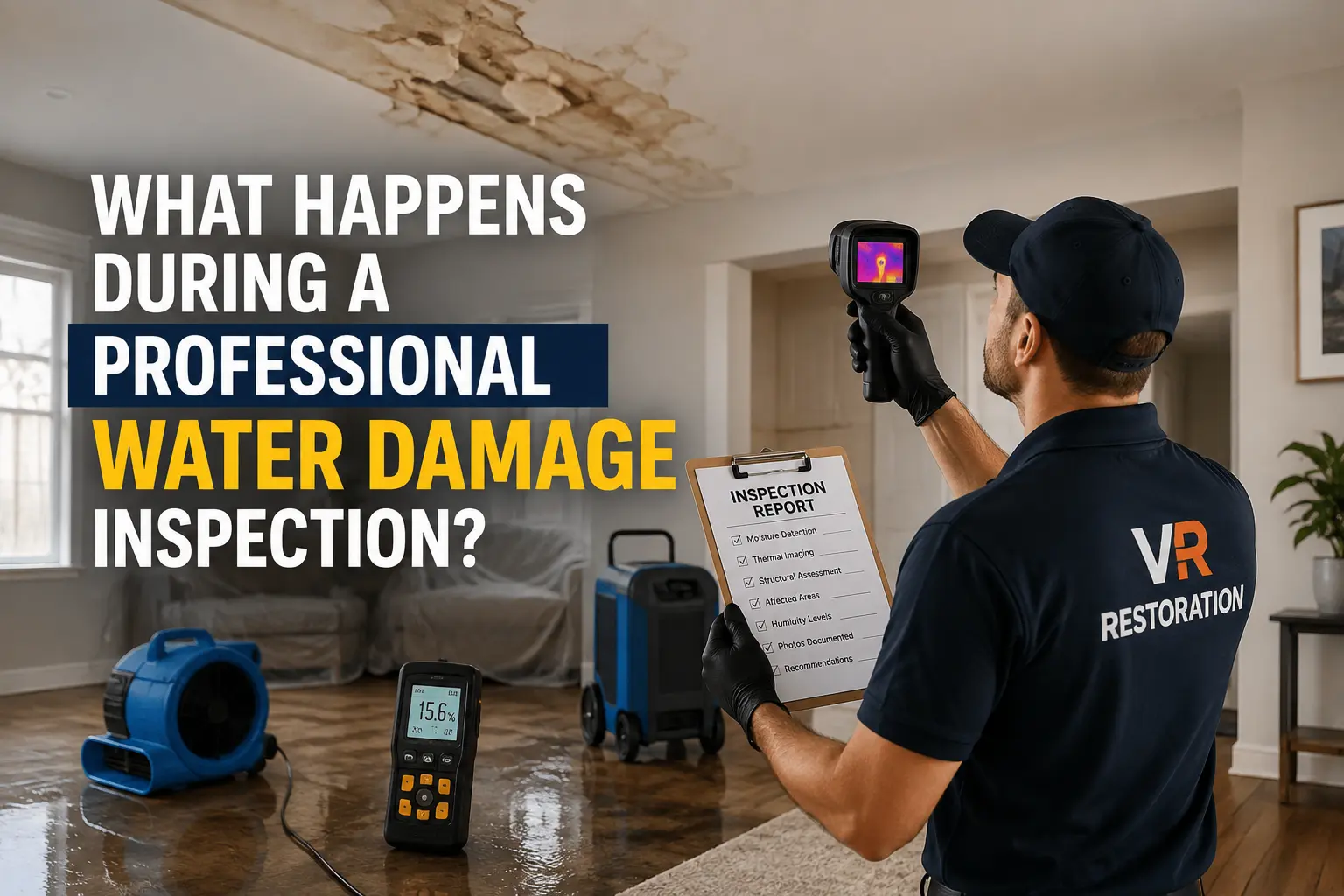
If you have a leak, flood, wet ceiling, damp basement, or unexplained musty smell, a professional water damage inspection helps find out how serious the problem really is. The goal is not only to look at visible water. A proper inspection checks where the moisture started, how far it has spread, what materials are affected, and what needs to happen next.
For homeowners in Vancouver, West Vancouver, North Vancouver, Burnaby, Coquitlam, and nearby areas, a water damage inspection can help prevent hidden moisture, mold growth, flooring damage, and expensive repairs later.
Need A Water Damage Inspection? 📞 Call +1 604 800 3900
Free on site assessment and clear next steps
Why A Water Damage Inspection Is Important
Water damage is not always easy to see. A wall can look dry on the surface while insulation, framing, or flooring behind it is still holding moisture. This is why simply wiping up visible water is often not enough.
A professional inspection helps answer important questions such as:
- Where did the water come from?
- Is the leak still active?
- How far has the moisture travelled?
- Is drywall or insulation wet?
- Can the flooring be saved?
- Is there a risk of mold?
- Does anything need to be removed?
- How long will drying take?
Getting these answers early can make the difference between a small restoration job and a much larger repair.
What Happens When The Technician Arrives
The first part of a professional water damage inspection is understanding what happened. The technician will usually ask a few simple questions before inspecting the affected area.
- When did you first notice the water?
- Do you know where the leak came from?
- Has the water source been stopped?
- Has this area had water damage before?
- Have you noticed any musty smell or mold?
- Has anything already been removed or repaired?
This information helps the technician understand how long materials may have been wet and where hidden moisture may have travelled.
How The Source Of Water Is Identified
Before drying begins, the source of the water needs to be found and controlled. Otherwise, new water may continue entering the structure.
Common sources include:
- Burst or leaking pipes
- Dishwasher or washing machine leaks
- Water heater failures
- Toilet or bathtub overflows
- Roof leaks
- Rain entering around windows
- Foundation water intrusion
- Basement flooding
- Snow or ice related roof leaks
If the source requires plumbing, roofing, or another specialized repair, the restoration team can explain what needs to happen before the drying process continues.
How Hidden Moisture Is Detected
One of the most important parts of a water damage inspection is moisture mapping. This means checking the affected area and identifying where water has travelled.
Water often spreads much farther than homeowners expect. It can move underneath flooring, behind baseboards, through drywall, and into insulation.
| Inspection Method | What It Helps Detect | Why It Matters |
|---|---|---|
| Moisture Meter | Moisture inside drywall wood and other materials | Shows whether materials are actually dry |
| Thermal Imaging | Temperature differences that may indicate moisture | Helps locate hidden wet areas |
| Humidity Reading | Moisture levels in indoor air | Helps plan drying equipment |
| Visual Inspection | Staining swelling bubbling and material damage | Confirms visible signs of water movement |
What Materials Are Inspected
A good inspection looks at more than the area where water is visible. Nearby materials are checked because water can travel sideways and downward through the building.
- Drywall
- Insulation
- Wood framing
- Hardwood flooring
- Laminate flooring
- Carpet and carpet pad
- Baseboards and trim
- Cabinets and vanities
- Subflooring
- Ceilings
- Concrete walls and floors
The technician will determine which materials can be dried and saved and which materials may need to be removed.
Equipment Used During A Professional Water Damage Inspection
Professional restoration companies use specialized equipment because moisture cannot always be found by touching a wall or looking at the floor.
| Equipment | Purpose |
|---|---|
| Moisture Meter | Measures moisture inside building materials |
| Thermal Camera | Helps identify possible hidden moisture patterns |
| Hygrometer | Measures temperature and relative humidity |
| Water Extraction Equipment | Removes standing water when immediate mitigation is needed |
| Air Movers | Increase airflow across wet surfaces during drying |
| Dehumidifiers | Remove moisture from indoor air and support structural drying |
How The Type Of Water Is Evaluated
The source of water matters because different types of water require different cleanup methods.
| Water Source | Example | Typical Concern |
|---|---|---|
| Clean Water | Broken supply pipe | Fast drying may save more materials |
| Contaminated Water | Appliance discharge or some overflows | More cleaning and material removal may be needed |
| Highly Contaminated Water | Sewage or flood water | Requires stronger safety and sanitation procedures |
The inspection helps determine what cleaning, drying, containment, and removal procedures are appropriate.
How Inspectors Check For Mold Risk
Water damage and mold are closely connected. If building materials stay wet, mold can begin growing. During the inspection, technicians look for signs that moisture has been present long enough to create a mold problem.
Common warning signs include:
- Musty smell
- Dark staining
- Visible growth
- Wet insulation
- Soft drywall
- Previous water damage in the same area
If mold is found or suspected, the restoration plan may include containment, HEPA filtration, removal of affected materials, and professional mold remediation.
What You Receive After The Inspection
After the inspection, you should understand what happened and what needs to happen next. A professional restoration team should explain the findings clearly without making the process confusing.
Your assessment may include:
- Location of the water source
- Areas affected by moisture
- Moisture readings
- Photos of the damage
- Recommended extraction or drying plan
- Materials that may need removal
- Estimated restoration scope
- Insurance documentation when needed
At VR Plus Restoration, we provide a free on site assessment and explain the next steps before restoration work begins.
How A Water Damage Inspection Helps With Insurance
If you plan to make an insurance claim, documentation is very important. The inspection creates a record of the damage before major cleanup or repairs happen.
- Take photos before removing damaged materials
- Document when the damage was discovered
- Identify the likely source of water
- Record moisture readings
- Keep invoices and restoration documents
Many home insurance policies may cover sudden and accidental water damage, but coverage depends on the cause and the details of your policy. Our team can help you understand the restoration process and communicate with your adjuster when needed.
Learn more about our water damage restoration services.
How Long Does A Professional Water Damage Inspection Take
The amount of time depends on the size of the property and how far the water has travelled. A simple leak affecting one room may take less time than a basement flood or a leak that has travelled between multiple floors.
| Situation | Inspection Complexity |
|---|---|
| Small bathroom leak | Usually focused on one room and nearby walls |
| Ceiling leak | May require inspection of the room above or attic |
| Basement flooding | Requires checking walls flooring contents and nearby rooms |
| Multi unit condo leak | May require access to several units and strata areas |
What Happens After The Water Damage Inspection
If the inspection confirms active water damage, restoration should begin as soon as practical. The exact process depends on the amount and type of damage.
- Stop the source so additional water cannot enter
- Extract standing water from floors and affected areas
- Remove materials when necessary to reach hidden moisture
- Install drying equipment including air movers and dehumidifiers
- Monitor moisture until building materials reach acceptable levels
- Clean and sanitize affected areas when required
- Repair and rebuild damaged drywall flooring trim and finishes
The goal is not simply to make the room look dry. The goal is to make sure hidden areas are properly dried before repairs are completed.
Frequently Asked Questions About Water Damage Inspections
Do I need an inspection if the water is already gone?
Yes, especially if water reached drywall, flooring, cabinets, insulation, or ceilings. Moisture can remain hidden even after visible water disappears.
Can a moisture meter detect water behind walls?
Moisture meters can help identify elevated moisture levels inside many building materials. Thermal imaging can also help technicians identify areas that require closer inspection.
Should I call insurance before a restoration company?
You can report the loss to your insurer quickly, but you should also take reasonable steps to prevent additional damage. Professional assessment and documentation can help support the claim.
Will everything wet need to be removed?
No. Some materials can be professionally dried and saved. The inspection helps determine what can remain and what needs removal.
What if mold is found during the inspection?
The affected area may require professional mold remediation with containment, cleaning, removal of contaminated materials, and moisture control.
Is a professional water damage inspection worth it for a small leak?
It can be. A small visible stain can sometimes hide moisture behind drywall or underneath flooring. Finding the problem early usually makes restoration easier.
Book A Free Water Damage Inspection
If you notice a wet ceiling, leaking wall, flooded basement, damaged flooring, or another sign of water intrusion, getting the property inspected early can help prevent larger problems.
VR Plus Restoration provides professional water damage inspections, moisture detection, water extraction, structural drying, mold remediation, and full restoration. We also help homeowners understand the insurance process and provide clear documentation when needed.
We serve Vancouver, West Vancouver, North Vancouver, Burnaby, Coquitlam, and surrounding Metro Vancouver communities.
Get A Free On Site Water Damage Assessment 📞 Call +1 604 800 3900
Fast help for water damage, hidden moisture, mold risk, and insurance documentation.
Leave a Reply