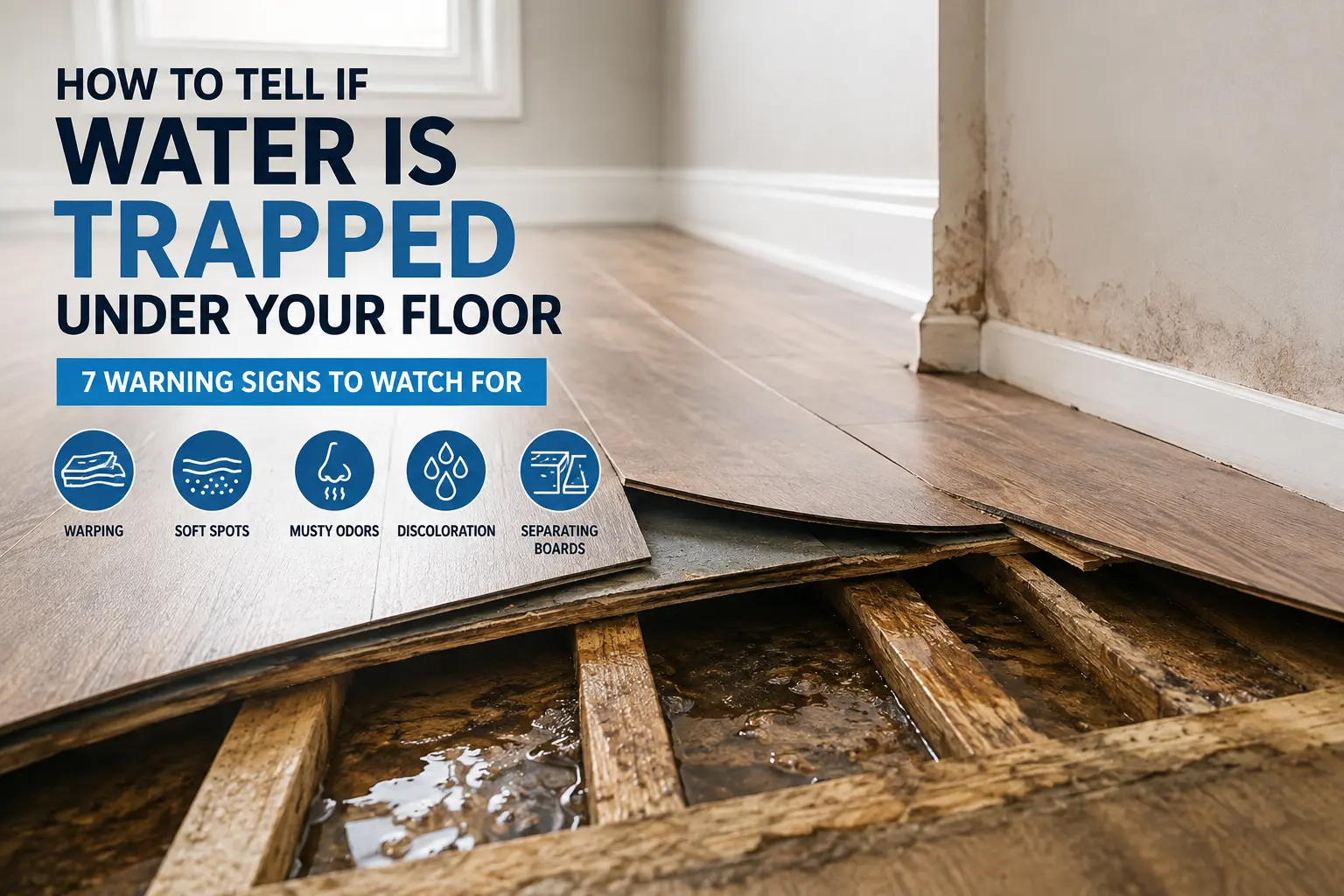
Water trapped under flooring is not always easy to see. In many cases, the surface may look dry while moisture remains underneath hardwood, laminate, vinyl, carpet or the subfloor.
Hidden water can lead to swelling, warping, unpleasant odours, damaged subflooring and eventually mold growth if the area does not dry properly.
If you recently had a leak, flood, overflowing appliance or plumbing problem, knowing the warning signs of water trapped under your floor can help you act before the damage becomes more serious.
In this guide, we explain how to recognize hidden moisture under flooring, what causes it, how professionals detect it and when you should consider calling a water damage restoration company.
Can Water Really Stay Trapped Under Flooring?
Yes. Water can travel underneath flooring through seams, edges, cracks and gaps around walls or fixtures.
Once water reaches the area below the finished floor, it may become trapped between the flooring and the subfloor.
This is particularly common after:
- Burst or leaking pipes
- Dishwasher leaks
- Washing machine leaks
- Refrigerator supply line leaks
- Toilet overflows
- Bathtub or sink overflows
- Basement flooding
- Heavy rainfall
- Roof leaks that travel through walls
- Sewer backups
Even a relatively small amount of water can spread underneath a floor and affect a much larger area than the visible leak.
7 Signs Water May Be Trapped Under Your Floor
1. Your Floor Starts to Buckle or Warp
Warping and buckling are some of the most noticeable signs of moisture underneath flooring.
Hardwood boards may begin to lift, separate or change shape as they absorb moisture. Laminate flooring can also swell or rise along the edges.
If the flooring was previously flat and suddenly begins changing shape after a leak or flood, hidden moisture may be present underneath.
2. The Floor Feels Soft or Spongy
A floor that feels soft, spongy or unusually flexible when you walk across it may indicate moisture damage underneath.
Water can weaken subflooring materials such as plywood or oriented strand board. Over time, these materials may lose strength and become softer.
A soft floor should not be ignored, especially if the area was recently exposed to water.
3. You Notice a Musty or Damp Smell
A persistent musty smell can be an indication that moisture is trapped somewhere in the building.
If the smell is strongest near the floor, baseboards or lower parts of a wall, moisture may be present underneath the flooring or within the subfloor.
A musty odour can sometimes appear before visible mold is present.
4. The Floor Changes Colour
Dark patches, staining or discolouration can appear when moisture enters flooring materials.
Hardwood may develop darker areas, while laminate or vinyl can show unusual staining near seams and edges.
Discolouration does not always mean there is currently standing water underneath the floor, but it can indicate previous or ongoing moisture exposure.
5. Floorboards Begin to Separate
Water can cause flooring materials to expand and contract.
As moisture levels change, boards may separate from one another or gaps may begin appearing between sections of flooring.
Sudden changes in spacing can be a warning sign that moisture has affected the floor.
6. You Hear Unusual Sounds When Walking
Flooring affected by moisture may begin making new sounds.
You may notice squeaking, cracking or movement that was not present before the water incident.
These sounds can happen when flooring or subflooring swells, shifts or separates because of moisture.
7. Baseboards or Lower Walls Begin to Swell
Water underneath flooring can spread outward toward walls and baseboards.
If baseboards begin swelling, separating from the wall or showing water stains, moisture may have travelled underneath the floor and into nearby building materials.
Bubbling paint or damaged drywall near floor level can also indicate hidden water.
How to Check for Water Under Flooring
Some signs of hidden moisture are visible, but determining exactly where water has travelled can be difficult without the appropriate equipment.
There are several ways moisture may be detected.
Look for Visible Changes
Start by inspecting the affected area carefully.
Look for:
- Swollen flooring
- Warped boards
- Dark spots
- Separating seams
- Wet baseboards
- Peeling paint
- Musty odours
Compare the affected area with nearby flooring that was not exposed to water.
Use a Moisture Meter
Restoration professionals often use moisture meters to measure moisture levels in flooring and building materials.
These tools can help identify areas with elevated moisture even when the surface feels dry.
Use Thermal Imaging
Thermal imaging cameras may help identify temperature differences that suggest moisture is present behind or underneath surfaces.
Thermal imaging does not directly detect water, but it can help restoration technicians identify areas that require further inspection.
Inspect the Subfloor
In some situations, sections of flooring may need to be lifted or removed to inspect the subfloor underneath.
This is more common when there has been significant flooding, prolonged moisture exposure or visible damage to the floor.
What Happens If Water Stays Under Your Floor?
Water trapped beneath flooring can cause more damage over time.
The extent of the damage depends on the amount of water, how long it has been present and the materials involved.
Potential problems include:
- Warped hardwood
- Swollen laminate
- Damaged carpet padding
- Rotting subflooring
- Loose flooring
- Damaged baseboards
- Water damaged drywall
- Persistent odours
- Mold growth
The longer the moisture remains, the greater the possibility that additional materials may need to be repaired or replaced.
Can Water Under Flooring Dry on Its Own?
Sometimes a very small amount of moisture may eventually dry naturally, but you should not assume that water trapped underneath flooring will dry properly on its own.
Flooring can reduce airflow and trap moisture between layers of building materials.
Even when the top surface feels dry, moisture may remain underneath the floor or inside the subfloor.
Professional drying equipment can improve airflow and reduce moisture more effectively, especially after a significant leak or flood.
How Long Does Water Stay Under Flooring?
There is no single answer because drying time depends on several factors.
These include:
- The type of flooring
- The amount of water
- The type of subfloor
- Indoor temperature
- Humidity
- Air circulation
- How quickly water extraction begins
Water trapped between materials may remain for much longer than surface moisture.
That is why professional moisture testing is often useful after significant water damage.
Water Under Hardwood Flooring
Hardwood is particularly sensitive to moisture because wood absorbs water.
When water becomes trapped underneath hardwood, boards may begin expanding, cupping, crowning or buckling.
In some cases, hardwood can be professionally dried if restoration begins quickly enough.
More extensive damage may require some boards to be removed or replaced.
If you want to learn more about moisture and hardwood flooring, read our guide about mold growth under hardwood floors .
Water Under Laminate Flooring
Laminate flooring can be particularly vulnerable to water because many laminate products contain fibreboard materials.
Once these materials absorb water, they may swell and lose their original shape.
Signs of water damage under laminate can include raised seams, bubbling, swelling and separation.
Severely swollen laminate often cannot return to its original condition after drying.
Water Under Vinyl Flooring
Vinyl flooring itself may resist water, but moisture can still travel underneath it.
Because vinyl can create a relatively sealed surface, water underneath may have limited airflow.
This can allow the subfloor to remain wet even when the vinyl surface appears completely dry.
Moisture inspection is particularly important after significant leaks or flooding.
Water Under Carpet
Carpet can absorb large amounts of water, while the padding underneath can remain wet long after the surface feels dry.
Depending on the source of the water and how long the carpet remained wet, carpet padding may need to be removed.
Contaminated water, including sewer backup water, may require more extensive removal and cleaning.
Can Water Under Flooring Cause Mold?
Yes. Persistent moisture underneath flooring can create conditions that support mold growth.
Mold may develop on subflooring, wood, drywall, carpet backing and other organic materials.
Because these areas are hidden, mold may develop before it becomes visible.
Warning signs can include musty smells, persistent dampness or discolouration around the edges of flooring.
If you suspect mold after water damage, our mold remediation services can help identify and address affected areas.
Should Flooring Be Removed After Water Damage?
Not every water damaged floor needs to be removed.
Whether flooring can be saved depends on several factors, including:
- The flooring material
- The source of the water
- How long the material remained wet
- The amount of water
- The condition of the subfloor
- Whether contamination is present
Professional moisture assessment can help determine whether the floor can be dried or whether damaged materials should be removed.
When Should You Call a Water Damage Restoration Company?
Professional help should be considered when water has spread underneath flooring, entered walls, affected multiple rooms or remained present for an extended period.
You should also consider professional restoration if:
- The floor is buckling or swelling
- The subfloor feels soft
- You smell persistent musty odours
- You cannot determine how far the water travelled
- The water came from a sewer backup
- The leak affected walls or ceilings
- You suspect mold
- The property experienced significant flooding
VR Restoration provides professional water damage restoration services throughout Metro Vancouver and surrounding communities.
How Professionals Dry Water Under Flooring
The drying process depends on the type of flooring and the extent of the damage.
A professional restoration process may include:
- Water extraction
- Moisture inspection
- Thermal imaging
- Removal of damaged materials
- Air movers
- Dehumidification
- Structural drying
- Cleaning and sanitization
- Ongoing moisture monitoring
The goal is not simply to make the visible floor look dry. The underlying materials must also reach appropriate moisture levels.
What to Do Immediately After Water Gets Under Your Floor
If you discover water around or underneath your flooring, there are several steps you can take.
- Stop the water source if it is safe to do so.
- Avoid electrical hazards in wet areas.
- Move furniture and valuables away from the affected area.
- Photograph the damage for your records.
- Remove visible standing water if it is safe and the water is not contaminated.
- Do not assume the floor is dry just because the surface looks dry.
- Arrange a moisture inspection when significant water may have travelled underneath flooring.
If water damage is extensive, contact a restoration professional before removing flooring yourself.
Hidden Water Damage Can Spread Beyond the Floor
Water rarely stays in one place.
Moisture underneath flooring may also travel into baseboards, drywall, wall cavities and nearby rooms.
This is one reason a small visible leak can sometimes create a larger restoration problem.
You can also read our guide about whether water damage can spread to other rooms .
Water Trapped Under Floors in Basements
Basement flooring is especially vulnerable because basements can experience water from plumbing failures, heavy rain, foundation leaks, drainage problems and sewer backups.
Water can spread under laminate, carpet or vinyl without being immediately visible.
If you are dealing with a wet basement, you may also find our guide on how to dry a wet basement before mold develops helpful.
Water Damage Restoration in Vancouver and Surrey
VR Restoration provides professional water damage inspection, extraction, structural drying and restoration services for residential and commercial properties across Metro Vancouver.
If you are located in Vancouver, visit our Vancouver water damage restoration page.
For properties in Surrey, learn more about our water damage restoration services in Surrey .
Frequently Asked Questions About Water Under Flooring
How do I know if there is water under my floor?
Common signs include warped flooring, swollen seams, soft spots, musty smells, discolouration and damaged baseboards. Moisture meters and professional inspection can help confirm hidden moisture.
Can water be trapped under flooring without being visible?
Yes. Water can travel underneath flooring and remain between the floor and subfloor even when the visible surface appears dry.
Will water under the floor eventually dry?
Small amounts of moisture may eventually dry, but flooring can restrict airflow and trap moisture. Significant water damage often requires professional drying and dehumidification.
How do professionals find water under flooring?
Restoration professionals may use moisture meters, thermal imaging, visual inspection and targeted removal of flooring materials to locate hidden moisture.
Can water under flooring cause mold?
Yes. Persistent moisture can create conditions that support mold growth underneath flooring, on subflooring and in surrounding building materials.
Does hardwood need to be replaced after water damage?
Not always. Some hardwood may be dried and restored if the damage is addressed quickly. Severely warped, contaminated or structurally damaged flooring may require replacement.
Can laminate flooring be saved after water damage?
Laminate that has swollen significantly may not return to its original shape. The extent of moisture exposure and condition of the subfloor should be assessed before deciding whether replacement is required.
Can water damage spread underneath floors into another room?
Yes. Water can travel beneath flooring and through building materials into adjacent rooms, especially when a large amount of water is involved.
Concerned About Water Under Your Floor?
If your home or business recently experienced a leak, flood, burst pipe or appliance failure, do not rely only on how dry the surface looks.
Hidden moisture underneath flooring can continue affecting the subfloor and surrounding materials after visible water has been removed.
VR Restoration provides professional water damage inspection, moisture detection, water extraction and structural drying services throughout Metro Vancouver.
Need help with water damage?
Call VR Restoration at
604 800 3900
for assistance.
Leave a Reply