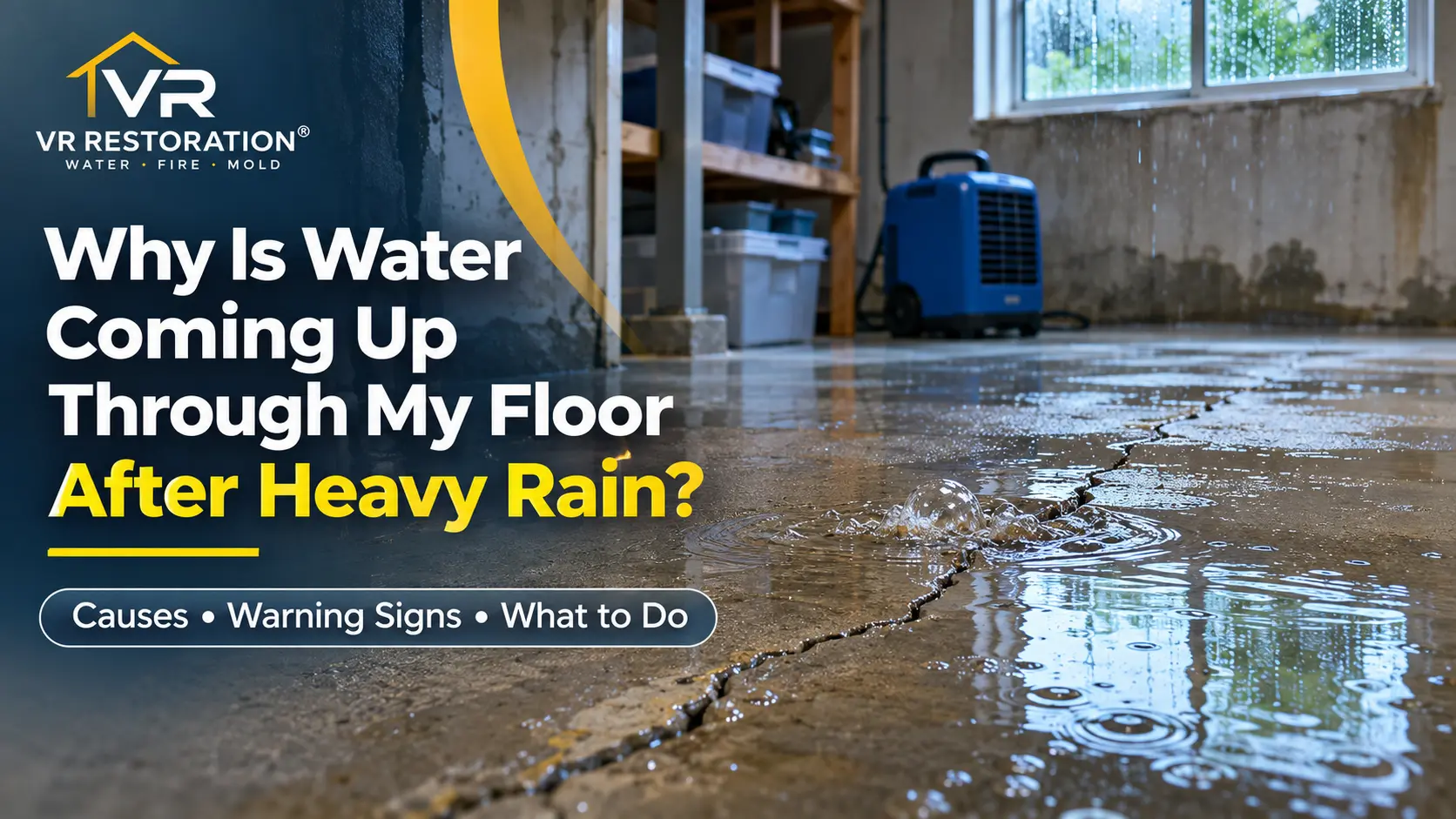
Have you noticed water coming up through your floor after heavy rain? Maybe your basement floor is suddenly wet, water is seeping between vinyl planks, or puddles are appearing along the edges of your concrete floor. For homeowners in Vancouver and across Metro Vancouver, this can be a serious warning sign of water intrusion.
Heavy rainfall can saturate the soil surrounding a home, increase groundwater pressure, and expose weaknesses in foundation walls, floor joints, and drainage systems. In some situations, water can enter from below the floor rather than through a visible roof or window leak.
Water coming up through your floor should never be ignored. Even a small amount of water can spread beneath flooring, damage insulation and building materials, and create conditions for mold growth.
In this guide, VR Restoration explains the most common causes, warning signs, immediate steps to take, and how professional water damage restoration can help protect your home.
Quick Answer: Why is water coming up through my floor after heavy rain?
Water may come up through your floor after heavy rain because saturated soil increases groundwater pressure around your foundation. Water can enter through cracks in concrete slabs, foundation joints, damaged waterproofing, or drainage problems. However, plumbing leaks, sewer backups, and water travelling from another area can produce similar symptoms. Identifying the source is essential before beginning repairs.
If your basement or living space is experiencing active water intrusion, contact VR Restoration for emergency water damage restoration in Vancouver and Metro Vancouver.
Can Water Really Come Up Through a Concrete Floor?
Yes. Water can enter through cracks, joints, and other openings in a concrete floor when surrounding groundwater conditions allow it.
Concrete is not automatically waterproof. Water vapour can also move through some concrete slabs and affect flooring adhesives or finishes, even when there is no visible standing water.
During prolonged rainfall, groundwater levels may rise and saturated soil can create hydrostatic pressure against below-grade structures.
If the foundation drainage or waterproofing system is inadequate, damaged, or overwhelmed, water may find a path into the basement.
Common entry points include:
- Cracks in concrete basement floors
- Joints between foundation walls and floor slabs
- Openings around plumbing penetrations
- Construction joints
- Defects in waterproofing systems
- Areas affected by drainage failures
Water may also enter through a foundation wall and travel across or beneath flooring, making it appear as though the water originated directly below the floor.
7 Common Causes of Water Coming Up Through Your Floor After Rain
1. Hydrostatic Pressure Around Your Foundation
Hydrostatic pressure is the pressure exerted by water. When soil around a below-grade foundation becomes saturated, groundwater can exert pressure against foundation walls and floors.
If there are cracks, openings, or other weaknesses, water may enter the basement.
This is one possible explanation when water appears during or shortly after periods of heavy rainfall.
Common Warning Signs
- Water appearing near basement wall and floor joints
- Puddles forming after prolonged rainfall
- Recurring moisture in the same basement area
- Damp concrete floors
- Water entering through visible foundation cracks
Hydrostatic pressure problems generally require investigation of the foundation, exterior drainage, and water entry points rather than simply drying the visible puddles.
2. Cracks in Your Concrete Floor
Concrete slabs can develop cracks due to shrinkage, settlement, movement, or other conditions.
Not every crack causes water intrusion. However, a crack that provides a pathway between groundwater and the interior may allow water to enter under suitable pressure conditions.
If water repeatedly appears along a crack after heavy rain, the area should be evaluated.
Important: Covering a wet crack with paint or a surface sealant without identifying the moisture source may not solve the underlying problem.
3. Failed or Blocked Foundation Drainage
Foundation drainage systems help manage groundwater around below grade structures.
Depending on the building, these systems may include perimeter drains, drainage pipes, sump pumps, and other components.
When drainage systems are blocked, damaged, poorly designed, or unable to handle water conditions, moisture may accumulate around the foundation.
Possible signs include:
- Repeated basement flooding during storms
- Water near the foundation perimeter
- Persistent dampness at wall and floor joints
- Standing water around exterior foundation areas
- A sump pump that is not operating properly
A qualified drainage or foundation professional can investigate whether the system requires cleaning, repair, or modification.
4. Water Entering Through the Foundation Wall and Spreading Under Flooring
Sometimes the water is not actually coming through the floor slab.
Rainwater may enter through a foundation wall, basement window, or another opening and travel beneath flooring before appearing elsewhere.
For example, water may move beneath vinyl planks or laminate flooring and become visible several feet away from the original entry point.
This can make the source difficult to identify without a proper moisture assessment.
Read our related guide about 10 hidden places water can damage your home.
5. Sump Pump Problems During Heavy Rain
Some homes use sump pumps to collect and discharge water from a sump basin.
If the pump stops working, loses power, becomes obstructed, or cannot keep up with incoming water, the basin may overflow or groundwater may accumulate.
Signs of a possible sump pump problem include:
- A sump basin filling higher than normal
- A pump that does not activate when expected
- Water collecting near the sump pit
- Unusual pump noises
- Recurring flooding during heavy rainfall
If you suspect a pump problem, avoid handling electrical equipment while standing in water. Contact an appropriate professional for safe inspection and repair.
6. Underground Plumbing Leaks
Water appearing on a floor is not always caused by rainfall or groundwater.
Water supply pipes or drain lines beneath or within a concrete slab may leak and cause moisture to appear through flooring or cracks.
Possible clues include:
- Wet flooring even when it has not rained
- Water collecting repeatedly in the same area
- An unexplained increase in water consumption
- Water meter activity when fixtures are not being used
- Persistent moisture that does not follow rainfall patterns
A licensed plumber can help determine whether a concealed plumbing leak is responsible.
7. Sewer Backup or Drainage Backflow
In some situations, water on a basement floor may come from a floor drain or plumbing fixture rather than groundwater entering through concrete.
Heavy rainfall can contribute to sewer or drainage system overload under certain conditions.
Warning signs include:
- Water rising from a floor drain
- Sewage odors
- Wastewater containing debris
- Toilets or drains backing up
- Multiple plumbing fixtures draining slowly
Safety warning: Water from a suspected sewer backup may contain harmful contaminants. Avoid contact, keep people and pets away, and contact qualified professionals for assessment and cleanup.
How to Tell Where the Water Is Coming From
Finding the source of water intrusion is important because different problems require different repairs.
| What You Notice | Possible Cause | Recommended Action |
|---|---|---|
| Water along basement wall and floor joints | Foundation or groundwater intrusion | Investigate foundation drainage and entry points |
| Water appearing through concrete cracks | Groundwater intrusion or another concealed source | Assess the crack and surrounding moisture conditions |
| Water coming from a floor drain | Drainage backup or sewer backflow | Avoid contact and arrange plumbing assessment |
| Water under vinyl or laminate flooring | Water travelling beneath the floor | Use moisture mapping to investigate the affected area |
| Water present during dry weather | Possible plumbing leak or persistent groundwater issue | Investigate plumbing and building moisture sources |
| Water collecting near a sump pit | Possible sump pump or drainage failure | Arrange safe inspection of the sump system |
These observations are clues rather than a definitive diagnosis. More than one moisture source can affect the same property.
What Should You Do Immediately When Water Comes Up Through Your Floor?
If water is actively entering your home, acting quickly can help reduce additional damage.
Step 1: Check for Electrical and Structural Hazards
Do not enter standing water if electrical outlets, appliances, wiring, or electrical panels may be affected.
If there is an electrical hazard, contact the appropriate emergency service or a qualified electrician. Avoid entering areas with suspected structural instability.
Step 2: Avoid Contact With Potentially Contaminated Water
If the water may be coming from a sewer or drain backup, treat it as potentially contaminated.
Keep children and pets away from the affected area and avoid attempting ordinary household cleanup of suspected sewage.
Step 3: Document the Damage
Take photographs and videos from a safe location.
Document:
- Where the water first appeared
- Visible water levels
- Damaged flooring and baseboards
- Nearby cracks or drains
- The approximate time the problem started
- Any previous water intrusion in the same area
Step 4: Identify and Stop the Source When Safe
If a plumbing leak is suspected and it is safe to do so, shutting off the water supply may help limit additional damage.
If the water is groundwater entering through the foundation, shutting off the plumbing supply will not stop it. The appropriate drainage or foundation issue must be addressed.
Step 5: Arrange Professional Water Extraction
Standing water can spread into flooring, drywall, trim, furniture, and concealed cavities.
Professional extraction equipment can remove accessible standing water and help prepare the affected area for drying.
Step 6: Check for Hidden Moisture
Even after the visible water is gone, moisture may remain beneath flooring or inside building materials.
Moisture measurements and mapping can help determine which areas require drying, further investigation, or removal of damaged materials.
Water Coming Through Your Floor in Vancouver? VR Restoration provides emergency water extraction, moisture detection, structural drying, and restoration throughout Metro Vancouver. 📞 Call +1 604 800 3900 Available 24/7 | Vancouver & Metro Vancouver
Can Water Damage Spread Under Vinyl, Laminate, or Hardwood Flooring?
Yes. Water can spread beneath many types of flooring even when the visible surface appears relatively dry.
Water may travel through joints, gaps, perimeter edges, and openings around fixtures.
The resulting damage depends on the flooring material, subfloor construction, amount of water, contamination, and how long the materials remain wet.
Vinyl Plank Flooring
Some vinyl flooring products resist water damage to the plank itself, but this does not mean the complete floor assembly is waterproof.
Water may become trapped beneath planks and affect underlayment, adhesives, or the subfloor.
Laminate Flooring
Many laminate flooring products contain wood-based cores that can swell when exposed to moisture.
Signs may include raised edges, buckling, or damaged joints.
Hardwood Flooring
Wood flooring may absorb moisture and develop cupping, swelling, gaps, or buckling.
Depending on the extent of damage, some flooring may be restorable while other sections require replacement.
Carpet and Underlay
Water can soak through carpet into padding and the subfloor.
Whether materials can be cleaned and dried depends on the water source, contamination level, material condition, and duration of exposure.
Can Water Under the Floor Cause Mold?
Persistent moisture beneath flooring can create conditions that support mold growth on susceptible materials.
Wood, drywall paper, carpet backing, dust, and other organic materials may support mold when they remain damp.
Possible warning signs include:
- A musty odor near the floor
- Recurring dampness
- Swollen baseboards
- Discoloration near wall and floor joints
- Visible mold on nearby materials
- Moisture returning after previous cleanup
However, a musty odor or wet floor alone does not confirm mold. An appropriate assessment is needed to determine whether microbial growth is present.
Health Canada recommends addressing indoor moisture problems and cleaning up water damage promptly to help prevent mold.
If mold is suspected, learn more about our professional mold remediation services.
How Professionals Detect Hidden Water Beneath Flooring
Professional water damage restoration involves more than removing visible puddles.
Water may travel beneath flooring, along wall cavities, and into nearby rooms. The visible wet area may not show the full extent of the damage.
Visual Inspection
Technicians inspect affected flooring, baseboards, walls, and accessible areas for signs of water intrusion and material deterioration.
Moisture Meter Readings
Suitable moisture meters help evaluate moisture conditions in different materials and compare affected areas with appropriate reference locations.
Thermal Imaging
Thermal cameras may help identify temperature patterns associated with possible moisture, but thermal imaging alone does not prove that water is present.
Moisture Mapping
Documenting moisture measurements across the affected area helps determine the possible extent of water migration and monitor drying progress.
Targeted Material Inspection
In some cases, flooring or trim may need to be lifted or removed to evaluate concealed moisture and material damage.
Any invasive investigation should account for electrical, plumbing, structural, and potential contamination hazards.
How Professional Water Damage Restoration Works
If water has entered your home through the floor, the restoration process will depend on the source, water conditions, and extent of affected materials.
1. Emergency Assessment
The restoration team assesses visible damage, safety concerns, and potential moisture migration.
2. Water Extraction
Professional extraction equipment is used to remove accessible standing water where appropriate.
3. Moisture Detection
Moisture readings help identify affected flooring, walls, and other building materials.
4. Source Investigation and Repair Coordination
The water entry point must be addressed. Depending on the cause, a foundation specialist, plumber, drainage contractor, or another qualified professional may be required.
5. Removal of Unsalvageable Materials
Materials that cannot be safely or effectively restored may require removal.
6. Structural Drying and Dehumidification
Professional air movers, dehumidifiers, and other suitable equipment may be used to dry affected materials under monitored conditions.
7. Drying Verification
Moisture measurements are monitored to evaluate progress and determine when appropriate drying goals have been achieved.
8. Restoration and Repairs
Once the moisture source has been corrected and affected materials are ready, necessary flooring, drywall, trim, and other repairs can be completed.
How Much Does It Cost to Fix Water Coming Through a Basement Floor?
The cost depends on the cause of the water intrusion and the extent of damage.
For example, extracting a limited amount of clean water from accessible materials is a different project from repairing foundation drainage and replacing extensively damaged flooring.
Factors affecting the cost include:
- The source of water intrusion
- The amount of standing water
- Whether the water is contaminated
- The size of the affected area
- The type of flooring and subfloor
- The amount of concealed moisture
- The condition of drywall and insulation
- The need for structural drying
- Whether mold remediation is necessary
- Foundation, drainage, or plumbing repairs
- The amount of reconstruction required
Because the causes and repair requirements vary significantly, an inspection is the best way to understand the scope of work.
Does Home Insurance Cover Water Coming Up Through the Floor in BC?
Home insurance coverage depends on the source of water, the circumstances of the loss, your policy wording, and any applicable endorsements or exclusions.
Some policies may provide coverage for certain sudden and accidental water losses.
Groundwater seepage, overland flooding, sewer backup, and gradual water intrusion may be treated differently and may require specific coverage.
Do not assume that all water entering through a basement floor is covered by standard home insurance.
What Should You Do for an Insurance Claim?
- Document the damage with photographs and videos.
- Contact your insurance provider promptly.
- Ask which water damage coverage applies to your situation.
- Follow the insurer's instructions for emergency mitigation and documentation.
- Keep invoices, inspection findings, and restoration records.
- Ask whether an adjuster needs to inspect the damage before repairs proceed.
VR Restoration can help document water damage, moisture readings, and restoration activities for communication with your insurance provider. Final coverage decisions are made by the insurer.
How to Help Prevent Water From Entering Through Your Floor
Preventing future water intrusion usually requires addressing the underlying water source rather than simply sealing or repainting the interior surface.
Maintain Gutters and Downspouts
Keep gutters clear and ensure downspouts discharge water away from the foundation according to appropriate local drainage requirements.
Learn more in our guide to clogged gutters and water damage in Vancouver.
Check Exterior Grading
Improper grading can allow surface water to collect near the building. Have drainage concerns assessed by a qualified professional.
Inspect Foundation Cracks
Investigate cracks that show active water intrusion, recurring dampness, or signs of movement.
Maintain Sump Pumps
If your home has a sump pump, follow the manufacturer's maintenance recommendations and arrange professional servicing when necessary.
Investigate Recurring Basement Moisture
Repeated dampness after rainfall may indicate a drainage or waterproofing issue that needs further evaluation.
Repair Water Entry Points
Window wells, exterior openings, damaged waterproofing, and foundation joints should be evaluated when they appear to contribute to leaks.
Do Not Ignore Hidden Water Damage
Moisture beneath flooring can remain unnoticed. If flooring is swelling, lifting, or producing musty odors, investigate the cause before installing new materials.
Frequently Asked Questions About Water Coming Up Through Floors
Why is water coming up through my basement floor after rain?
Water may enter through basement floor cracks, wall and floor joints, or other foundation openings when groundwater pressure increases after heavy rainfall. Drainage problems and water travelling from nearby walls can also cause similar symptoms.
Can groundwater come through a concrete floor?
Yes. Groundwater can enter through cracks, joints, and openings in a concrete slab under suitable conditions. Water vapour can also migrate through some slabs and affect flooring materials without creating visible puddles.
Why is my basement floor wet but the walls are dry?
Possible causes include moisture entering through the slab, a concealed plumbing leak, condensation, or water travelling beneath flooring from another location. Moisture testing and source investigation can help determine the cause.
Can water come up through vinyl plank flooring?
Yes. Water can emerge through plank joints or edges if it has accumulated beneath the flooring. Even water resistant planks do not guarantee that the underlying floor assembly is protected from moisture.
Is water coming through the floor an emergency?
Active flooding, suspected sewage backup, electrical hazards, or rapidly spreading water should be treated as urgent. Even smaller leaks require timely investigation because concealed moisture can damage building materials.
Will a dehumidifier stop water coming through my floor?
No. A dehumidifier can help manage moisture in the air and support certain drying processes, but it does not stop groundwater, plumbing leaks, or other active water sources.
Can I seal my basement floor to stop groundwater?
A surface coating alone may not resolve groundwater intrusion caused by pressure, drainage defects, or foundation openings. The underlying cause should be investigated before selecting a repair method.
How long does it take to dry water under flooring?
Drying time varies depending on the flooring, subfloor, water source, amount of moisture, environmental conditions, and drying method. Some materials may require removal or replacement rather than drying in place.
Can water under flooring cause mold?
Yes. Persistent moisture can create conditions that support mold growth on susceptible materials beneath or around flooring. Prompt source control and appropriate drying help reduce this risk.
Does insurance cover groundwater entering a basement in BC?
Coverage depends on your policy and the cause of the loss. Groundwater seepage, overland flooding, and sewer backup may be subject to different exclusions or endorsements. Contact your insurer to confirm your coverage.
Who should I call if water is coming through my floor in Vancouver?
Contact a qualified professional to identify and repair the source. If building materials are wet, VR Restoration provides emergency water extraction, moisture detection, structural drying, and water damage restoration in Vancouver and Metro Vancouver. Call 604 800 3900.
Emergency Water Damage Restoration in Vancouver and Metro Vancouver
Water coming up through your floor after heavy rain can be more than a minor inconvenience. It may indicate a foundation drainage issue, groundwater intrusion, plumbing leak, or another source of water damage.
At VR Restoration, we help homeowners, strata properties, and businesses respond to water damage and restore affected building materials.
Our services include:
- 24/7 emergency water damage response
- Professional water extraction
- Basement flood cleanup
- Moisture detection and mapping
- Structural drying and dehumidification
- Wet flooring and drywall assessment
- Water damage restoration and repair planning
- Mold remediation when necessary
- Insurance claim documentation assistance
We serve Vancouver, West Vancouver, North Vancouver, Burnaby, Coquitlam, Port Coquitlam, Surrey, Richmond, New Westminster, and surrounding Metro Vancouver communities.
Learn more about our Vancouver water damage restoration services.
Water Coming Up Through Your Floor After Heavy Rain? Don't wait for moisture to spread beneath your flooring. Contact VR Restoration for professional water damage assessment, extraction, drying, and restoration. 📞 Call +1 604 800 3900 Available 24/7 | Vancouver & Metro Vancouver
Leave a reply
Your comment will be reviewed before it appears publicly.