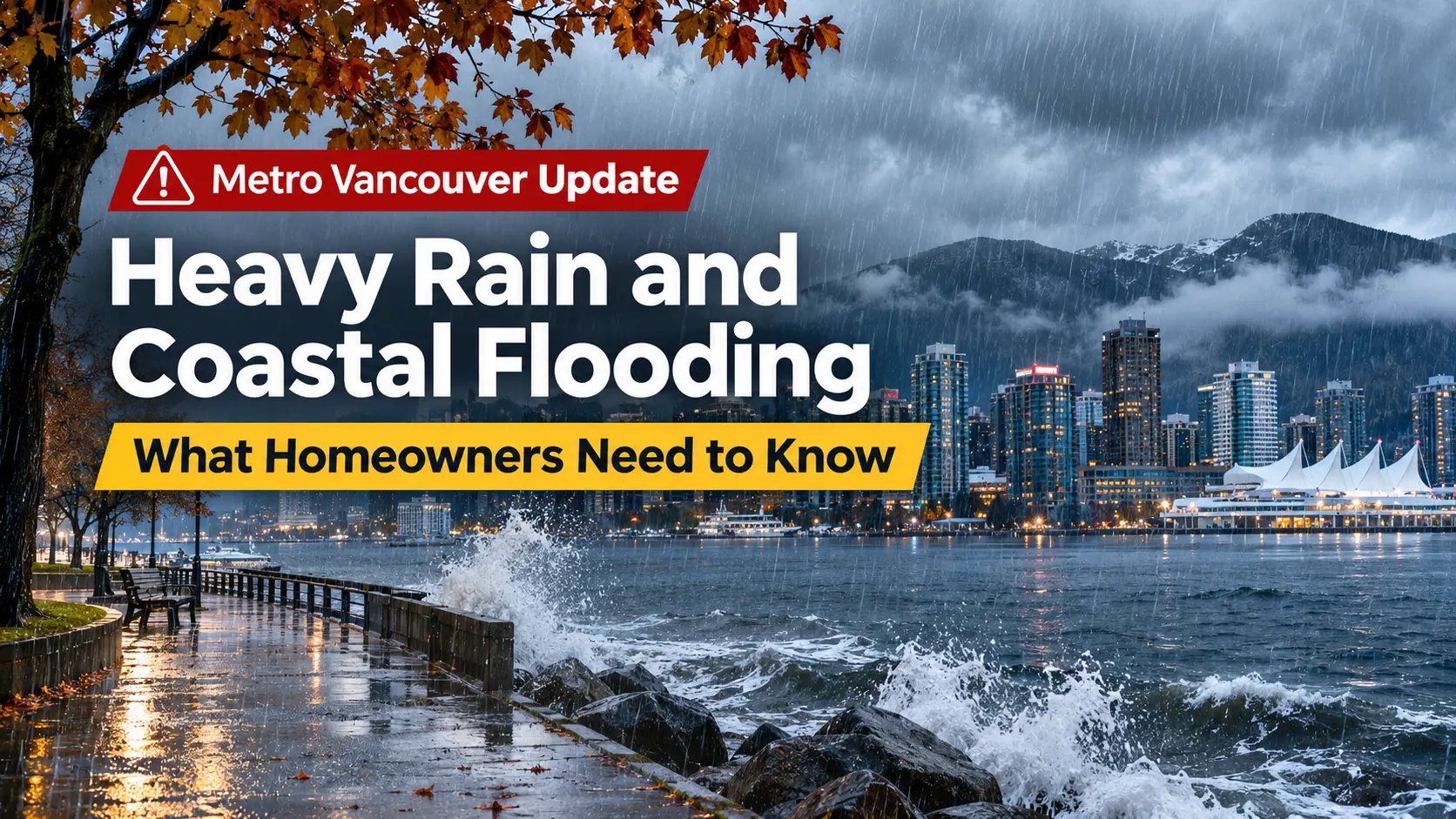
Metro Vancouver is facing another period of challenging weather following heavy rainfall overnight on November 25 and into the morning of November 26, 2026. With saturated ground, elevated coastal water levels, and ongoing flooding concerns, homeowners should remain alert to potential water damage.
Environment Canada has issued an Orange Warning for coastal flooding affecting sections of Vancouver, West Vancouver, Bowen Island, and surrounding coastal areas. The combination of storm surge, large waves, and exceptionally high tides increases the risk of flooding in vulnerable waterfront and low lying communities.
Meanwhile, recent heavy rainfall has increased concerns about basement flooding, foundation leaks, overflowing drainage systems, roof leaks, and hidden moisture inside residential and commercial properties throughout Metro Vancouver.
Even when the rain begins to slow down, water damage can continue developing beneath flooring, behind drywall, and inside foundation walls.
Metro Vancouver Weather and Flooding Update: November 26, 2026
- Earlier forecasts called for an additional 30 to 60 mm of rainfall across the North Shore and northeastern Metro Vancouver.
- The Yellow Rainfall Warning for West Vancouver, North Vancouver, Coquitlam, and Maple Ridge ended early Thursday morning.
- An Orange Coastal Flooding Warning remained active for specified Metro Vancouver coastal areas on Thursday morning.
- Coastal water levels could reach 40 to 70 cm above predicted astronomical tide levels.
- Homeowners should remain alert to drainage problems, basement flooding, and concealed water damage following the storm.
Weather information reflects conditions reported on November 26, 2026. For current conditions, visit the official Environment Canada weather alerts website.
If you are experiencing flooding or water intrusion inside your property, VR Restoration provides emergency water damage restoration throughout Metro Vancouver, including water extraction, moisture detection, structural drying, and restoration.
What Is Happening in Metro Vancouver on November 26, 2026?
Another strong weather system moved across British Columbia's South Coast following several days of wet weather.
Although rainfall warnings for some Metro Vancouver communities ended Thursday morning, accumulated moisture and saturated soil can continue affecting residential properties after the heaviest rainfall has passed.
At the same time, unusually high coastal water levels have created additional concerns for properties near the shoreline.
Environment Canada identified the combination of storm surge, large waves, and king tides as the primary coastal flooding hazards associated with this weather system.
These conditions can result in two different types of flooding:
- Rainfall related flooding: Water accumulating because of saturated ground, inadequate drainage, overflowing gutters, or foundation leaks.
- Coastal flooding: Seawater reaching normally dry coastal areas due to elevated tides, waves, and storm surge.
Both can cause significant property damage, but their sources, cleanup requirements, and potential insurance coverage can differ.
For additional information, read the EmergencyInfoBC coastal flooding advisory issued in November 2026.
Which Metro Vancouver Communities Should Watch for Water Damage?
Water intrusion risks vary depending on property elevation, proximity to the coast, foundation construction, drainage conditions, and previous water damage.
Homeowners in the following communities should pay particular attention to conditions around their properties following prolonged rainfall.
West Vancouver
West Vancouver faces both rainfall related water intrusion concerns and coastal flooding risks in designated shoreline areas.
Properties near the waterfront may be exposed to elevated coastal water levels, while homes on sloped terrain may experience increased surface runoff and drainage problems.
Homeowners should watch for:
- Water entering basements and crawl spaces
- Moisture along foundation walls
- Flooded garages and lower level rooms
- Water entering through windows and exterior doors
- Overflowing gutters and drainage systems
- Water accumulating around retaining walls
- Coastal water intrusion in vulnerable waterfront properties
If your property has been affected by the recent storm, contact our team for emergency water damage restoration in West Vancouver.
North Vancouver
North Vancouver experienced rainfall warnings during the recent weather system. Properties near hillsides, creeks, and areas with inadequate drainage may be particularly vulnerable to water intrusion during prolonged storms.
Check basements, ground level rooms, window wells, foundation joints, and crawl spaces for signs of moisture.
Water entering through exterior walls or foundations may remain hidden behind drywall and beneath flooring.
VR Restoration provides emergency flood cleanup, moisture detection, and structural drying for homeowners across North Vancouver.
Vancouver
Sections of Vancouver's coastline were included in the Orange Coastal Flooding Warning on November 26, 2026.
Heavy rainfall can also affect residential buildings, condominiums, commercial properties, underground parking areas, and basement suites throughout the city.
Older buildings and properties with existing drainage problems may experience recurring water intrusion during periods of prolonged rainfall.
Learn more about the City of Vancouver's November 2026 coastal flooding advisory.
For professional assistance, explore our water damage restoration services in Vancouver.
Coquitlam and the Tri Cities
Coquitlam and northeastern Metro Vancouver were also included in the earlier rainfall warnings associated with this storm.
Although Coquitlam is not one of the coastal warning areas identified in the Vancouver and West Vancouver shoreline bulletin, prolonged rainfall can still create concerns involving groundwater, drainage, foundation leaks, and basement flooding.
Homeowners in Coquitlam, Port Coquitlam, and Port Moody should inspect basement floors, sump pumps, exterior drainage systems, and lower level rooms for signs of water intrusion.
VR Restoration assists homeowners throughout the Tri Cities with emergency water extraction, drying, and restoration following water damage.
What Is Coastal Flooding and Why Is It Dangerous?
Coastal flooding occurs when seawater reaches land that is normally dry. It can develop when high tides combine with storm surge, strong winds, and large waves.
A king tide is an exceptionally high astronomical tide. When a storm occurs during a king tide, coastal water levels may rise further.
According to Environment Canada's November 26 warning, the storm system could increase water levels by approximately 40 to 70 cm beyond predicted astronomical tides in affected coastal areas.
This creates additional risks for:
- Waterfront residential properties
- Low lying coastal communities
- Basements near the shoreline
- Ground level commercial properties
- Underground parking facilities
- Coastal roads and pedestrian pathways
Seawater can introduce salts, sediment, and contaminants into building materials. These conditions may complicate cleanup and restoration compared with some ordinary household water leaks.
Safety warning: Stay away from exposed shorelines, beaches, seawalls, and areas affected by large waves. Follow instructions from local emergency management authorities.
7 Ways Heavy Rain Can Cause Water Damage Inside Your Home
Water damage does not always begin with a large or immediately visible flood. During prolonged rainfall, moisture can enter through small openings and gradually spread into concealed areas.
1. Basement Flooding
When surrounding soil becomes saturated, groundwater may accumulate around a home's foundation.
If drainage systems cannot adequately manage the water, moisture may enter through foundation cracks, construction joints, window wells, or openings around the basement floor.
Signs of basement flooding include wet carpet, standing water, damp concrete, swollen baseboards, and moisture around the bottom of walls.
Learn what to do in our guide: Who Should You Call for a Flooded Basement in Vancouver?
2. Water Coming Up Through Floors
Heavy rainfall can increase groundwater pressure around and beneath below grade foundations.
Water may enter through cracks in concrete slabs or travel underneath flooring after entering through a nearby foundation wall.
This can damage laminate flooring, hardwood, vinyl plank installations, carpet, and underlying floor assemblies.
Even if the surface appears dry, moisture may remain trapped underneath.
Read our detailed guide: Why Is Water Coming Up Through My Floor After Heavy Rain?
3. Window Leaks
Wind driven rain can expose weaknesses around windows, flashing, exterior joints, and cladding.
Water entering around a window may travel down the surrounding wall cavity and damage drywall, insulation, trim, or flooring.
Check for:
- Water pooling on window sills
- Peeling paint near window frames
- Discoloration below windows
- Swollen or damaged window trim
- Dampness on surrounding walls
Read more about why windows leak during heavy rainfall in Vancouver.
4. Roof and Ceiling Leaks
Prolonged rainfall can expose defects in roofing materials, flashing, roof penetrations, and drainage components.
Water may enter the attic and travel through building cavities before appearing as stains or drips inside the home.
Watch for new ceiling stains, peeling paint, damp drywall, dripping water, or visible ceiling deformation.
If a ceiling appears unstable or severely bulged, keep people away from the affected area and arrange professional assistance.
5. Overflowing Gutters and Downspouts
Gutters and downspouts help direct rainwater away from roofs and foundations.
When leaves, debris, or damaged drainage components prevent water from flowing properly, rainwater may overflow against exterior walls or accumulate near the foundation.
This can contribute to basement moisture, exterior wall leaks, and damage to nearby building materials.
Read our guide to clogged gutters and water damage in Vancouver homes.
6. Foundation and Exterior Wall Leaks
Rainwater can enter through vulnerable foundation joints, cracks, damaged waterproofing, and exterior building envelope defects.
Moisture may travel behind finished walls without producing immediate visible damage.
Possible warning signs include:
- Bubbling or blistering paint
- Soft drywall
- Unexplained wall discoloration
- Musty odors
- Swollen baseboards
- Recurring dampness after rainfall
These symptoms deserve further investigation, especially when they appear repeatedly after storms.
7. Sewer Backup and Drainage Problems
Heavy rainfall can contribute to drainage system overload in certain circumstances.
Water may enter a property through floor drains, toilets, or other plumbing fixtures when a backup occurs.
Sewage and outdoor floodwater should be treated as potentially contaminated. Avoid direct contact and keep children and pets away from affected areas.
Professional cleanup may require specialized equipment, protective measures, and removal of contaminated materials.
What Should You Check Inside Your Home After Heavy Rain?
Once conditions are safe, inspect accessible areas of your property for early signs of water intrusion.
| Area to Inspect | Warning Signs | Possible Problem |
|---|---|---|
| Basement | Standing water, damp walls, wet carpet | Foundation or drainage related flooding |
| Windows | Wet sills, swollen trim, stains | Window or building envelope leaks |
| Ceilings | Brown stains, dripping, sagging | Roof or concealed water leaks |
| Interior Walls | Bubbling paint, soft drywall, discoloration | Concealed moisture intrusion |
| Flooring | Buckling, swelling, water between joints | Moisture beneath flooring |
| Crawl Space | Standing water, damp insulation, odors | Groundwater or drainage problems |
| Garage | Water pooling near doors and walls | Surface runoff or drainage failure |
| Floor Drains | Overflowing water, unpleasant odors | Potential sewer or drainage backup |
These signs can help identify potential problems, but a visual inspection alone cannot determine the full extent of concealed water damage.
For additional guidance, explore our article about 10 hidden places water can damage your home.
Experiencing Water Damage After the Metro Vancouver Storm? VR Restoration provides emergency water extraction, moisture detection, structural drying, and flood cleanup throughout Metro Vancouver. 📞 Call +1 604 800 3900 Available 24/7 | Vancouver, West Vancouver, North Vancouver & Coquitlam
What Should You Do Immediately if Your Home Is Flooded?
Taking appropriate action after water enters your home can help reduce additional damage. However, personal safety must always come first.
1. Stay Away From Electrical Hazards
Do not enter standing water if electrical outlets, wiring, appliances, or electrical panels could be affected.
Do not attempt to operate electrical equipment or access a breaker panel through standing water. Contact emergency services or a qualified electrician when necessary.
2. Follow Local Emergency Instructions
If your property is located in a coastal flooding area, monitor official alerts and follow instructions from local authorities.
If an evacuation order is issued, leave the affected area as directed. Call 911 if there is an immediate threat to life or safety.
3. Move Valuables to a Safe Location
If it is safe to do so, move important documents, electronics, personal belongings, and other valuable items to higher locations away from floodwater.
Household chemicals should also be secured where they cannot contaminate floodwater.
4. Document the Water Damage
Take photographs and videos from safe locations before affected materials are moved or removed.
Record:
- When the water intrusion started
- Where water appears to be entering
- The extent of visible flooding
- Damaged flooring, walls, and personal belongings
- Any previous water intrusion issues
- Emergency mitigation activities
5. Contact Your Insurance Provider
Notify your insurance provider promptly and ask about your water damage coverage, documentation requirements, and emergency restoration procedures.
Coverage can differ depending on whether the damage was caused by rainwater intrusion, sewer backup, groundwater seepage, overland flooding, or coastal flooding.
6. Arrange Professional Water Extraction
Standing water can continue spreading into porous building materials and concealed spaces.
Contact a qualified water damage restoration company to assess the situation and determine the appropriate extraction and drying methods.
If exterior floodwater levels remain high around the building, professional assessment is particularly important before pumping out a flooded basement because pressure differences may affect foundation safety.
7. Check for Hidden Moisture
Removing visible water is only one part of water damage restoration.
Moisture may remain beneath flooring, behind drywall, inside insulation, and within other building components.
Professional moisture testing helps determine which materials require drying, further investigation, or removal.
Can Water Damage Continue After the Rain Stops?
Yes. Water damage can continue developing after rainfall has ended.
Groundwater may remain elevated, moisture may continue moving through building materials, and concealed cavities can remain damp even when visible surfaces begin to dry.
Potential consequences include:
- Drywall deterioration
- Swollen baseboards and trim
- Hardwood floor cupping or buckling
- Damaged insulation
- Persistent indoor humidity
- Musty odors
- Mold growth
- Possible deterioration of building materials following prolonged moisture exposure
This is why homeowners should not assume that their property is fully dry simply because standing water is no longer visible.
Read more about what happens when water damage is left untreated.
How Quickly Can Mold Develop Following Flooding?
Under suitable conditions, mold growth can begin within approximately 24 to 48 hours on susceptible wet materials. Actual growth depends on moisture levels, temperature, material type, and environmental conditions.
Flood affected drywall, wood, carpet, insulation, and other materials may support mold growth when moisture remains unresolved.
Early signs of a possible moisture or mold problem include:
- A persistent musty smell
- Discoloration on walls or ceilings
- Recurring dampness
- Visible mold growth
- Peeling or bubbling paint
These signs are not always proof of mold. An appropriate assessment may be needed to determine the condition of affected materials.
Prompt water extraction, source control, and properly monitored drying can help reduce the risk of additional moisture related damage.
If mold is discovered, VR Restoration provides professional mold remediation services in Metro Vancouver.
How Professional Flood Cleanup and Water Damage Restoration Works
Water damage restoration following heavy rainfall or coastal flooding requires an assessment of the water source, contamination risks, affected materials, and moisture migration.
Emergency Water Damage Assessment
A restoration assessment helps identify visible damage, potential safety concerns, and possible concealed moisture.
Professional Water Extraction
Appropriate extraction equipment is used to remove accessible standing water when conditions allow safe extraction.
Moisture Detection and Mapping
Moisture meters and other suitable inspection methods help identify affected building materials beyond the visually damaged area.
Contamination Assessment and Cleanup
Outdoor floodwater, seawater, and sewage may introduce contaminants into the property. Cleanup procedures should account for the water source and the condition of affected materials.
Removal of Unsalvageable Materials
Drywall, insulation, flooring, and other materials that cannot be safely restored may require removal.
Structural Drying and Dehumidification
Commercial drying equipment may be used under controlled conditions to remove moisture from affected building materials.
Drying Monitoring
Moisture measurements help track drying progress and determine whether appropriate drying goals have been achieved.
Restoration and Reconstruction
Once the source has been addressed and affected materials are ready, necessary repairs and reconstruction can proceed.
Does Home Insurance Cover Heavy Rain and Coastal Flooding in British Columbia?
Home insurance coverage for storm related water damage depends on the individual policy, the source of water, applicable exclusions, and any additional coverage purchased.
Different types of water damage may be treated differently by insurance providers.
| Type of Water Damage | Potential Insurance Considerations |
|---|---|
| Sudden plumbing leak | May be covered under certain standard home insurance policies, subject to policy conditions and exclusions. |
| Rainwater entering through a damaged roof | Coverage depends on the cause of the roof damage and applicable policy conditions. |
| Overland flooding | May require additional flood coverage or a specific endorsement. |
| Sewer backup | May require separate sewer backup coverage. |
| Groundwater seepage | May be excluded or subject to specific coverage conditions. |
| Coastal flooding and storm surge | Ocean water and storm surge may be excluded, even under some expanded water damage policies. |
| Gradual or recurring water intrusion | Often subject to maintenance, deterioration, or repeated leakage exclusions. |
Important: Do not assume that coastal flooding is covered simply because your policy includes water damage or overland flood protection.
Contact your insurance provider to confirm whether your specific loss is covered.
VR Restoration can assist with documenting affected areas, moisture measurements, emergency mitigation, and restoration activities to support communication with your insurance provider.
Final coverage decisions remain with your insurer.
How to Protect Your Home From Additional Water Damage During Rainy Weather
Vancouver's wet season makes regular property maintenance and early moisture detection particularly important.
When weather conditions are safe, consider the following preventive measures:
- Keep gutters and accessible drainage components clear of debris.
- Ensure downspouts discharge water appropriately away from foundations.
- Inspect basement window wells for accumulated water.
- Arrange maintenance for sump pumps and foundation drainage systems.
- Investigate recurring basement dampness and foundation leaks.
- Check exterior window and door assemblies for signs of water intrusion.
- Store valuable belongings above basement floor level.
- Monitor walls, ceilings, and flooring after prolonged rainfall.
- Address musty odors and unexpected indoor moisture promptly.
- Review your home insurance policy for relevant flood and water damage coverage.
Avoid climbing onto roofs, using ladders, or attempting exterior repairs during severe weather.
Frequently Asked Questions About Metro Vancouver Flooding and Water Damage
Is there a flooding warning in Vancouver on November 26, 2026?
Yes. Environment Canada continued an Orange Coastal Flooding Warning on the morning of November 26, 2026, for specified coastal areas, including sections of Vancouver and West Vancouver. Residents should check official weather alerts for current conditions and warning updates.
Is West Vancouver at risk of flooding during this storm?
Designated coastal areas of West Vancouver were included in the coastal flooding warning. Other properties may also experience rainfall related water intrusion depending on elevation, drainage, foundation conditions, and local weather exposure.
Why can my basement flood after the rain stops?
Groundwater levels and soil saturation may remain elevated after rainfall ends. Water can continue entering through foundation cracks, floor joints, and inadequate drainage systems even when the heaviest rain has passed.
What should I do if water is coming through my basement floor?
Avoid electrical hazards and potentially contaminated water. Document the affected area from a safe location and arrange professional assessment, source investigation, and water damage restoration.
Can heavy rainfall cause hidden mold inside walls?
Yes. Rainwater entering through exterior openings can create damp conditions behind drywall and insulation. If moisture remains unresolved, susceptible materials may support mold growth.
Can coastal floodwater damage hardwood floors?
Yes. Coastal floodwater can affect hardwood, subfloors, adhesives, and surrounding building materials. Salt and contamination may complicate restoration, and some materials may need replacement.
Does a dehumidifier prevent basement flooding?
No. A dehumidifier can help reduce indoor humidity and support certain drying processes, but it cannot stop active groundwater intrusion, coastal flooding, or drainage failures.
Does home insurance cover coastal flooding in BC?
Coverage depends on the policy. Coastal flooding and storm surge may be specifically excluded, even when other types of water damage are covered. Contact your insurance provider for confirmation.
How do I know if water is trapped beneath my flooring?
Warning signs may include buckling, swollen flooring joints, musty odors, recurring dampness, and moisture around baseboards. Professional moisture testing can help determine whether concealed materials are affected.
How soon should I contact a restoration company after flooding?
Contact a qualified restoration company as soon as it is safe to do so. Early assessment and appropriate mitigation can help reduce additional damage and identify moisture that may not be immediately visible.
Who should I call for emergency water damage restoration in West Vancouver?
VR Restoration provides emergency water damage restoration, flood cleanup, water extraction, moisture detection, and structural drying in West Vancouver. Call 604 800 3900 for assistance.
Is water damage restoration available 24/7 in Coquitlam and North Vancouver?
Yes. VR Restoration offers 24/7 emergency water damage response throughout its Metro Vancouver service areas, including Vancouver, West Vancouver, North Vancouver, and Coquitlam.
Official Weather and Emergency Information
The weather information in this article reflects official advisories available on November 26, 2026. Weather warnings may change throughout the day.
For current alerts and emergency instructions, consult the following official resources:
- Environment Canada: Metro Vancouver Coastal Flooding Warning
- Environment Canada: Rainfall Warning Updates
- EmergencyInfoBC: November 2026 Coastal Flooding Warnings
- City of Vancouver: Coastal Flooding Risks
- DriveBC: Current Road Conditions
24/7 Emergency Water Damage Restoration Across Metro Vancouver
Following prolonged rainfall and coastal flooding warnings, property owners should remain alert to both visible flooding and hidden moisture damage.
At VR Restoration, we understand the challenges that Vancouver's rainy weather can create for homeowners, strata properties, and businesses.
Our water damage restoration services include:
- 24/7 emergency water damage response
- Water damage inspections
- Emergency water extraction
- Basement flood cleanup
- Moisture detection and mapping
- Structural drying and dehumidification
- Wet drywall and flooring assessment
- Water damage repair and restoration
- Mold inspection and remediation
- Insurance claim documentation assistance
We provide professional restoration services throughout Vancouver, West Vancouver, North Vancouver, Coquitlam, Port Coquitlam, Port Moody, Burnaby, Surrey, Richmond, New Westminster, and surrounding Metro Vancouver communities.
Whether you are dealing with a flooded basement, water entering through your foundation, leaking windows, wet flooring, or hidden moisture after heavy rainfall, our team is available to help assess and restore your property.
Explore our emergency water damage restoration services or learn more about our water damage restoration services in West Vancouver.
Has Heavy Rain or Flooding Damaged Your Property? Don't wait for hidden moisture to cause additional damage. Contact VR Restoration for professional water damage assessment, emergency extraction, structural drying, and restoration. 📞 Call +1 604 800 3900 Available 24/7 | Vancouver & Metro Vancouver
Leave a reply
Your comment will be reviewed before it appears publicly.